
Recently, several renowned experts and scholars from Taiwan have visited Washington D.C., United States, to meet with congressional members and think tanks, engaging in in-depth strategic exchanges regarding the current Indo-Pacific situation, U.S.-Taiwan relations, and the gray zone threats from the Chinese Communist Party.
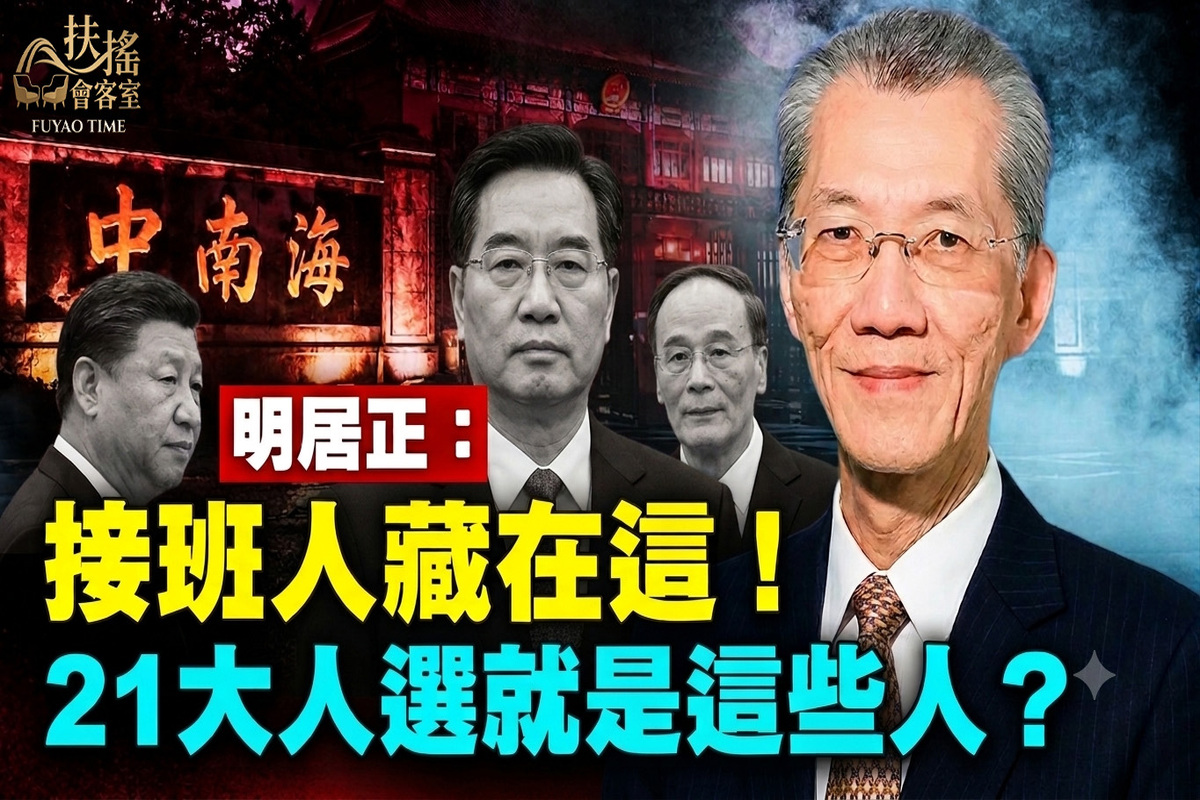
On July 24th, Professor Ming Jur Zheng, a distinguished political scientist and honorary professor at National Taiwan University, after meeting with congressional members, was invited to the New Tang Dynasty TV’s “News Talk” studio for an exclusive interview.
During the interview, Professor Ming shared a profound strategic analysis on the underlying logic of the Chinese Communist Party’s “cognitive warfare” against the U.S. and Taiwan, the challenges and breakthroughs in countering infiltration, the reality of institutional competition in the Taiwan Strait, as well as the escalating power struggles within the top leadership of the Chinese Communist Party ahead of the 21st National Congress.
As the military intimidation by the Chinese Communist Party in the Taiwan Strait and Indo-Pacific region becomes more frequent, the international community is keen on understanding what mechanisms are in place for the U.S. and Taiwan to counter the overwhelming psychological and intelligence warfare by China, and how effective are their efforts in countering cognitive warfare.
Professor Ming pointed out that the Chinese Communist Party has always aimed at annexing Taiwan as part of maintaining its claimed legitimacy and external mobilization, with the cognitive warfare against Taiwan serving as a significant driving force. One notable effect of this cognitive warfare is the propagation of the “anti-America sentiment.”
According to Professor Ming, it has become clear that Taiwan possesses its own defense capabilities and is supported by international allies like the U.S. and Japan. To undermine the effectiveness of U.S. support for Taiwan, the Chinese Communist Party’s most cost-effective and efficient strategy is to erode the foundation of trust between the U.S. and Taiwan. The widespread “anti-America sentiment” narrative in Taiwan’s society currently most benefits the Chinese Communist Party.
Professor Ming further emphasized that the oversimplification of the cross-strait conflict as merely a matter of “Taiwan independence” overlooks the core institutional and value-based competition between Taiwan’s democratic constitutional system and the mainland’s communist regime.
Moving forward in the coming years, Professor Ming emphasized that the key variables determining the fate of the Chinese Communist Party regime are not distant military adventures but rather the severe economic downturn, high youth unemployment rates, social unrest, and deepening conflicts with Western democratic alliances in trade, technology, and finance.
In conclusion, Professor Ming highlighted the importance of breaking free from the shackles of the communist system for China to truly embark on a path of sound development and prosperity.
For the full program, please watch online:
Subscribe to the YouTube channel:
https://www.youtube.com/@%E6%89%B6%E6%90%96%E6%9C%83%E5%AE%A2%E5%AE%A4
Subscribe to the Clean World channel:
https://www.ganjingworld.com/channel/1eiqjdnq7go5grer6fQLmhsYe1g60c
(Reference: “News Talk” program)