
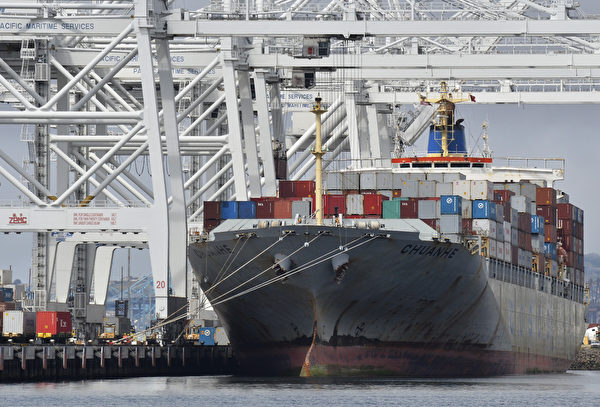
The US Customs and Border Protection (CBP) announced on July 29th that since the implementation of the Enforce and Protect Act (EAPA) in 2016, they have uncovered tariff evasion cases involving over $1 billion, setting a new record under the system.
Rodney Scott, Acting Commissioner of CBP, stated that tariff evasion harms American businesses and labor interests and undermines the integrity of legal trade. CBP will continue to utilize the investigative powers granted by EAPA to track various forms of tariff evasion and ensure that importers fulfill their tax obligations in accordance with the law.
EAPA was established as an enforcement mechanism by the US Congress in 2016 under the Trade Facilitation and Trade Enforcement Act, specifically authorizing CBP to investigate import practices suspected of circumventing anti-dumping and countervailing duties.
According to the regulations, US businesses, industry groups, and other stakeholders can report to CBP. Once CBP determines there is credible evidence of tariff evasion, a formal investigation can be initiated, and protective measures can be taken during the investigation, such as requesting additional security bonds from importers or suspending final clearance to prevent potentially evasive goods from entering the US market.
CBP mentioned that common methods of tariff evasion in recent cases include falsely reporting the country of origin of goods to avoid applicable tariffs, using transshipment through third countries to mask the actual source of goods, misclassifying goods in terms of tariff category, undervaluing goods to reduce tariff payments, and submitting false import documents or other misleading information to avoid tariff payments.
These actions not only result in loss of government tariff revenue but also place law-abiding companies at an unfair competitive disadvantage, weakening the effectiveness of US trade remedies.
As of now, CBP has completed 394 EAPA investigations, with 188 cases ultimately confirmed to involve tariff evasion, while 108 investigations are still ongoing.
Moreover, CBP has collected or requested over $1 billion in tariffs from relevant importers and continues to monitor the importation of goods related to these cases to ensure the effective enforcement of anti-dumping and countervailing duties owed.
CBP intends to continue collaborating with domestic and international law enforcement and trade partners to strengthen investigations into suspected tariff evasion and maintain a fair market competition environment while ensuring the effective enforcement of US trade laws.
EAPA, officially known as the Enforce and Protect Act, is an administrative investigative mechanism that came into effect in 2016 focusing on enterprises evading anti-dumping and countervailing duties through means such as falsely reporting the origin, transshipment, and undervaluation of goods.
The EAPA process is transparent and efficient, with a legal requirement for investigations to be completed within one year. Throughout each investigation, CBP closely cooperates with informants, including small businesses and individuals with limited legal resources, to help them submit thorough and well-supported allegations.
Unlike regular customs inspections, EAPA grants CBP expedited investigation powers allowing temporary measures to be taken during the investigative period to prevent suspected tariff evasion goods from continuing to enter the US market.
As the US intensifies trade enforcement, EAPA has become one of CBP’s crucial enforcement tools to combat tariff evasion and uphold fair trade. CBP stated that in recent years, the enforcement efforts and the number of cases and amounts involved in EAPA investigations have significantly increased.
EAPA relies on clues provided by businesses and US citizens. CBP encourages whistleblowing; if you have any information regarding violations of US trade laws, please report to the US Customs and Border Protection to help protect American economic interests and maintain fair competition.