
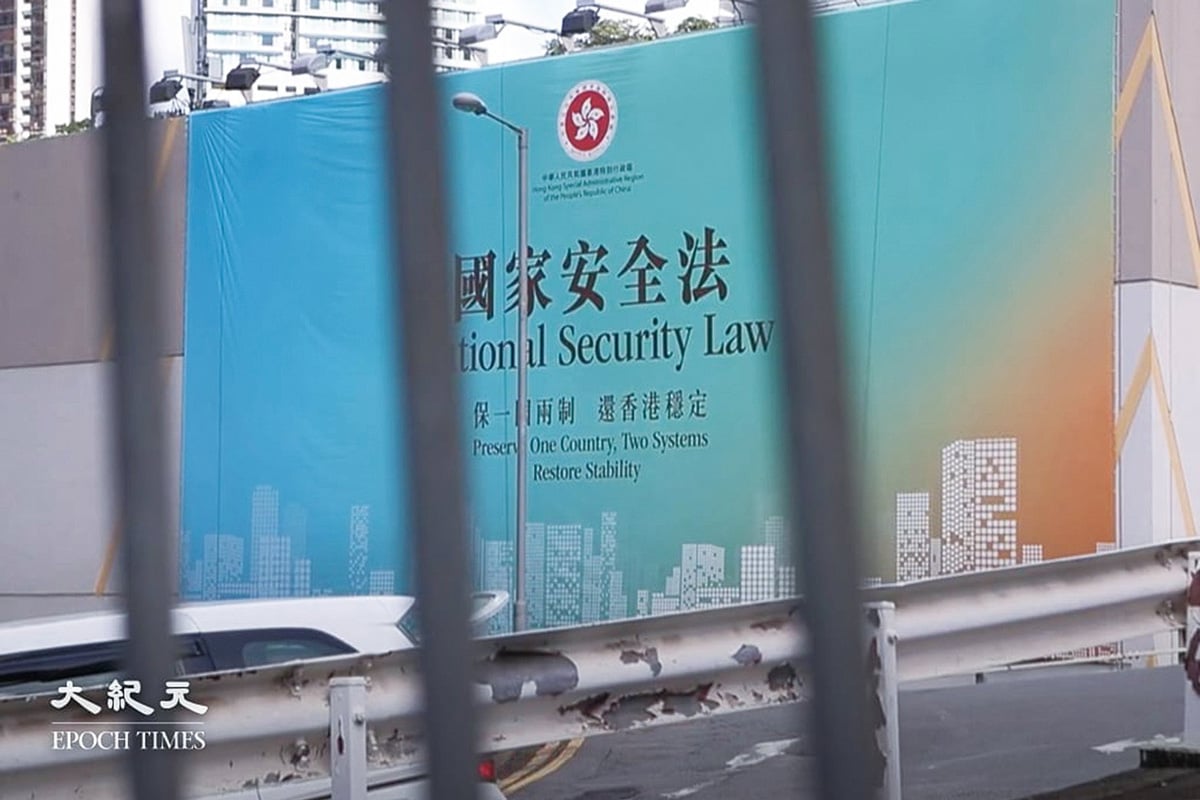
On November 5, Hong Kong’s National Security Department apprehended a 34-year-old local man under allegations of importing “seditious books” from Taiwan in violation of the National Security Law. Multiple sources have confirmed that the arrested individual is Yau Si-chung, a director and member of the support platform for inmates known as “Migratory Birds.”
The police issued a press release detailing that the arrested man was implicated in activities related to a local company, allegedly importing materials intended for sale in their Hong Kong store that purportedly aimed to incite public hatred, contempt, or rebellion against the central government and the Hong Kong Special Administrative Region (SAR) government. In conducting their investigation, authorities searched both his residence and the company, seizing a considerable number of books and digital devices. The police further warned that importing publications with seditious intent is a serious crime, punishable by up to seven years in prison, and advised residents to refrain from illegal activities.
According to reports from local media, including TVB and Hong Kong 01, Yau Si-chung is associated with “Migratory Birds,” a platform established by former pro-democracy district councillor Chu Kong-wai. This platform facilitates the purchase and sale of goods for incarcerated individuals and provides various support services. After the incident, Chu declined to comment to the media.
Interestingly, “Migratory Birds” had previously posted on social media revealing that a shipment of Taiwanese books, originally scheduled for delivery on October 13, had been delayed by a week, with over 60 of those books detained by customs. The platform emphasized that these titles were not newly published and had been imported several times before without any threats to national security. Furthermore, the same books had been available at their stores and various independent bookstores within the market, which had never been flagged as harmful to security.
They reiterated that the titles in question facilitate rational discussions on social issues and share personal experiences, which have no connection to “seditious intent.”
In an interview with Pulse HK News before his arrest, Yau expressed his confusion, mentioning that they had previously imported the same batch of books and pointed out that many were currently circulating in the market, making it difficult to see how they posed a national security risk.
In response to this enforcement action, former Legislative Council member Sin Chung-kai remarked to Pulse HK News that historically, Hong Kong enjoyed freedom of speech. There was no need for censorship regarding books unless sedition was explicitly defined. He noted that the current government arrests individuals without any approval or warning, leaving booksellers unable to assess the potential national security risks of the materials they sell, thus creating a challenging environment in light of the ongoing “national security crisis.”
Sin further analyzed the matter, emphasizing that the seizure of books which have previously circulated on the market clearly targets specific bookstores rather than the publications themselves. He argued that this could provide a defense in court.
In the wake of ongoing protests that erupted in Hong Kong in 2019 against a proposed extradition bill, Beijing imposed the National Security Law in June 2020. By March 2024, the Legislative Council further enacted local legislation to establish the National Security Ordinance, fulfilling the requirement of Article 23 of the Basic Law.
As the legal landscape becomes increasingly restrictive, the past year has seen at least four independent bookstores come under investigation by the National Security Department for alleged sedition, raising serious concerns about the shrinking space for publishing and reading in Hong Kong.
In March of this year, the owner of “One Punch Bookstore,” along with three employees, was arrested by the National Security Department for allegedly selling the book “Jimmy Lai’s Biography,” leading to charges related to the sale of seditious publications.
Just before July 1, the owners of “Hunter’s Bookstore” faced arrest for similar charges stemming from their sale of the same biography, ostensibly for “engaging in seditious acts” and money laundering. This bookstore had a history of commemorating the June Fourth incident in various ways.
In mid-July, on the opening day of the Hong Kong Book Fair, police conducted surprise raids on both “Left Behind Bookstore” and “Field Book House,” resulting in the arrest of five store owners and employees. Authorities claimed they were suspected of violating the new sedition law by displaying and selling items with seditious intent within their premises.
These series of law enforcement actions have prompted a chilling effect within the industry, leading to several prominent independent bookstores, including Yulin, Lok Man, and Choi Meng, to announce their closure thereafter.
Sin Chung-kai bluntly stated that authorities are currently targeting independent bookstores one by one. He cautioned that this incident likely won’t be the last and reflects a broader erosion of reading freedoms for the people of Hong Kong.
Chinese-American journalist Feng Zhe-yun had previously noted in interviews with BBC and other media outlets that Hong Kong was once a “grey area” free from mainland China’s publishing approval system, allowing booksellers considerable leeway to determine which titles were worth selling. However, the recent spate of law enforcement actions targeting books has signified that “the situation has changed dramatically.”
This case has also ignited extensive discussions on social media, with many netizens criticizing the authorities’ enforcement as “absurd and creating an atmosphere of authoritarian fear.” Some commentators have even questioned the legitimacy of utilizing national security forces to arrest individuals simply for selling books that are readily available in the market, suggesting a deep-seated insecurity within the governing authorities.