
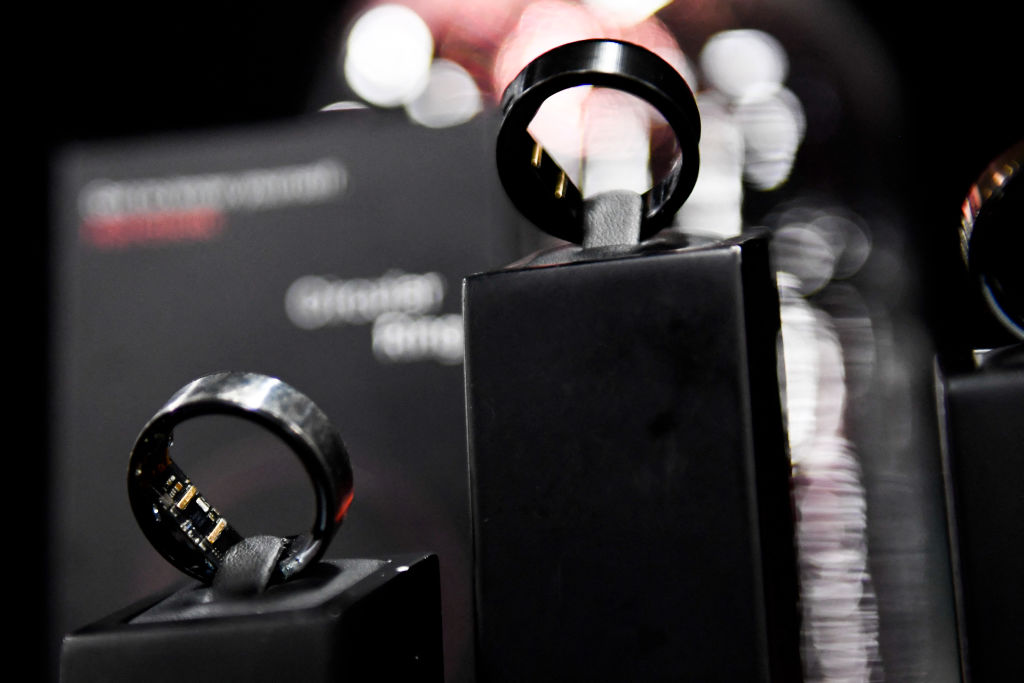
A smart ring priced at 2,499 yuan, said to improve balance and reduce the risk of falls, has faced skepticism in mainland China. On the evening of November 7, two related WeChat stores had no items available for sale.
Reports from media outlets indicate that the WeChat stores called “Jiwo Sharing Online Store” and “Jiwo Brainkey” no longer had products listed for sale that night.
The “Jiwo Sharing Online Store” is operated by Sharing Online (Hangzhou) Technology Co., Ltd., which previously sold the “Jiwo Kring01 Smart Ring” for 2,499 yuan. A staff member from the company stated that they were the national general distributor of this product.
According to reports from Taishan Finance, the manufacturer of the ring is Zheshangyitong (Zhejiang) Digital Security Technology Co., Ltd., which is affiliated with a state-owned listed company in Zhejiang Province.
Recently, this ring made its debut at the “Light of the Internet” expo held in Wuzhen, Zhejiang. At the event, participants demonstrated their balance by standing on one leg with their arms raised, while staff members provided hands-on pushes to showcase the difference in balance before and after wearing the ring.
Exhibitors claimed that the ring uses micro-magnetic materials to influence brain waves and nerve conduction, thereby enhancing balance as well as improving sleep quality. The primary target audience for this product is the elderly.
However, many netizens raised concerns about the demonstration’s validity, pointing out that the position of the push, the angle, and the stance of the participants could all influence the results. They questioned how the ring’s effectiveness in reducing fall risks could be conclusively proven based solely on the live demonstration.
Media professional Jiang Cheng expressed his doubts in a commentary for a major newspaper on November 7. He argued that using complex jargon does not validate the product’s effectiveness, and he stressed that the principles behind the technology and its real-world impact must undergo scientific scrutiny. He emphasized that the manufacturer should provide evidence of efficacy and respond to public concerns regarding the mode of demonstration.
Following the doubts concerning the product’s efficacy, a test report presented at the expo also drew attention. Reports stated that a document from the Beijing Zhongke Guangxi Science and Technology Research Institute was showcased at the event. Staff from the institute noted that this report was a research testing document meant only for corporate reference during product design, upgrades, and internal training. It should not be used for promotional purposes.
In response to the growing skepticism, Wu Hongfei, the legal representative of “Sharing Online,” announced that they would involve “academy-level scientists” to clarify the situation. He also mentioned that the company had additional reports related to the balance effects but had not provided those reports by the time the news was published.