
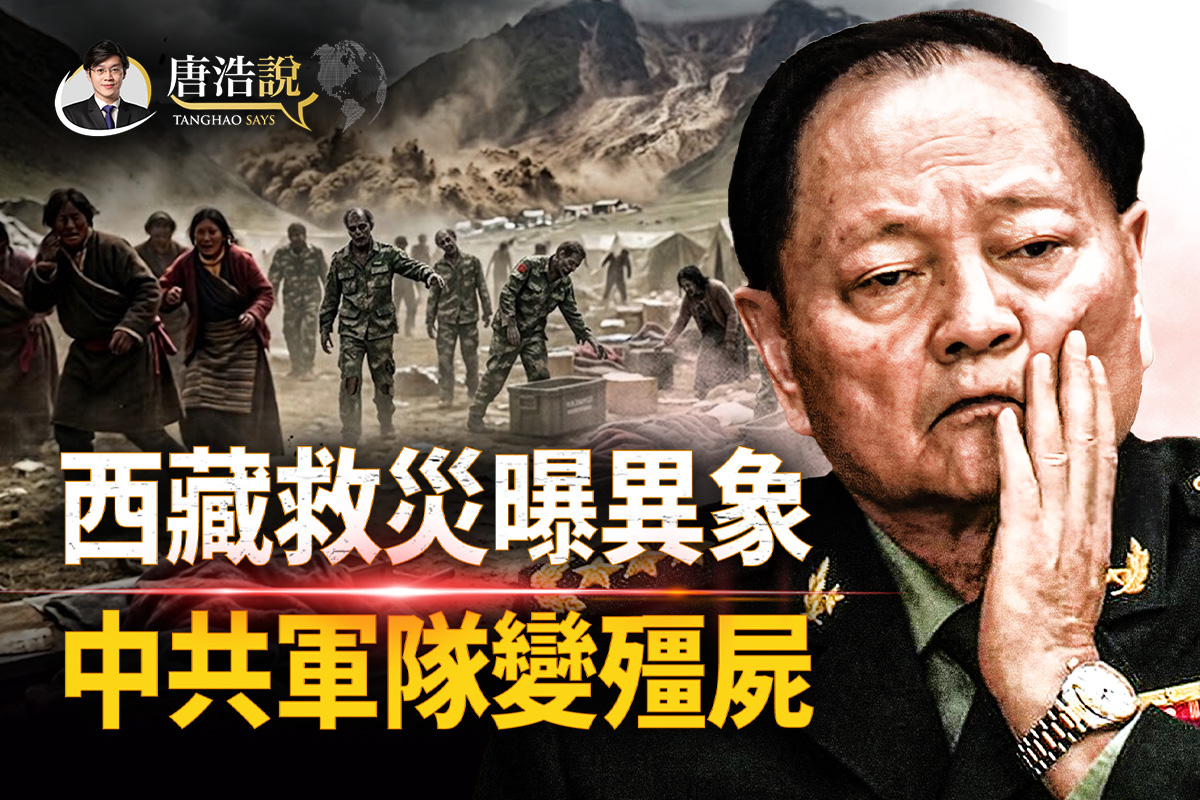
Today’s Focus: In the aftermath of the unprecedented outbreak of mountain floods in Tibet, the contrast between the rescue efforts of the Chinese Communist Party (CCP) and the Nepalese military is stark. While the Nepalese military has shown outstanding performance in relief operations, the CCP’s military response has been notably slow and limited in scale. What is happening within the CCP’s military? Is the CCP’s military approaching a state of “zombification”? And what does this mean for Xi Jinping’s potential aggression towards Taiwan? Amidst the ongoing crisis in Tibet, is there a possibility of another catastrophic mountain flood?
The stark differences in the rescue efforts of the CCP and the Nepalese military have raised questions about the effectiveness and efficiency of the CCP’s response to natural disasters. This has led to speculation about internal issues within the CCP’s military, prompting concerns about the potential implications for future geopolitical developments, including the situation in Taiwan.
Some observers have suggested that the sluggish and limited response from the CCP’s military in the face of the Tibet mountain floods may be indicative of deeper troubles within the organization. The notion of a “zombification” of the CCP’s military raises further questions about the leadership and decision-making processes within the party.
As the situation in Tibet remains precarious, with the threat of another mountain flood looming, the international community is closely watching how both the CCP and the Nepalese military handle the ongoing crisis. The outcome of their respective responses could have far-reaching implications for regional security and stability.
In light of these developments, concerns have been raised about Xi Jinping’s ambitions and potential actions towards Taiwan. The perceived weaknesses and challenges faced by the CCP’s military in the wake of the Tibet mountain floods have fueled speculation about the party’s future strategies and objectives, including the possibility of military aggression towards Taiwan.
Amidst the uncertainty and tensions surrounding the crisis in Tibet, the need for international cooperation and support has become increasingly urgent. The coordination of relief efforts and the sharing of resources between China, Nepal, and other relevant stakeholders will be crucial in addressing the immediate challenges and ensuring the long-term stability of the region.
In conclusion, the aftermath of the Tibet mountain floods has revealed significant disparities in the rescue efforts between the CCP and the Nepalese military. These differences have sparked debates and discussions about the state of the CCP’s military, the leadership’s approach to crisis management, and the potential implications for regional security. As the situation continues to unfold, all eyes are on how the parties involved navigate the crisis and work towards sustainable solutions for the affected communities.