
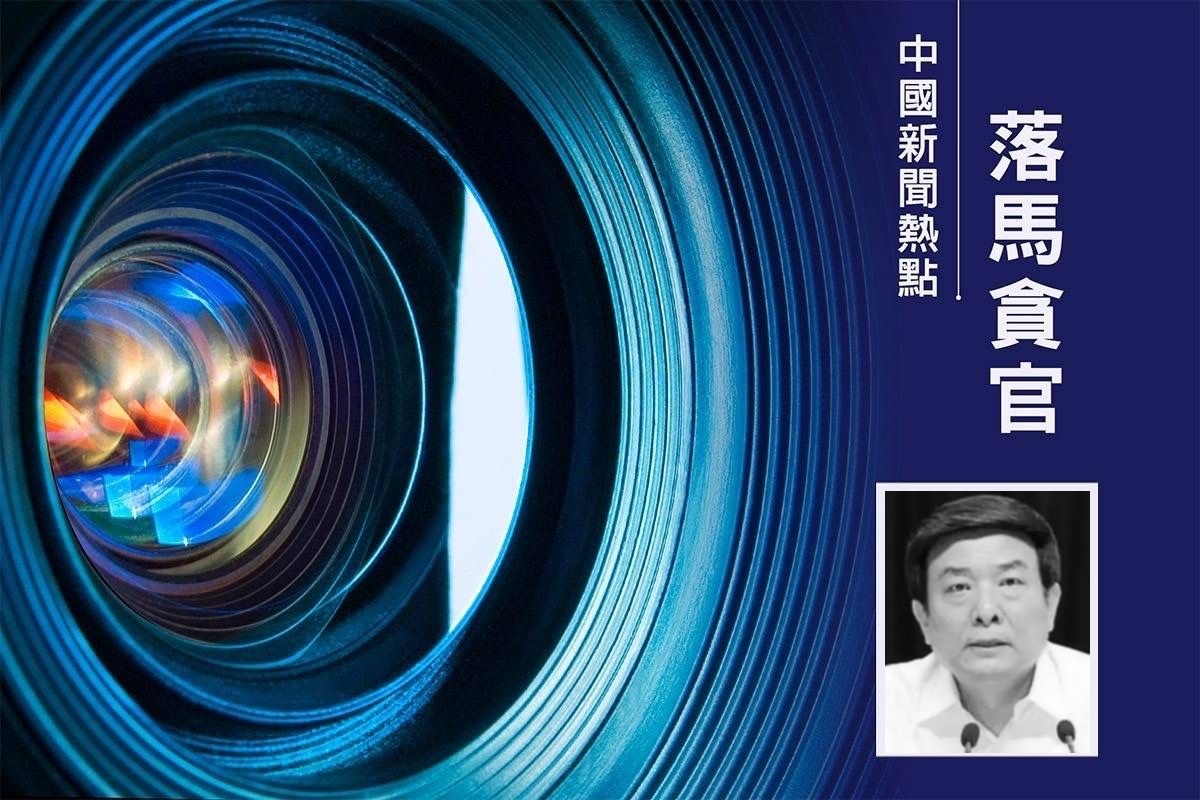
Former associate of Liu Yunshan in charge of China’s news publishing, radio, television and copyright review, Cai Fuchao, was caught in a corruption scandal after 8 years of retirement. An informed insider of the Chinese Communist Party’s propaganda system revealed that several months ago, the Central Commission for Discipline Inspection suddenly received multiple anonymous reports accusing Cai Fuchao of abusing his power within the radio and television system for personal gain, including allegations of political disloyalty and abuse of approval authority for propaganda. Reports suggest that this was a collective denunciation initiated within the radio and television system against Cai Fuchao.
On July 15, the Central Commission for Discipline Inspection announced that Cai Fuchao, former Deputy Minister of the Propaganda Department, former Party Secretary and Director of the National Radio and Television Administration, was undergoing review and investigation. Officially, specific reasons were not disclosed, nor was it clarified where the investigation originated. The propaganda high-ranking official who once determined which news could be reported and which programs could be broadcast is now being subjected to an opaque internal party review process.
A source within the CCP’s radio and television system, Mr. Li, disclosed to reporters that they were aware the day before the announcement that Cai Fuchao was under investigation by the Central Commission for Discipline Inspection. He said, “The day before, many people in the Radio and Television Administration had already heard the news, saying there would be a meeting to express their stance. Everyone is saying that Cai Fuchao is not just involved in economic corruption. He held the power of approval, making a lot of money in project funding usage and license issuance, and also arranged for his people to control procurement power, placing cronies in cultural publishing and CCTV. The next step is to reveal his double-faced nature, inadequate implementation of central directives, and disloyalty to the party. This person had no problems for the past 8 years, but once named for investigation, all the issues surfaced.”
On the same day, the CCP’s State Administration of Radio and Television Party Committee held a meeting to convey the decision of the Central Commission for Discipline Inspection and the State Supervision Commission to conduct disciplinary inspection against Cai Fuchao on charges of “serious violations of discipline and law.” It was not announced whether any of Cai Fuchao’s former associates, family members, or relevant company personnel were under investigation, nor was it made clear if the case involved publishing permits, film and television approvals, copyright transactions, equipment procurement, or cultural project funding.
Cai Fuchao, 75, is regarded by insiders in the CCP’s propaganda system as a former associate of Liu Yunshan. In 2011, he served as Deputy Minister of the Propaganda Department (at that time Liu Yunshan was the Minister of the Propaganda Department), and Director of the National Radio, Film, and Television Administration. After the 2013 merger of institutions, he became the first director of the National Radio, Film, and Television Administration and concurrently served as Director of the National Copyright Administration. In September 2016, Cai Fuchao stepped down from those positions, transferring to become Deputy Director of the Education, Science, Culture, Health, and Sports Committee of the National Committee of the Chinese People’s Political Consultative Conference. Liu Yunshan left the Politburo Standing Committee in October 2017, and Cai Fuchao retired in March of the following year.
Veteran media figure Mr. Cheng commented that during his tenure as Director of the National Radio, Film, and Television Administration and Director of the National Copyright Administration, Cai Fuchao wielded significant power. He stated, “Since 2013, when Cai Fuchao took over the National Radio, Film, and Television Administration, his term coincided with the peak activity of Korean dramas and Korean artists in the Chinese market. It is said that Cai Fuchao had used Korean TV shows importation and related approval authority to receive benefits. Many intermediaries were dissatisfied because they couldn’t get a big share, accusing Cai of taking the lion’s share while others got scraps. Many others also reported him for monopolizing benefits in various aspects.”
Records show that Cai Fuchao joined the “Beijing Daily” in 1979, rising from reporter to deputy editor-in-chief. In 1998, he joined the Beijing Municipal Party Committee’s Propaganda Department system, later overseeing Beijing’s external propaganda, communication, and cultural affairs. In 2013, following the merger of the General Administration of Press and Publication with the Radio and Television Administration, the National Radio, Film, and Television Administration was established, consolidating powers related to newspaper publishing, radio and television, film, online audio-visual content, and copyright approval into this institution.
Chinese scholar Qian Zhigang believes that high-ranking officials like Cai Fuchao usually go through scrutiny by the CCP Commission for Discipline Inspection and other departments before retiring to ensure a safe landing. Being revisited with old cases now indicates that so-called retirement audits and organizational investigations are often influenced by backstage forces. He said, “In 2016, when Cai Fuchao left for the Chinese People’s Political Consultative Conference, Liu Yunshan had not retired and was still in the Politburo Standing Committee. Even if problems were found during the retirement audit, they would have to say there were none. No one dares to say this case is unrelated to Liu Yunshan, it definitely won’t implicate Liu. This is also the rule for the CCP’s top echelons.”
Cai Fuchao had long been rooted in the Beijing propaganda system. An insider within the CCP’s propaganda system mentioned that Cai Fuchao received mentorship from Liu Yunshan during his tenure in Beijing’s propaganda department, leading to his subsequent entry into the central propaganda system. Liu Yunshan entered the Propaganda Department in 1993 and served as Minister from 2002 to 2012. Due to Liu Yunshan and some officials around him having backgrounds in Inner Mongolia, this faction was once called the “Mongolian Gang” by outsiders.