
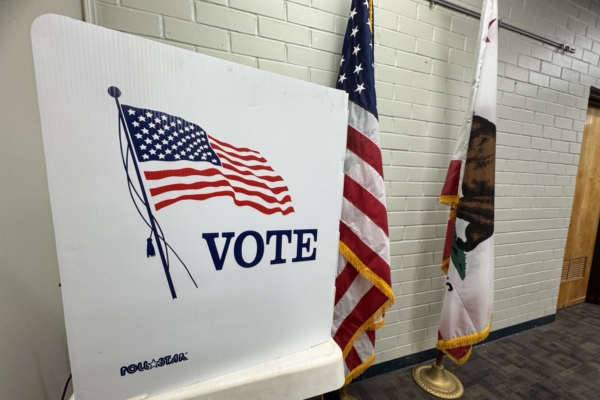
In the aftermath of the November 2026 elections, the California Democratic Party has gained significant ground in the state legislature, securing a commanding position that allows it to exercise substantial authority over decision-making processes.
Within the 40-seat Senate, the Democrats are projected to secure around 31 seats, which translates to approximately 77% of the total. In the larger 80-seat Assembly, the forecast indicates that the Democratic Party may claim 64 seats or more, representing an impressive majority of 80% or higher.
On the other hand, the Republican Party has experienced a decline in its representation in the Assembly, where it previously held 19 seats. According to the ballot counting results posted on the Secretary of State’s website as of 7:20 PM on November 4, the Republicans have now reduced their presence by three seats. Among the 16 competitive districts where Republican candidates are leading, five are characterized by a slim margin, making it uncertain whether they will maintain their lead until the official results are released on December 11. To date, California has counted approximately 8.2 million ballots, which constitutes around 35.2% of the total registered voters in the state.
In the 7th District, incumbent Josh Hoover (R) has garnered 47.5% of the votes but trails behind challenger Amy Slavensky (D). Slavensky, a former public school principal and the director of the Amador County Unified School District, has openly shared her personal history, having once relied on food stamps, the Medi-Cal program, and government housing assistance. Her campaign focuses on critical issues such as education, the cost of living, healthcare, and the stabilization of public institutions.
Meanwhile, in the 36th District, incumbent Jeff Gonzalez (R) has captured only 40.9% of the vote and is currently behind Ida Obeso-Martinez (D), the mayor of Imperial City in Imperial County. Obeso-Martinez advocates for measures that curb corporate price gouging, increase the stock of affordable housing, and attract high-paying job opportunities in a bid to lower living costs.
Furthermore, in the 47th District, incumbent Greg Wallis (R) has received 44% of the vote, trailing Leila Namvar (D), an Iranian immigrant, working mother, and labor union leader. Namvar aims to protect the rights of working families through advocacy against corporate greed, promoting affordable housing, fostering high-wage jobs, and enhancing access to quality education and healthcare services.
In the 58th District, incumbent Leticia Castillo (R) has secured just 39.4% of votes, falling behind Clarissa Cervantes (D), a Riverside City Council member with experience as chair of the Riverside County Transportation Commission’s Access Riverside NOW committee.
In addition, there are five districts where Republican candidates hold only a narrow lead, with some races decided by a mere 1,000 votes.
In the 33rd District, incumbent Alexandra Macedo (R) has received 51.9% of the vote, while challenger Hipolito Angel Cerros (D) trails with 48.1%.
In the 34th District, Charles Hughes (R) has garnered 52.8%, while Randall Putz (D) has received 47.2%.
In the 70th District, incumbent Tri Ta (R) leads with 50.5%, compared to Paula Swift (D), who has 49.5%.
In the 72nd District, Gracy Van Der Mark (R) holds a slight edge with 50.8% over Chris Kluwe (D), who has 49.2%.
Lastly, in the 74th District, incumbent Laurie Davies (R) is narrowly leading with 50.4% against Sergio Farias (D), who has 49.6%.
These developments in California’s legislative landscape may indicate a shift in priorities and policies moving forward, as the Democratic Party prepares to leverage its newfound legislative power.