
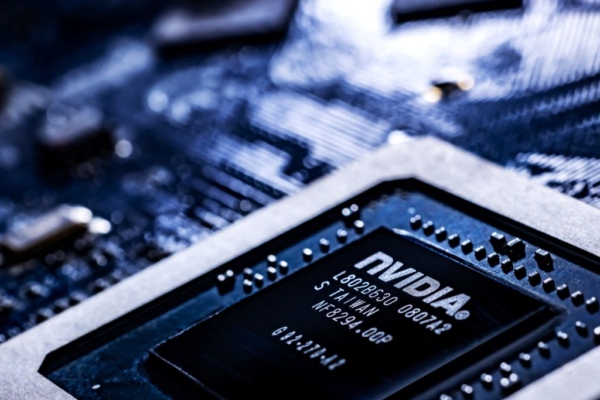
On Thursday, November 5th, reports emerged indicating that approximately 600,000 advanced chips manufactured by Nvidia are currently held up in Hong Kong, awaiting approval from Beijing before they can enter mainland China. This situation highlights the intense demand for top-tier chips among Chinese technology companies while also showcasing the Chinese authorities’ ongoing strategy of tightening control over domestic firms through regulatory approvals.
This is the first disclosure regarding the scale of H200 chip inventory that remains blocked, revealing Beijing’s reluctance to deepen its reliance on advanced technologies from the United States. In essence, the Chinese government’s stringent import controls have become the primary obstacle preventing these Nvidia chips from finding their way into the mainland market.
Several informed sources have indicated that while Beijing has allowed a limited number of chips to enter the country in recent months, the approvals granted have only pertained to a minuscule fraction of the total. Authorities have yet to authorize large-scale imports of such products into mainland China. One source noted that several major Chinese internet companies managed to secure around 10,000 H200 chips each over the past few months.
Additionally, a small quantity of chips has made its way into China via intermediaries and indirect channels, although specific quantities have not been disclosed.
While the H200 is not Nvidia’s most cutting-edge AI processor, it does possess capabilities that currently surpass those of domestic alternatives, making it invaluable for training AI models, especially when integrated with Nvidia’s software.
The situation with the Nvidia chips stuck in Hong Kong underscores the contradictions within the Chinese government’s stance. On one hand, there is a desire for the advanced computational abilities offered by Western chips, while on the other, there is a palpable reluctance to become overly dependent on American technology.
In May of this year, Nvidia’s CEO Jensen Huang stated that the company received permission from the U.S. government to sell H200 chips to China, but approval from Beijing is still pending.
Karson Elmgren, a researcher at the Artificial Intelligence Policy and Strategy Institute (IAPS), expressed his confusion regarding the actions of the Chinese authorities. He remarked on social media platform X that these cutting-edge chips are crucial in today’s technological industrial revolution era and questioned why China would be hesitant to import such essential materials.
Martin Chorzempa, a senior fellow at the Peterson Institute for International Economics, also commented, suggesting that Chinese authorities likely believe that supporting domestic chip designers and manufacturers could yield greater long-term benefits than the immediate enhancements in AI capabilities that might come from short-term chip imports.
Moreover, due to supply constraints, some Chinese buyers are resorting to intermediates and indirect channels to purchase H200 chips, subsequently driving up black market prices. One insider reported that as of the end of October, the price for an H200 server with eight cards in China exceeded 6 million yuan (approximately $900,000), which is about three times the price from a year ago. Furthermore, servers equipped with newer Blackwell chips from Nvidia, which are also subject to U.S. export controls, are reportedly priced even higher, exceeding 20 million yuan per unit.
Back in July, the technology media outlet The Information reported that Chinese officials had informed several companies, including Alibaba, ByteDance, and DeepSeek, that they could be permitted to purchase a limited number of H200 chips for AI model training. However, the total number of approved chips is expected to fall short of 200,000, as Beijing prefers these companies to prioritize the use of domestically produced processors for inference tasks.
As tensions rise and the situation remains uncertain, the impact on both the Chinese tech sector and the global chip market continues to evolve.