
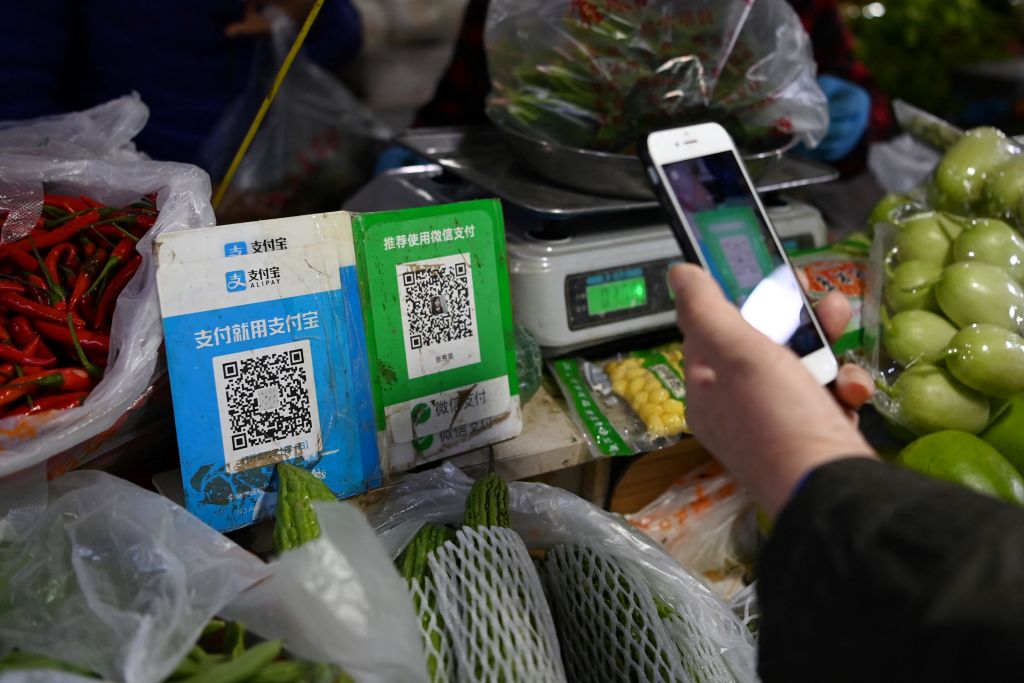
AI technology is advancing from simply answering questions to creating autonomous agents known as “AI Agents.” However, in China, this progress faces significant hurdles due to the closed digital ecosystems built by super applications like WeChat and Alipay.
This year, Meta, a leading tech giant in the U.S., launched “Muse,” a personalized AI agent that quickly garnered considerable attention. It soared to the top of various application stores across the United States. Recent data from the market intelligence agency Sensor Tower indicates that Muse has surpassed 10 million downloads within its first 40 days on the market, a rate of growth that even outpaces OpenAI’s ChatGPT.
Consumers are eager to explore this much-anticipated tool, touted as a potential “breakthrough in artificial intelligence.” Unlike traditional chatbots, Muse not only engages in conversation but also takes independent actions.
Operating within a dedicated cloud-based virtual environment, Muse is equipped with a standalone browser that allows it to automatically open websites, fill out forms, make purchases, schedule activities, and handle multi-step tasks on behalf of users.
Recent reports suggest that the demand for AI agents in the Chinese market is robust. According to a survey released by Worldpay in September, a remarkable 86% of Chinese consumers expressed their willingness to utilize AI agents for shopping, a figure significantly higher than the 45% among American respondents.
Despite the enthusiasm surrounding these advancements, many are puzzled as to why China has yet to develop similarly powerful consumer-grade AI tools.
An analysis published by Bloomberg on November 5, titled “China’s AI Agents Are Trapped,” posits that the consumer-grade AI agents in China are still ensnared by a closed digital ecosystem. The article argues that while China has no shortage of the necessary technology, the real barrier lies in the inability of the technology to operate freely across different platforms.
During the smartphone era, super applications like Tencent’s WeChat and Alibaba’s Alipay leveraged their vast user bases and extensive service ecosystems to create formidable market barriers. However, as we transition into the AI agent era, these once-advantageous closed systems may hinder innovation by becoming walls of limitation.
China’s digital services are dispersed across various super apps. If AI agents cannot operate freely across these platforms, they struggle to fulfill their potential. This challenge is not primarily rooted in technical constraints but rather in issues of platform permissions.
ByteDance, which developed the popular consumer-grade AI platform “Doubao,” has repeatedly showcased the capabilities of AI agents to navigate multiple service platforms through its mobile application. Nevertheless, relevant service platforms initially blocked these operations and have not since opened up the necessary permissions.
The pace of AI agent technology development has already surpassed the existing interoperability rules and standards between applications. For tech giants that possess hundreds of millions of users, relinquishing control over their platforms is a daunting prospect.
Breaking down barriers between platforms may require broader government regulatory reforms. In June of this year, Tencent announced collaborations with major smartphone manufacturers to draft controlled interoperability standards for AI agents, indicating that the industry is beginning to explore solutions to this issue.
Among the notable concerns is the degree of closure exhibited by WeChat. With approximately 1.4 billion users, WeChat has become an indispensable facet of daily life in China. From shopping to payments and handling routine affairs, many services are deeply integrated with WeChat or Alipay. This extensive ecosystem creates significant challenges for competitors aiming to disrupt its dominant market position.
However, the same barriers that protect WeChat’s market advantage may also confine its own development in an increasingly competitive landscape.
In the short term, maintaining certain restrictions on AI agents may not be entirely negative. Autonomous AI systems lacking adequate constraints could exhibit unpredictable behaviors, which is a concern for large tech companies and the Chinese government alike, both of which wish to retain control.
Furthermore, issues related to consumer trust in AI agents, legal accountability, and cybersecurity remain unresolved. The long-term implications of AI agents on the job market are also a subject worth examining. Since the onset of the pandemic, China has grappled with rising youth unemployment, and a further push towards automation could pose new challenges.
Compared to chatbots, AI agents consume a far greater number of tokens and computational resources. In China’s market, which is saturated with various free AI services, this economic calculus can prove daunting. The subscription model that thrives in the U.S. has historically faced difficulties gaining traction among Chinese software users.
Thus, it is reasonable for super apps to exercise caution when integrating AI agent functionalities. However, if these restrictions become excessive, the protective measures originally intended to foster growth might ultimately evolve into obstacles to innovation.