
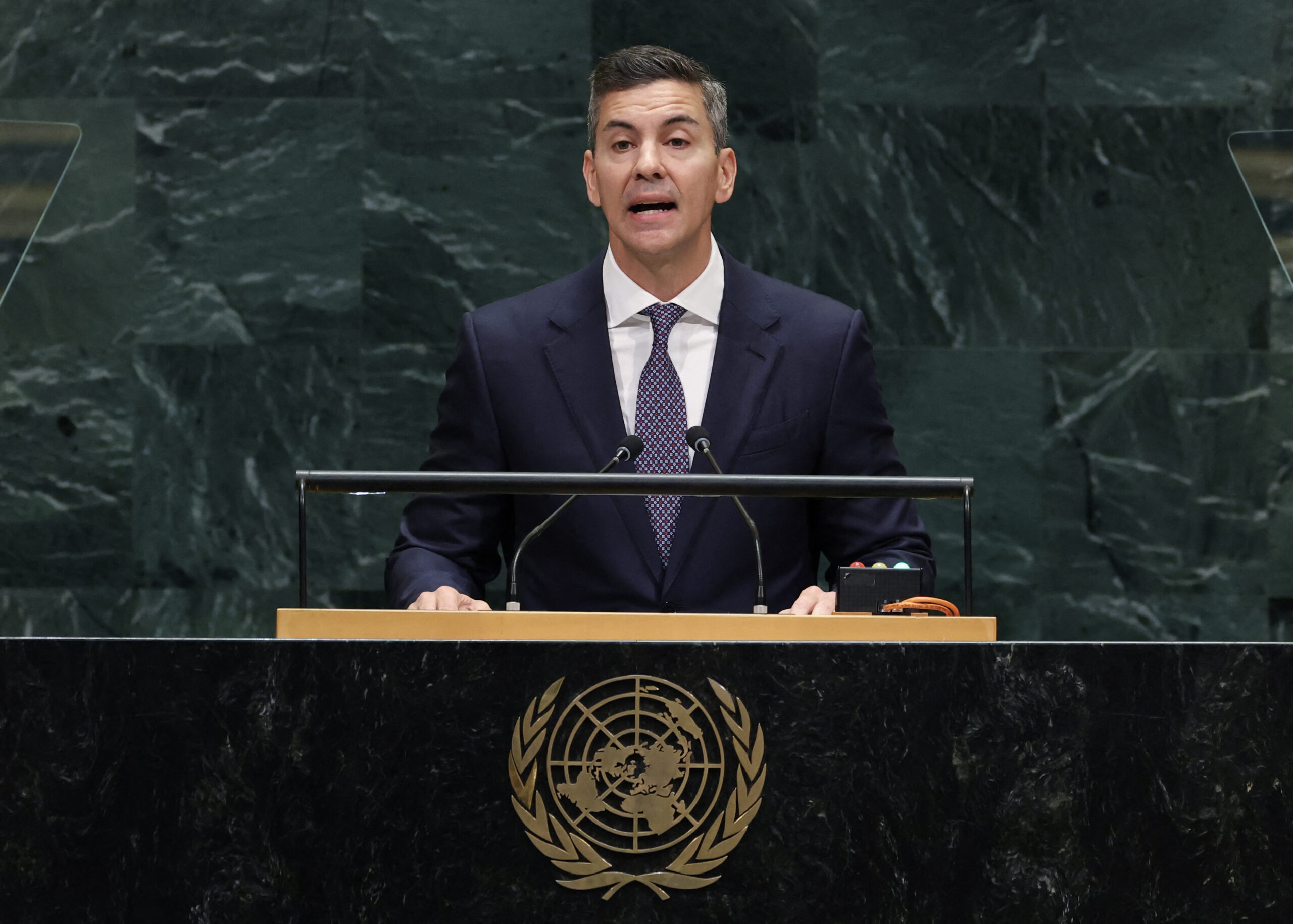
On November 6, 2026, prosecutors in Paraguay announced the issuance of arrest warrants for the recently impeached President Santiago Peña and former central bank governor Carlos Carvallo. This action is part of an investigation into their alleged misconduct and other crimes related to the collapse of Ueno Bank.
The arrest warrants were issued shortly after the Paraguayan Senate voted to impeach Peña, which was reported by the Associated Press. Following this vote, the prosecution sent a letter to the commander of the national police requesting the execution of the arrest orders.
As stipulated in the arrest warrants, Peña will be placed under house arrest until he is brought before the Prosecutor’s Anti-Corruption and Economic Crimes Division for questioning. Meanwhile, Carvallo is set to be detained at a police facility.
Unlike in the US and UK legal systems, where arrest warrants must be issued by a judge, prosecutors in Paraguay have the authority to release arrest orders (Orden de detención fiscal) early in an investigation and can direct the police to detain and interrogate suspects.
On the same day, a unanimous vote by 44 senators resulted in Peña’s impeachment, citing his alleged negligence during his term in office. This vote paves the way for Vice President Pedro Alliana to take on the presidential role.
Just three days prior, regulatory authorities had shut down Ueno Bank. Legislators accused Peña of misusing political influence to channel public funds, amounting to hundreds of millions of dollars, into Ueno Bank, while regulatory bodies overlooked the bank’s high-risk internal lending practices.
Peña has adamantly denied any wrongdoing related to these allegations.
On November 5, Peña submitted his resignation, which the Congress rejected. His attorney argued that legislators should approve his resignation rather than continue with the impeachment proceedings. Opposition legislators, however, insisted on proceeding with the impeachment to prevent Peña from leaving office with immunity.
Following his impeachment, Peña will no longer have the privilege of a lifetime senate seat – a right granted by the Paraguayan constitution to elected former presidents. Consequently, he also loses the accompanying parliamentary immunity.
Criminal investigations have also been launched against Peña, Alliana, and both current and former officials of the central bank and pension fund management agency.
Opposition senator Yolanda Paredes stated, “He must step down, but not to go home; he should be sent to a maximum-security prison.”
Ueno Bank was sealed by regulators in the early hours of November 3, leaving nearly three million customers unable to access their deposits.
According to The Washington Post, the bank’s customer base represents approximately 60% of Paraguay’s adult population. The Paraguayan central bank has indicated that Ueno Bank’s capital fell well below legal requirements, rendering it unable to absorb its losses.
Reports suggest that this digital bank had surged in prominence over several years, becoming the fifth largest in Paraguay in terms of deposit size, having attracted more than $800 million in public funds.
The impeachment charges against the president highlighted that Peña owned shares in the bank’s holding company (which he sold under pressure last year) and appointed former executive Carvallo to lead the central bank.
Lawmakers have also accused him of permitting the national pension fund to deposit $355 million, exceeding the legal limit.
The Washington Post points out that Peña continued to hold shares in the bank’s holding company until 2025; however, he has denied any direct association with the bank.
The prosecution has charged 27 individuals, including the bank’s major shareholder, Miguel Vázquez, with fraud and attempted fraud, while six bank directors remain in pre-trial detention.
Authorities have confiscated nine luxury cars, a yacht, and several small planes linked to Vázquez’s residence.
Thousands of Paraguayans have taken to the streets multiple times this week, demanding the return of their frozen deposits and accountability for those responsible. Protesters have clashed with police, who used rubber bullets and pepper spray to disperse them.
On Thursday, the first round of depositors, whose amounts were under 10 million Paraguayan Guaraní (approximately $1,600), began retrieving their funds.
The Paraguayan central bank has stated that the insurance limit for deposits is about $37,000, which is sufficient to cover nearly all customers, emphasizing that the bank’s collapse is an isolated incident and that the overall financial system remains secure.