
Recent reports have highlighted a severe weather crisis in the southwestern United States, characterized by successive rounds of intense storms and unprecedented rainfall, resulting in drastic rises in river levels and widespread flooding. This calamity has deeply affected the lives of tens of thousands of residents and inflicted significant damage to local natural heritage and landscapes.
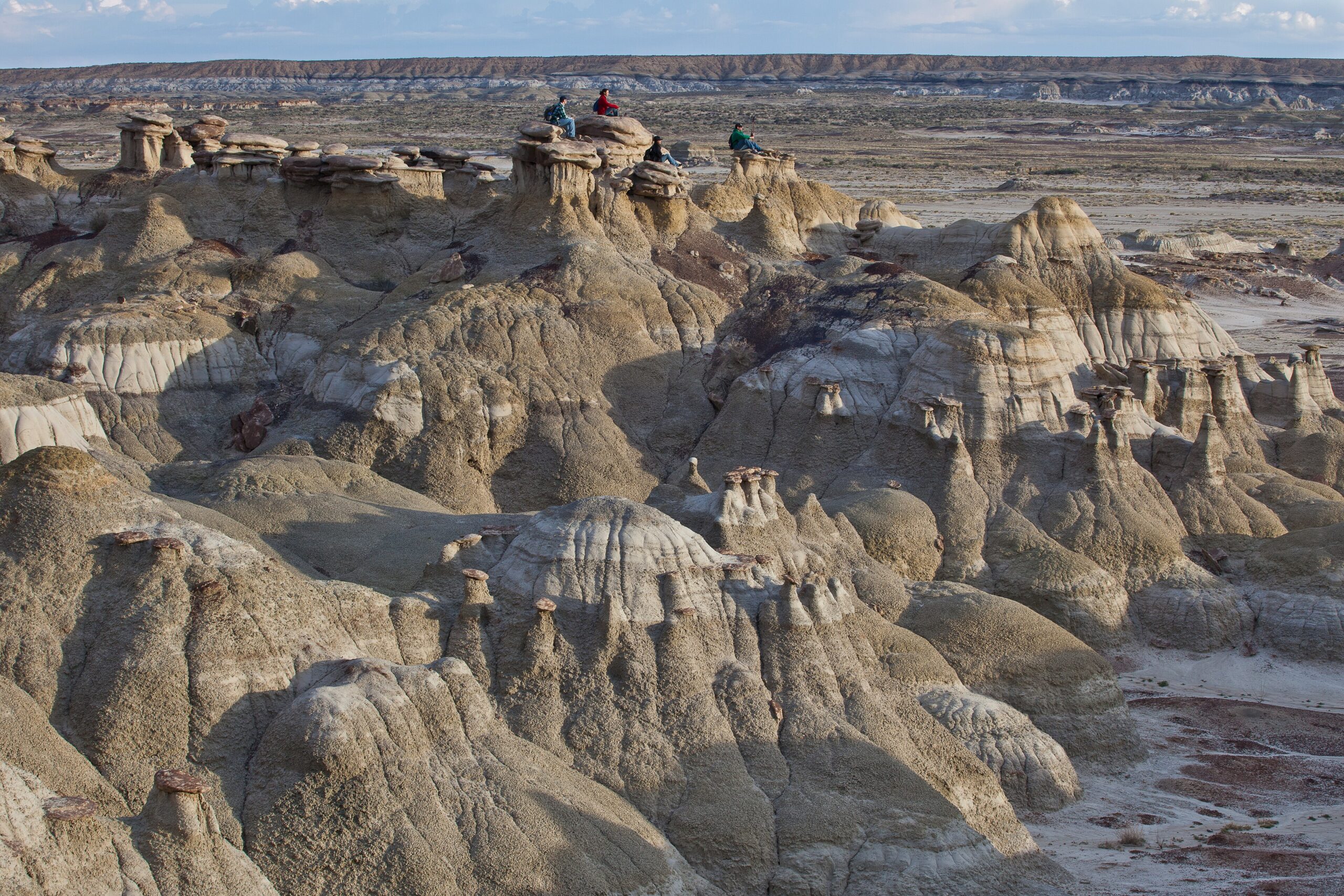
According to reports, in the northwestern part of New Mexico near the Ah-Shi-Sle-Pah Wilderness, two renowned desert landmarks—known as the “Alien Throne” (Tsé Bináká Níyol in Navajo) and the “King of Wings”—have tragically collapsed over the course of a few weeks. These iconic formations, meticulously sculpted by millennia of erosion, have now officially entered the annals of history.
Experts estimate that between late September and early October, an influx of tropical moisture inundated the area, leading to more than 200 trillion gallons of rain—equivalent to approximately 757 trillion liters—falling across the Four Corners region, which encompasses New Mexico, Colorado, Utah, and Arizona. The heavy rains struck land that had already become saturated due to an exceptionally wet autumn, causing normally dry washes to overflow. This resulted in the destruction of numerous homes and roads. While floodwaters are now gradually receding and cleanup efforts have begun, officials predict total economic losses could reach hundreds of millions of dollars.
Prior to the recent storms, social media had already begun to circulate images depicting the collapse of the “King of Wings.” On October 30, Kialo Winters, a tour guide and founder of Navajo Tours USA, visited the area and was shocked to discover that the famed “Alien Throne” had also been reduced to rubble.
In an interview, Winters expressed his sorrow, stating, “This is so unreal… countless thoughts flashed through my mind.”
These majestic formations were originally supported by heavy stone slabs balanced precariously on narrow clay bases, creating a striking illusion of defying gravity. A visitor, Alan Studt, reminisced about his past visits and noted that recent photographs revealed new cavities and cracks in the bases of both the Throne and the King of Wings. The obvious signs of weathering indicated that these natural structures had long been under siege before being utterly destroyed by the very forces of nature that originally shaped them.
Winters emphasized the cultural significance of these rocks to the local Native American communities. They are not merely tourist attractions, but have served as vital landmarks guiding ancestors along trade routes for thousands of years. These formations also carry stories passed down through generations. Even though the legacy of these landmarks will survive through photographs, illustrations, and personal memories, Winters is calling on the public to allow the site to “rest,” urging visitors not to climb on the wreckage or take away any fragments.
The loss of the “Alien Throne” and “King of Wings” serves not only as a reminder of the power of nature but also highlights the deep cultural connections that indigenous communities have with these formations. As cleanup efforts continue, there is a collective hope that the legacy of these storied landmarks will be remembered and honored, even as they become part of the past.