
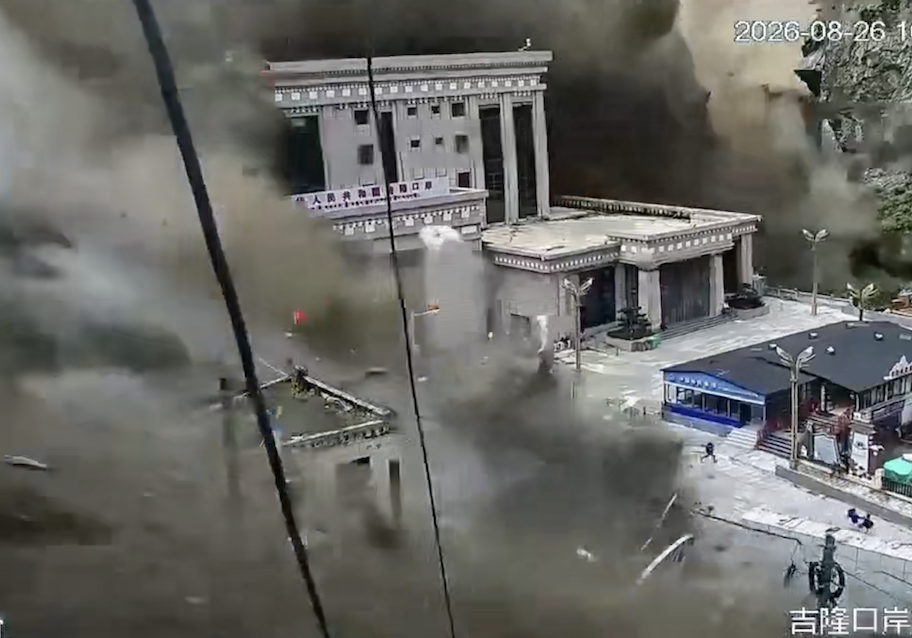
On September 5, 2026, after a serious mudslide disaster occurred at the Gyirong Port in Tibet along the China-Nepal border on August 26, the U.S. Embassy in China publicly requested Beijing to provide information on the victims and related rescue efforts, including American citizens. Chinese state media responded by accusing the U.S. of creating difficulties. However, the Nepalese immigration department had already accurately reconstructed entry and exit data from electronic records. China had also long achieved a nationwide network for querying entry and exit records, casting doubt on the Chinese authorities’ statements.
The mudslide disaster in the border area between Nepal and Tibet, China, has been ongoing for over 10 days, with the latest reports from China confirming the death toll has risen to 31. According to Xinhua News Agency, as of 6 p.m. on September 4, the mudslide disaster at Gyirong in Tibet had claimed 31 lives and left 531 missing. Nepalese authorities reported 1,259 deaths and 5,083 missing persons. On September 4, Nepalese rescue teams rescued two trapped workers from a hydropower station tunnel buried in rubble.
The official Chinese report had mentioned 261 missing foreign nationals from 23 countries, including 18 American citizens. However, China had not yet released any specific lists of victims or missing persons.
In contrast to the opaque approach taken by China, Nepalese authorities adopted a transparent information dissemination strategy following the disaster. The Nepalese Ministry of Tourism had compiled and released a list of 583 missing foreign citizens, including tourists and climbers from 38 countries, such as the U.S. Some families of missing foreign nationals had provided passport information for cross-referencing with the list through paper or email submissions to Nepalese authorities or their embassies.
On September 3, the U.S. Embassy in Beijing issued a statement on its official website, stating that following the disaster, they had been continuously requesting information from China regarding search and rescue operations, recovery of victims’ bodies, and identity confirmation.
The U.S. Embassy also requested China to provide more detailed information on the entry and exit records at Gyirong Port to clarify the situation of American citizens in the affected area and facilitate flexible departure arrangements for U.S. travelers currently in the Tibet Autonomous Region.
The embassy stated that communication was ongoing with travel agencies, Chinese authorities, and other countries with nationals in the region, and once verified information about American citizens was obtained, it would be promptly shared with affected American families.
An article from China’s Global Times, a publication under the People’s Daily, responded on the evening of September 3, criticizing the U.S. Embassy for publicly demanding more information from China beyond the scope of normal consular protection measures, questioning the intentions behind the requests.
The article mentioned the rapid and unprecedented destruction caused by the disaster, suggesting that some entry and exit records may have been lost due to extensive infrastructure damage and registration system disruptions. The public request for detailed records was viewed as challenging and demanding.
It was highlighted that the U.S. had sufficient diplomatic channels to convey their concerns to China. However, the Chinese National Immigration Administration had long provided nationwide electronic queries for entry and exit records; as of July this year, Gyirong Port had been promoting “big data analysis” and “smart ports.”
According to reports by the Central News Agency, the Chinese National Immigration Administration has long provided nationwide electronic queries for entry and exit records. Chinese citizens could directly access and download their electronic entry and exit records using the “Immigration Office 12367” service.
During a program on NTD Television, the host stated that the claims made by Chinese state media about infrastructure damage and missing personnel registration logs in the disaster area lacked credibility. Given that the Chinese Immigration Administration had long provided electronic queries for national entry and exit records, with information stored in the cloud, it should have been easy to verify data, and the Chinese government was likely reluctant to disclose foreign casualties, revealing the true death toll on their side.
The host believed that China’s reluctance to provide foreign casualties’ data was revealing of their actual death toll. While the Chinese government showed disregard for human life, foreign governments would demand accountability.
On the other side of the border, Nepal’s approach stood in stark contrast to China’s official stance. The Nepalese Immigration Department was able to reconstruct events accurately using electronic records: on the morning of the disaster, 89 people went through departure procedures heading to Tibet, while four people registered their entry into Nepal. The time of the last transaction was even pinpointed to 08:35:03.
Discussions on overseas platforms expressed skepticism towards the Chinese response article, with comments emphasizing that the data was stored in Beijing’s National Immigration Administration data center, making it difficult to believe that the records were washed away or inaccessible, fueling suspicions of concealing actual figures.
Furthermore, as customary, Chinese authorities had heavily censored information following the disaster, with reports of an official “propaganda directive” circulating online. The official crackdown on “rumors” about the disaster fueled controversy.
The Guardian reported that while Chinese state media had dispatched journalists to the Tibetan disaster area, coverage focused mainly on rescue efforts rather than the extent of the damage in the affected area.
Foreign journalists faced restrictions in accessing Tibet, with local residents potentially facing penalties for unauthorized contact with foreign media, making it difficult for independent verification of casualties on the Tibetan side.
In contrast, international media had been able to enter the disaster area in Nepal, interviewing survivors, relatives of the missing, and rescue teams, capturing helicopter transfers of displaced persons and the search for missing individuals at the rescue site.