
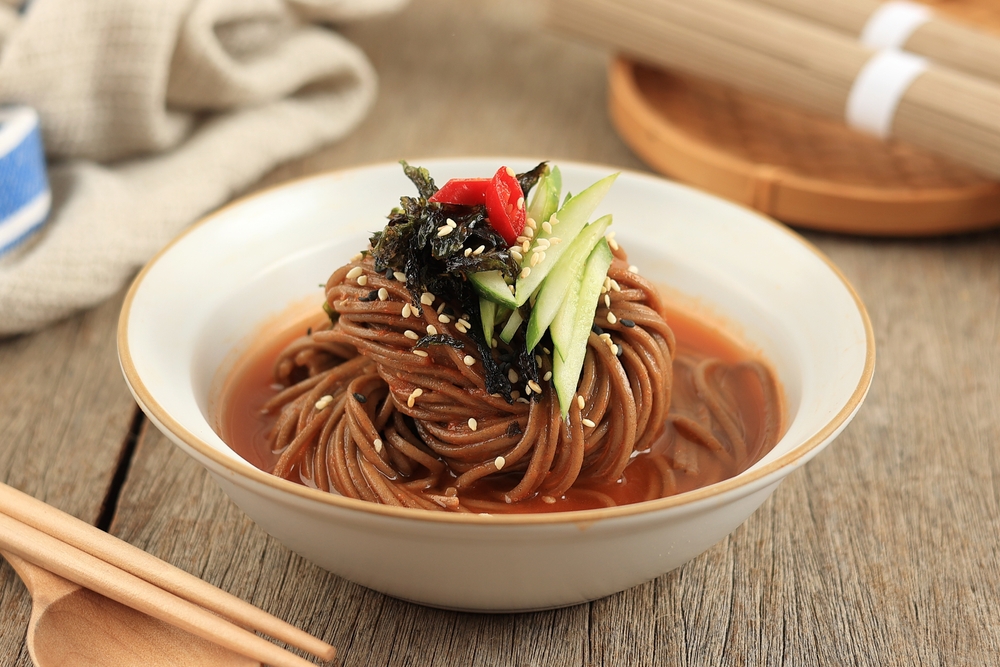
On November 2nd, during lunchtime, citizens gathered in long lines outside two “zero-cost noodle shops” located in Jiangning District, Nanjing. The proprietors stated that their aim was to provide free meals as a charitable endeavor. However, a nearby business owner, who has been operating an affordable fried noodle shop for many years, expressed concern that since the “zero-cost noodle shops” opened, his business has diminished substantially, prompting him to consider not renewing his lease once it expires. This situation has sparked mixed reactions among the public.
According to reports, the two “zero-cost noodle shops” in Nanjing are situated in the Yinxiang area of Jiangning District and the Daishan area of Yuhua District. Mr. Zhang, the operator, explained that his motivation for opening the shop was to do more charitable work. He emphasized that there are no specific dining conditions; anyone willing to come in can enjoy free noodles.
The Yinxiang location opened in October, serving hundreds of vegetarian noodle dishes per meal. Customers are not restricted based on age or economic status; rather, the main requirements are to line up, maintain hygiene, and avoid wasting food. Diners include local residents, elderly individuals, sanitation workers, and delivery riders.
One resident, Mr. Li, who lives alone, noted that he has visited the shop five or six times. He finds it convenient, eliminating the hassle of cooking alone at home, and he plans to volunteer to help with meal distribution.
Another diner, Mr. Pan, who is currently unemployed and lacks a stable residence, mentioned that he learned about the free meals the day before. After queuing for about ten minutes, he enjoyed a bowl of noodles and returned the next day for another meal.
Mr. Zhang shared that he previously ran a buffet, where food waste was common due to the wide variety of dishes available. Consequently, he switched to serving simpler vegetarian noodles, aiming to control costs while decreasing waste and providing meals to more people.
When asked about future plans to charge for meals, Mr. Zhang firmly stated that he has no plans to introduce fees and has not established a profit model.
The Daishan shop has been in operation for about a week, serving over 1,000 diners daily. Mr. Zhang initially intended to open ten shops that would serve 5,000 bowls of noodles each day, but he is now considering adding an additional location and adjusting based on actual demand.
The emergence of free noodle shops has elicited various responses from nearby food businesses. Some merchants reported on November 5th that their customer traffic had not been impacted, largely due to the differing nature of their offerings.
However, a owner, Mr. Yang, who has run an affordable dining establishment for approximately 15 years, expressed concern that his main clientele consists of local workers. To cater to the spending ability of laborers, he has kept his prices low, with profits marginal after deducting costs. Since the introduction of the free noodle shop, his own customer base has decreased, with no patrons during lunch hours at times. Where he once had several employees, he now works alone and is reconsidering whether to renew his lease when it expires.
In contrast, an employee from another shop specializing in fried noodles stated that they have not yet noticed any significant impact. She believes there are enough snacks and eateries nearby that customers choose based on their timing and preferences; furthermore, some older diners, despite knowing about the free vegetarian noodles, are not accustomed to that specific taste, and busy workers may not wish to wait in line.
Opinions among netizens regarding the “zero-cost noodle shops” are divided. Supporters argue that by not imposing restrictions based on identity or economic factors, the initiative allows individuals in need to avoid the embarrassment of having to prove their financial hardship. Critics, however, assert that public resources should prioritize those who are truly struggling, ensuring that assistance is more targeted.
Some online commenters voiced concerns that the free meals could divert customers away from nearby food establishments, placing additional pressure on small businesses that rely on low profit margins for survival. Others believe that the free vegetarian noodles cater to a different clientele and cuisine, making it unfair to attribute all variations in business solely to the presence of these noodle shops.
A commentary piece in a local newspaper pointed out that a business model offering free meals without discrimination could potentially breach the lines of fair competition. Such operations, which are priced significantly below cost, could attract all local diners away from similar establishments in a short time. Many small-scale businesses would struggle to compete on price, making it challenging for them to stay in business or leading to their forced closure. If business owners leave after a few months, the disruption caused to the local dining ecosystem could take a long time to recover from, as the losses incurred by nearby tenants and retailers, alongside the reduction in consumer dining choices, would ultimately be experienced by the entire market within the region.
The article emphasizes that while good intentions in charity are commendable, they should not come at the cost of disrupting a fair business environment. To maintain a balance between charitable warmth and market vitality, it would be better to ensure and optimize service quality at reasonable prices rather than providing free services that may not be sustainable in the long run.