
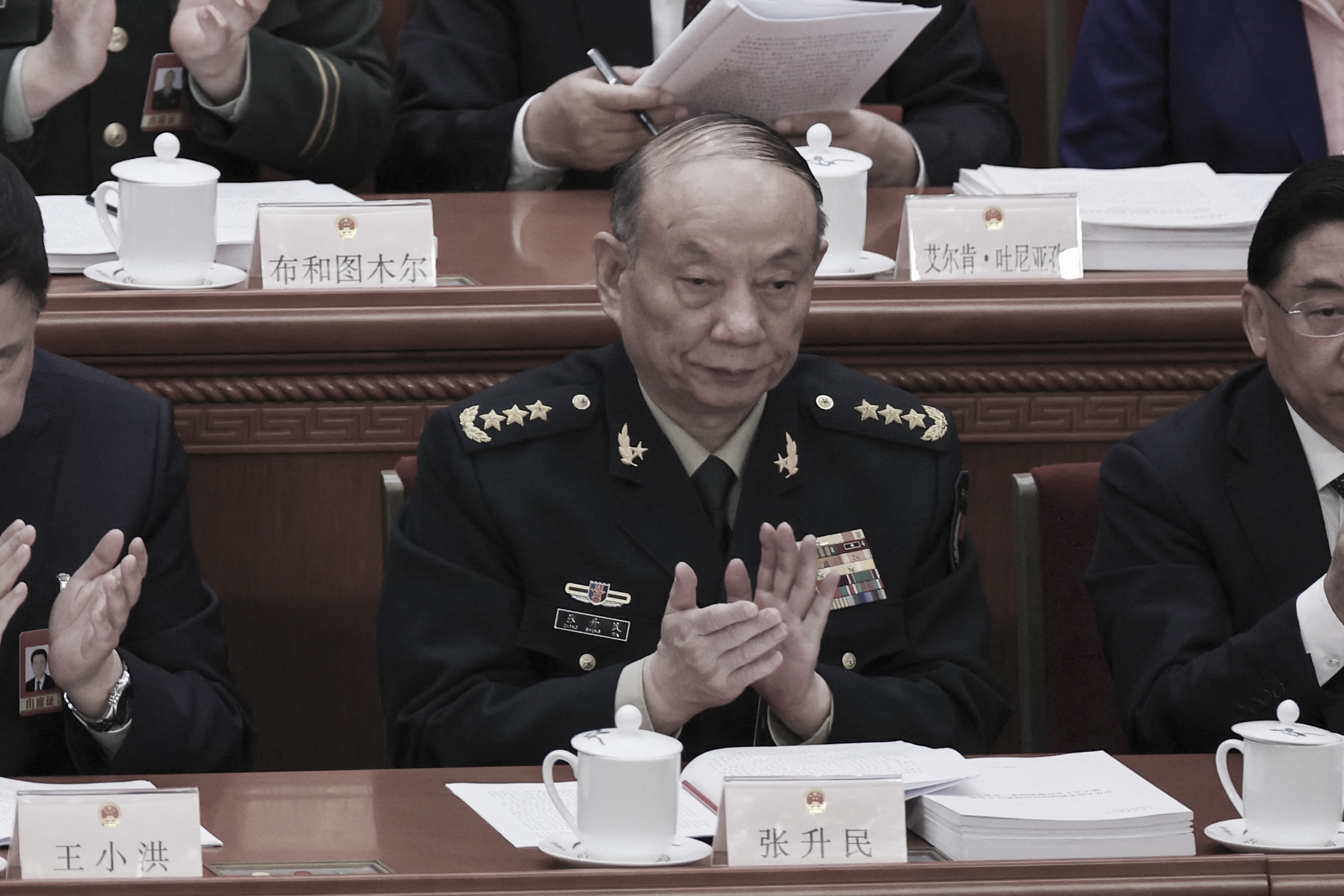
Following the conclusion of the Chinese Communist Party’s 20th Central Committee’s fifth plenary session, the People’s Liberation Army Daily has been publishing a series of front-page commentaries. These articles delve into topics such as anti-corruption, party leadership over the military, and a recent piece claims to focus on the urgent issue of ensuring “absolute party leadership over the armed forces.”
Analysts interpret this development as a reaffirmation of the ongoing power struggle within the Central Military Commission, particularly highlighting the rivalry between General Zhang Youxia and President Xi Jinping. The situation remains unresolved, with concerns about the potential erosion of military power under Zhang Shengmin.
On November 5th, the PLA Daily published its sixth commentary on the front page, discussing what it describes as “significant political tasks for the entire party in the current and forthcoming period.” The article stresses the need to “address prominent issues” related to maintaining the party’s absolute leadership over the military, enhancing combat readiness, and implementing political responsibilities within the party.
Another article from November 4th reiterated the stance that “there cannot be any individuals within the military who harbor doubts about the party.” A prior piece from November 3rd emphasized the unwavering commitment to strengthening party leadership over the armed forces.
The fifth plenary session, which lasted four days and concluded on October 29th, officially confirmed the removal of Zhang Youxia and Liu Zhenli, the deputy chairman of the Central Military Commission, from their party positions due to previous actions taken by the Politburo.
The Ministry of National Defense reported on January 24th that both Zhang Youxia and Liu Zhenli were under investigation. The PLA Daily subsequently published an editorial criticizing both individuals for “seriously undermining the responsibility system of the chairman of the military committee.”
On September 21st, state media announced that Zhang and Liu were implicated in “group behavior” where political issues intertwined with economic ones, with a strong emphasis on corruption. In a follow-up article on September 23rd, the PLA Daily reiterated earlier strong rhetoric and claimed that the investigations into Zhang and Liu “eliminated major political risks.” This perspective has led many to view the incidents as indicative of a power struggle akin to a political coup.
Senior political commentator Chen Pokong, currently based in the United States, previously remarked that the third plenary session of the 20th Communist Party Congress over two years ago established a balance of power, where generals Zhang Youxia and Liu Zhenli posed a counterweight to Xi Jinping. By removing Zhang and Liu through what many perceive as coup-like maneuvers, Xi has addressed potential threats to his power.
Following the fifth plenary session, military expert Li Linyi pointed out that the PLA Daily’s renewed focus on the necessity for “absolute party leadership over the military” serves to further validate rumors regarding Zhang Youxia’s attempts to sideline Xi Jinping. The ongoing discussions suggest that the issue of maintaining this leadership remains unresolved, as Xi continues to harbor concerns about the potential loss of military authority, particularly in light of the rising influence of Zhang Shengmin and possible future threats from other military leaders.
During the fifth plenary session, the party elected Zhang Shengmin to the Central Politburo, suggesting a move toward consolidating power within the military.
However, Chen Pokong expressed skepticism regarding Zhang Shengmin’s capacity to influence decision-making significantly. Should Zhang attempt to assert his independence, he may provoke suspicion from Xi Jinping; conversely, if he chooses to act cautiously, he risks ineffectively impacting military policy.
This evolving narrative within China’s military leadership underscores the precarious balance of power at the highest levels and the serious implications it holds for the future of governance in China. As the leadership dynamics within the party and the military unfold, many will be closely monitoring how these developments may affect China’s domestic and foreign policy decisions going forward.