
Recently, a wave of unprecedented threats to the safety of citizens in the United States and Europe has emerged, leading to widespread concern among the public. This series of events began with several high-profile cyberattacks on the refrigeration systems of major retail chains across various countries. It escalated with a string of bomb threats and aircraft hijacking alerts involving numerous commercial flights. Such incidents are increasingly becoming a part of the daily landscape in Europe, causing considerable unease among residents.
At present, there is no direct evidence linking these incidents together or suggesting they are orchestrated by a single entity. However, many observers believe these events mark a shift in discussions around security in Europe, focusing now on the likelihood of larger-scale hybrid warfare.
According to reports, specifically from the UK’s Guardian newspaper, a troubling trend began in early August when multiple military commissaries at several U.S. bases experienced failures in their refrigeration systems. This prompted an investigation by the Pentagon into potential cyberattacks.
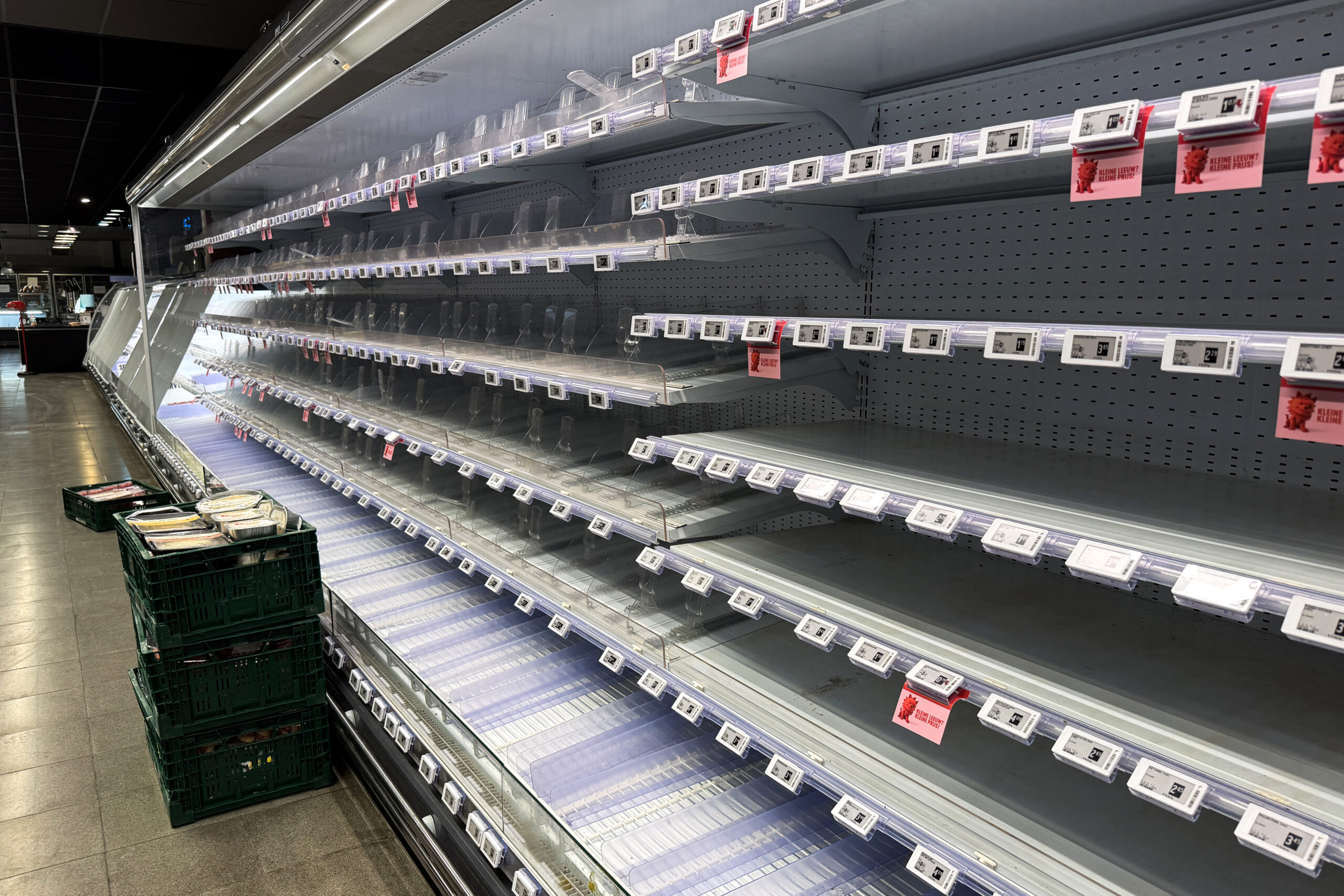
By October 12, hackers had compromised the management software of refrigeration units at various supermarkets across France, leading to a dangerous spike in temperatures. Some stores experienced temperature increases to as high as 50 degrees Celsius, resulting in the spoiling of vast quantities of food. French authorities reported that some supermarkets even faced fire incidents due to the equipment failure.
Not long after, on November 2, hackers launched a coordinated attack on supermarket refrigeration systems in six European countries. The affected retailers included Carrefour, Intermarché, and IKEA in Belgium, Coop and ICA in Sweden, Delhaize in Luxembourg, Kesko in Finland, SuperValu in Ireland, and several grocery stores in Estonia.
The Intermarché operating group, Les Mousquetaires, reported that approximately 150 stores were attacked, with refrigeration units operating at dangerously high temperatures for up to six hours. The company estimates that the financial losses could reach into the millions of euros.
This wave of cyberattacks has swept through Europe, affecting over 100 stores and businesses across numerous countries. Even smaller operations like butcher shops and grocery stores reported similar failures, highlighting the widespread impact of these disturbances.
While no evidence currently connects the equipment failures at U.S. military bases to the attacks on European supermarkets, the similarities in the targeted refrigeration systems have raised alarms regarding vulnerabilities in such essential equipment.
Experts indicate that these attacks are not merely about data breaches or temporary outages of online services. Rather, hackers have successfully infiltrated and disrupted the operational systems of physical devices, directly causing loss to businesses and consumers alike.
There is growing concern among experts that commercial refrigeration equipment like freezers might become new focal points for cyberattacks. Moreover, it has been noted that it is not just refrigeration units at risk; other appliances such as ovens, washing machines, dishwashers, and central heating systems, which are connected to the internet for remote operation, could also be susceptible to similar attacks.
In the UK, so far, the country has managed to avoid the brunt of these cyber threats. Cybersecurity firm Forescout reported that countries such as France, Italy, Greece, and Belgium predominantly use interconnected refrigeration systems. Daniel dos Santos, the firm’s vice president of research, noted that out of the ten highest-risk nations, none are from the UK, indicating that while the country does face risks, they are not particularly elevated.
As of now, the UK has not experienced any similar attacks. Graham Wynn, deputy director of regulatory affairs at the British Retail Consortium, stated that UK retailers are collaborating with the National Cyber Security Centre (NCSC) to ensure that their refrigeration systems can withstand potential cyber threats.
A spokesperson for the NCSC remarked that they are working along with international partners and the industry to understand the specifics surrounding these attack incidents.
The Guardian further reports that at this time, no hacker groups have claimed responsibility for such attacks, nor have any ransomware gangs exploited these events to extort money from businesses. Given the rapid spoilage of food due to rising temperatures, it may be exceedingly difficult for supermarkets to recover losses even if a ransom is paid.
Cybersecurity expert Rafe Pilling from Sophos suggests that the attacks could either be the work of state-sponsored hacker groups signaling threats or independent hackers; however, the former seems more probable.
Pilling pointed out that the aim of such cyberattacks is to cause significant food waste, thereby instilling a sense of fear among the public and inciting panic within Western societies.
Fredrik Blix, a cybersecurity consultant from Visente AB, speculated that these attacks could serve broader political goals, such as undermining confidence in nations supporting Ukraine.
Just last week, a major cryptocurrency exchange was targeted by hackers, reportedly linked to North Korea. However, experts suspect that the individuals or groups behind the recent supermarket refrigeration attacks may be Russian or Chinese state hackers, with the likelihood of Russian operatives engaging in hybrid warfare being particularly high.
Western intelligence officials have indicated that Russia is expanding various forms of disruptive actions across Europe, warning that the situation could worsen in the upcoming months. The Guardian analysis noted that the simplicity of the attack methods—termed “low-tech”—meant that attackers may not require sophisticated malware, making it challenging for investigators to trace the source of the attacks.
Commercial refrigeration management software typically connects to the internet, which may expose programming codes to vulnerabilities, making them susceptible to hackers. Unlike personal computers or mobile devices, which often receive timely software upgrades and security patches, commercial refrigeration systems are sometimes left without such upgrades for extended periods.
Nick Jackson, head of the cyber operations unit at cybersecurity company Bitdefender, highlighted that businesses often delay installing security patches due to the necessary downtime that halting operations can cause.
Another potential hindrance could be the lack of risk awareness among the managers of refrigeration units, who fail to prioritize regular software updates. For instance, Coop in Sweden reported that some of their freezers are still connected to 4G networks, which are more susceptible to attacks.
Experts stress that the most immediate solution to this problem lies in promptly installing security patches for refrigeration management systems. Belgian refrigeration equipment manufacturer Sabcobel noted that following the October 12 attacks in France, they have begun applying patches to their freezer systems to prevent further issues stemming from subsequent attacks.
The overarching worry stemming from these cyberattacks is that widespread destructive actions can be executed without complex technical maneuvers.
In an interview with CNBC, Bjorn R. Watne, the global chief information security officer of Interpol, warned that the proliferation of artificial intelligence is expanding the scale and intensity of cyberattacks, enabling criminal networks to target multiple victims simultaneously.
Watne stated that while artificial intelligence does not fundamentally alter the methods of cyberattacks, it enhances their efficacy on existing technological foundations. Attacks that previously required significant time and specialized resources can now easily be executed against a larger array of systems and institutions.
Experts have cautioned that should the targets include corporate refrigeration systems, storage facilities, and network management systems, the implications would become even more severe.
Simultaneously, another wave of security alerts has arisen in the European aviation sector. Since October, multiple flights within Europe have been subjected to bomb threat alerts, triggering emergency responses, including the scramble of fighter jets.
On October 13, a Corendon Airlines flight traveling from Grece’s Corfu Island to Nuremberg, Germany, triggered a hijacking alert when ground control lost contact with the crew, prompting Greek authorities to activate hijacking response protocols. Fortunately, the flight landed safely in Nuremberg, with no casualties reported.
A few days later, on October 18, Austrian Airlines Flight OS82, en route from Tel Aviv to Vienna, had to alter its flight path due to a bomb threat, leading the Bulgarian Air Force to dispatch a MIG-29 fighter jet for escort until the aircraft safely landed at Sofia Airport. After disembarking, thorough security checks revealed no explosives.
Since November, several flights across Europe have received bomb threats, with incidents occurring from November 2 to 3 affecting at least five flights traveling between the UK, Denmark, Poland, Spain, Bulgaria, and Israel. Some of these aircraft were forced to make emergency landings or divert their routes, while Hungary even dispatched fighter jets for escort. Airports were temporarily closed, and passengers evacuated, with counter-terrorism and security teams conducting inspections, but no explosives were found.
The relationship between these incidents remains unclear, and the identities of those responsible for orchestrating these threats have yet to be established. As such, both the general public and authorities are left to ponder the implications of these alarming events.