
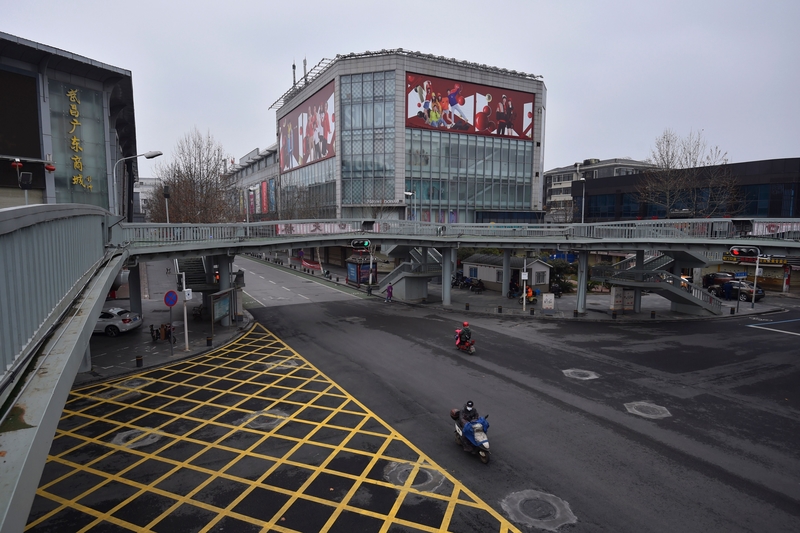
A film titled “The White-Coated Warriors,” which centers on the early days of the COVID-19 pandemic during the lockdown of Wuhan in 2020, was initially set to be released nationwide on November 6, after a delay of nearly six years. However, amidst rising controversies surrounding the film, it has now seemingly been pulled from its promised release date.
Both major Chinese movie ticketing platforms, Maoyan and Taopiaopiao, updated their pages on November 6 to reflect that the screening information for “The White-Coated Warriors” was erased, and tickets could not be purchased as originally planned. This indicates an effective withdrawal of the film from its scheduled release. In the preceding days, “The White-Coated Warriors” also did not follow the standard practice of opening presales ahead of its debut.
Additionally, the Chinese film rating platform Douban has since changed the movie’s release date to 2027, making it impossible for users to leave comments or reviews about the film.
On October 17, the film announced through its official Weibo account that it would be released on November 6, with the tagline, “76 days, 10 million people, life and death on the line.” However, after the initial announcement on October 19, no further updates were provided on the movie’s official Weibo.
As of now, the production company, distributor, and creative team behind the film have not made any statements regarding its unexpected withdrawal.
“The White-Coated Warriors,” directed by Qiu Li-Tao and featuring actors Andy Lau and Yang Zishan in leading roles, was originally filmed under the titles “Angels of the Pandemic” and “Viral Invasion.” The movie wrapped production in December 2020, completing filming in slightly over a month. It was rebranded in 2023 and underwent further changes, officially passing review in July 2025. Initially slated for an August 23, 2025 release, it was subsequently withdrawn from the schedule without notice.
The film draws inspiration from events that transpired during the lockdown in Wuhan, paying tribute to healthcare workers, including doctors, nurses, and medical professors, as well as grassroots volunteers clad in white protective suits, colloquially referred to as “Big Whites.”
At the end of 2019, Wuhan reported initial cases of the novel coronavirus, which the authorities labeled as a pneumonia of unknown origin. Dr. Li Wenliang, an ophthalmologist at Wuhan Central Hospital, alerted colleagues through a WeChat group about a cluster of cases resembling the SARS outbreak at the Huanan Seafood Market. However, Li was silenced by local police for spreading what they deemed rumors. The city of Wuhan was officially locked down on January 23, 2020, at 10 a.m., with restrictions lasting until midnight on April 8, totaling 76 days. During this challenging period, residents faced not only the fear of death but also were subjected to strict quarantines. Many were trapped in their homes with inadequate access to medication or essential supplies, leading to tragic incidents where individuals reportedly starved to death. The Chinese government’s early efforts to conceal the truth about the virus’s spread contributed to the pandemic’s escalation on a global scale.
The promotional material for “The White-Coated Warriors” claims the film is based on real events, stating that “everyone’s story was once a starring role.” Following the announcement regarding the film’s release, a significant number of voices emerged online expressing resistance, criticism, and even calls for a boycott. Numerous internet users characterized their experience as “a nightmare” and indicated they would not attend screenings.
Comments left on the Douban page for “The White-Coated Warriors” included support for Dr. Li Wenliang, messages of gratitude, and sentiments that “the people of Wuhan are not interested in watching this.” These comments were subsequently deleted.
A commentator known as Finding remarked on X, “To portray the so-called 76 days, 10 million people, life and death struggles as a hero’s tale. The true retrogression is to first seal the city and block the roads, then compel people to ‘go against the tide.'”
Liu Min, a mainland entrepreneur who lived through three years of pandemic restrictions, previously expressed to reporters that what the Chinese public truly desires to see in a film is not glorification of the so-called victory over the pandemic but rather a representation of the struggles and changes endured by the Chinese people during those three harrowing years. For instance, a film could be made about Dr. Li Wenliang, or the disastrous fire in Urumqi, Xinjiang, in 2022, which resulted in grievous casualties due to lockdown restrictions, alongside the subsequent “White Paper Revolution” it ignited. Furthermore, stories from the Tongzhou Bridge incident and other significant events could also be explored.