
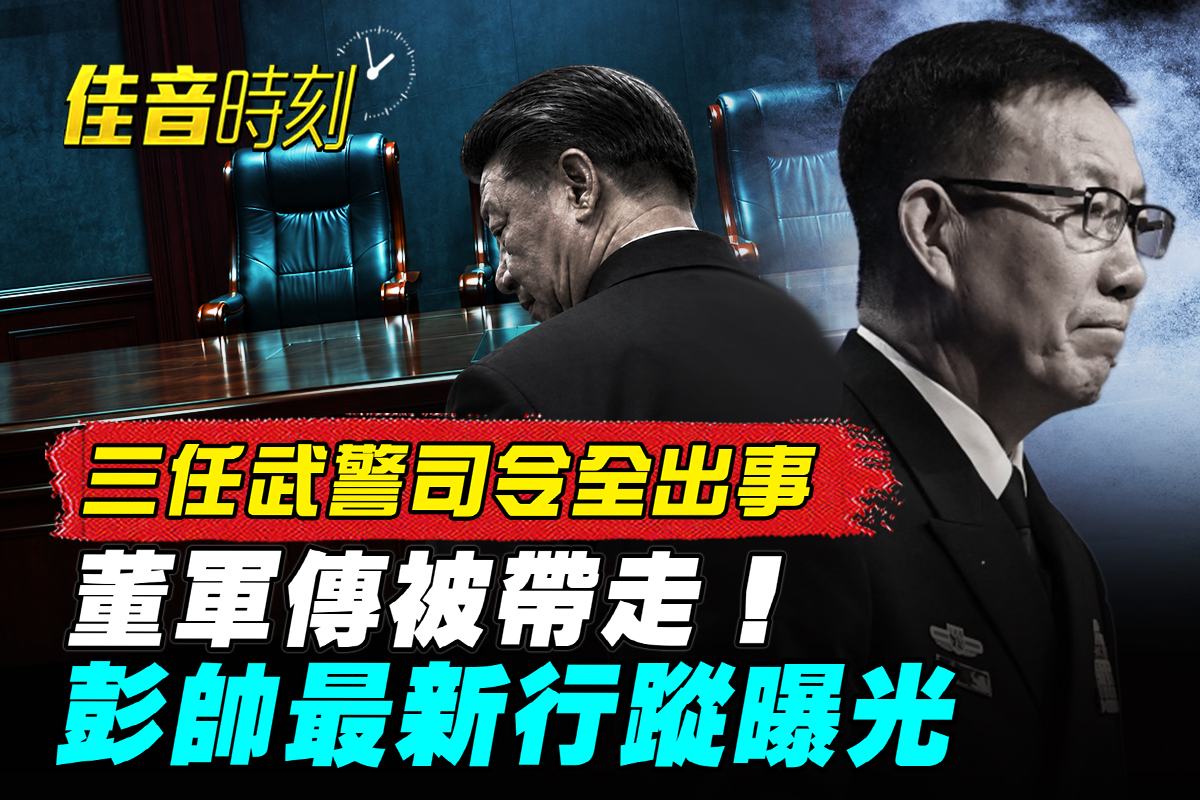
The ongoing purge within the Chinese Communist Party’s military has intensified significantly in recent days. On November 4th, former commander of the People’s Armed Police, Wang Ning, had his status as a member of the National Committee of the Chinese People’s Political Consultative Conference revoked. Remarkably, with this latest development, all three consecutive commanders of the Armed Police have faced serious repercussions.
Simultaneously, Defense Minister Dong Jun has remained conspicuously absent from public view, triggering speculation about his situation, with reports surfacing that he may have been taken away for investigation. The military turmoil appears to be broadening, raising questions about the stability and direction of the armed forces.
Moreover, the political landscape within the Communist Party is exhibiting unusual activities. Wang Huning, who previously served as Wang Ning’s deputy, has once again been missing from key meetings. Reports have emerged suggesting that his entire family has been taken away and that their assets have been confiscated. This alarming trend of high-profile detentions further deepens concerns regarding internal strife and power struggles within the party.
In another revealing development, news has resurfaced regarding Chinese tennis star Peng Shuai, who made headlines five years ago for publicly accusing former Chinese Vice Premier Zhang Gaoli of sexual assault. Since her allegations, she has mostly remained out of the public eye, leading to widespread speculation about her current circumstances. There is a growing interest in her whereabouts and whether she is able to live freely, considering the ongoing crackdown on dissenting voices within China.
The situation continues to unfold, with various factions in the Communist Party at odds. As these stories develop, they highlight the increasingly precarious environment in which political and military figures navigate their careers, fraught with both potential advancements and alarming pitfalls.
The dynamics within the party, coupled with the actions taken against prominent figures like Wang Ning and the uncertainty surrounding Peng Shuai, paint a picture of a regime grappling with internal tensions and external pressures, signaling that significant changes may be on the horizon.
As these events progress, the implications for both domestic stability and international relations remain to be seen, underscoring the need for close observation of the evolving political climate in China.