
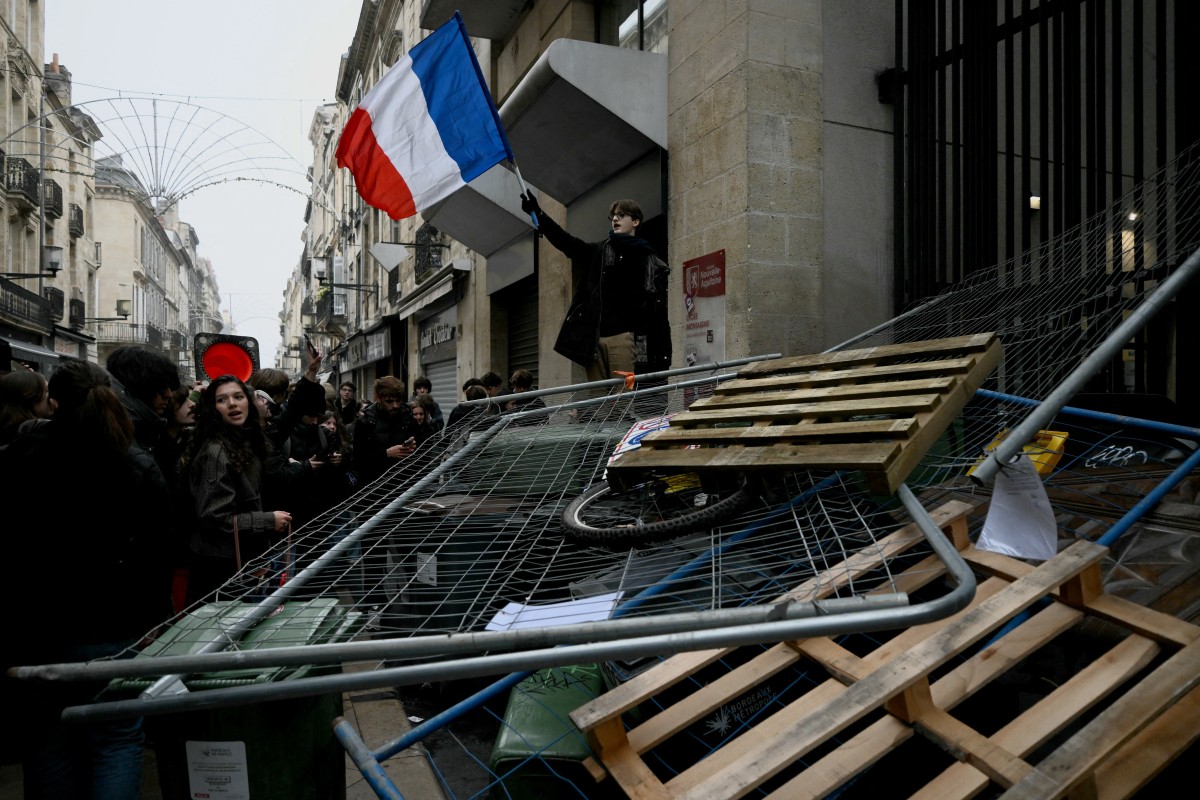
On Thursday, November 5, France was engulfed in a national strike and series of demonstrations spanning multiple industries. The protests, driven by various unions and student organizations, focused on issues such as inflation, wages, purchasing power, public services, and educational conditions. While the large gatherings across the country generally remained peaceful, there were reports of sporadic clashes between demonstrators and police, along with some incidents of property damage.
In a notable event, the iconic Eiffel Tower in Paris was closed to the public on Thursday, and the official website urged ticket holders to check their email for notifications regarding refunds and other arrangements.
According to data from the French Ministry of the Interior, it is estimated that between 500,000 and 700,000 people took part in the demonstrations nationwide, with the capital, Paris, seeing an attendance ranging from 40,000 to 80,000. However, one of the organizing bodies, the French General Confederation of Labor (CGT), claimed that the total number of participants across the country reached 1.6 million.
The joint protests saw multiple groups unite, as the unions issued a statement expressing their concerns. “Fuel, food, rent, gas, electricity… everything is rising except for wages and pensions,” they stated.
The strike had a swift impact on infrastructure and public services: nuclear power generation faced reductions early in the strike, and approximately one-third of high schools were disrupted due to teacher strikes or student blockades. Although some railway services and public transport experienced delays and cancellations, the overall transport network did not face a large-scale paralysis.
This nationwide strike is not an isolated incident but a continuation of a wave of protests that have been ongoing for weeks. The movement initially began with high school students in mid-September, protesting inadequate educational resources, poor school conditions, and a shortage of teachers. Subsequently, dissatisfaction quickly spread, evolving into a more extensive opposition to austerity measures that included unions and various community groups in their protests.
In response to the large scale of the protests and potential unrest, French authorities raised security alerts and entered a heightened state of vigilance. The Ministry of the Interior deployed 70,000 police officers and gendarmes across the country, equipped with armored vehicles, drones, and helicopters to maintain order.
The atmosphere at the beginning of the Paris march was peaceful and buoyant, featuring floats and bands playing the “Marseillaise,” contrasting sharply with the severe robberies and riots that occurred on October 17. However, two hours into the march, masked individuals initiated acts of vandalism, prompting police to deploy tear gas to disperse and isolate them. Towards the end of the procession, there were also reports of small fires being extinguished.
In Lyon, black-clad masked protesters shouted anti-police slogans. Riot police responded by deploying tear gas and charging into the crowd to restore order, with the Ministry of the Interior stating that the violence had been brought under control.
In the Toulouse area, one high school was set ablaze after being targeted with fireworks by masked demonstrators, necessitating an emergency evacuation of students and staff. The Minister of National Education condemned this act as “an absolute scandal.”
In Rennes, some demonstrators attempted to block roads and reportedly hurled steel balls at police.
Eighteen-year-old student Alice Martinovic shared with reporters that youth and students are joining forces with workers, aiming for their voices to be heard by candidates.
Forty-five-year-old firefighter Mehdi Dumontroty noted that wages are not keeping pace with inflation, and the extreme heat wave that triggered wildfires this summer highlights the urgent need for more resources to support public services.
Sophie Binet, the general secretary of the CGT, emphasized, “The government is trying to clamp down on the protests, but the scale is larger than ever before.”
This wave of unrest occurs during a politically sensitive transitional period, just five months before the presidential elections. As the incumbent President Emmanuel Macron cannot run for re-election, this situation may lead to a runoff between right-wing candidate Marine Le Pen and left-wing contender Jean-Luc Mélenchon in next spring’s election, slated for April.
French Prime Minister Sébastien Lecornu has scheduled a meeting for November 9 to gather unions and employer groups to discuss matters related to pricing and wages, indicating that the government is attempting to engage with the challenges sparked by these protests.