
In recent years, the Chinese Communist Party has repeatedly claimed that “China is one of the safest countries in the world.” Some mainland Chinese and foreigners living or traveling in China often regard aspects like nighttime travel, street order, and public safety as places where China gives people a sense of security.
However, experts question how many people would consider China to be “safe” when considering food safety, consumer safety, property security, child safety, and trust between individuals.
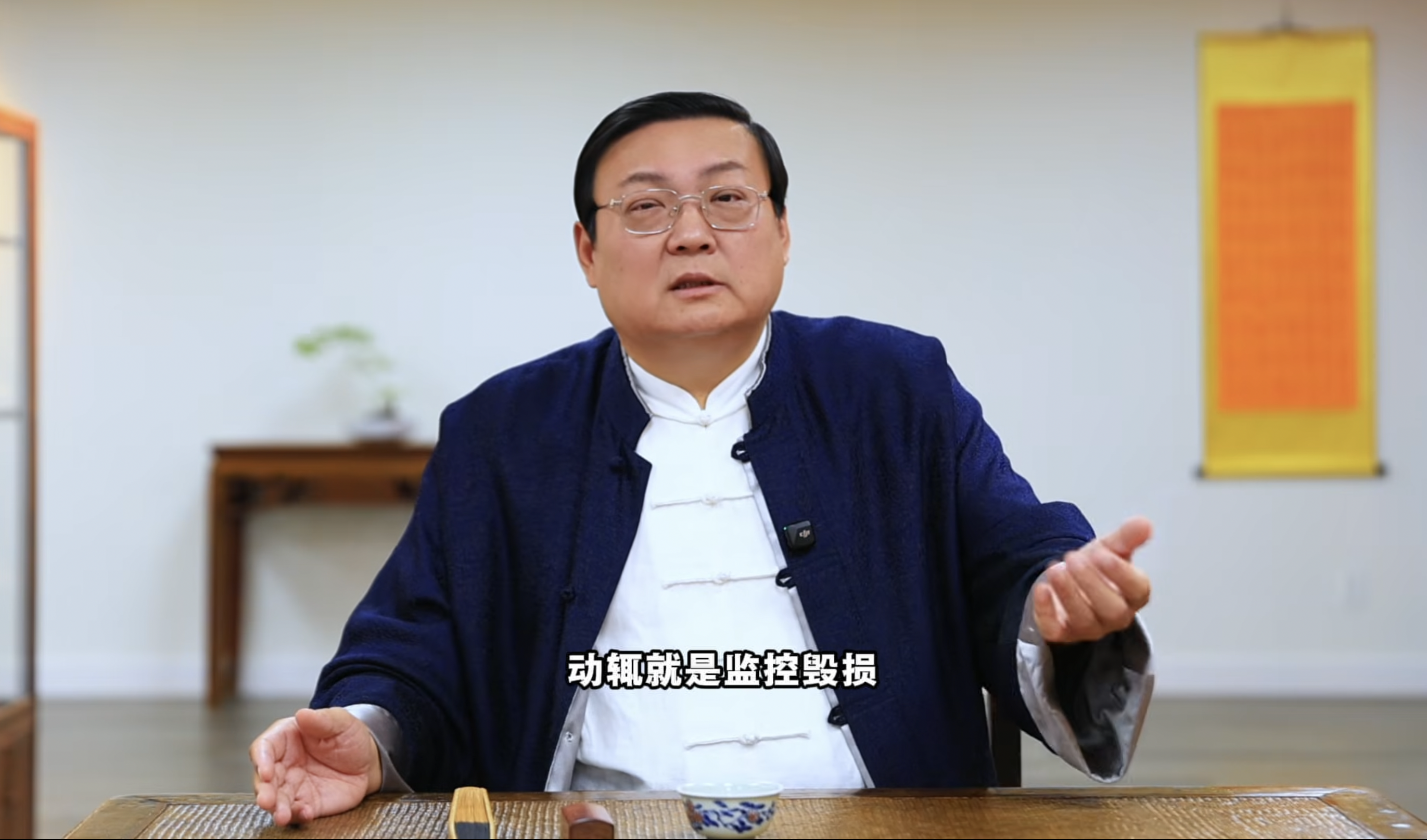
Prominent mainland Chinese commentator Liang Hongda, in discussing the question of whether China is the safest country, raised sharp questions on a program. He did not just focus on whether people dare to go out at night but posed more probing queries: with surveillance cameras everywhere in China and the ability to track traffic violations, why is it that when a child goes missing, they cannot be found? Does this mean that ordinary people truly receive sufficient security protection?
Liang Hongda’s answer was: “A sense of security and security itself are not the same. Security has never been just about personal safety.”
The comparison often made by foreigners is about “taking a nighttime stroll alone.” Some bloggers from the United States or certain major European cities mentioned that in their hometowns (like London, Dublin, or certain neighborhoods of New York), walking alone in dark alleys or subway stations after midnight is very dangerous, with risks of robbery, drug dealing, or harassment by drunk individuals.
Some shared examples of seeing young women still riding bicycles or walking alone back home in first-tier Chinese cities (such as Beijing, Shanghai, Shenzhen) at 1 or 2 am, or eating late-night snacks on the streets (like barbecue), which made them feel incredibly surprised and relaxed.
While some foreign tourists or long-term residents in Europe and the United States have shared positive experiences regarding daily public safety, there are also rational foreign individuals and community comments (such as on Reddit’s China forum) pointing out the systemic costs and potential risks behind this kind of “safety”: pervasive surveillance and privacy concessions, AI facial recognition cameras, and large-scale data tracking. For foreign individuals highly valuing privacy, living in such a society feels like being in a “panoptic prison” lacking any privacy.
Some foreign individuals on social media caution that the premise of “safety and security” in China absolutely forbids touching upon politics and religion. In recent years, with China revising the “Exit and Entry Administration Law” and expanding national security screenings, foreigners also face non-traditional security risks (political risks) like being “restricted from leaving the country” or arbitrarily detained for their speech.
Liang Hongda, who has over 942,000 subscribers on his YouTube channel, recently mentioned on a program that in addressing public security in China, he first pointed out that surveillance cameras are omnipresent in China, and in cases of traffic violations, the cameras can capture license plates and vehicle information to identify owners and issue fines.
This is not just a vague statement. Current traffic regulations in China explicitly allow public security agencies to collect and fix traffic violation evidence using monitoring technology. Surveillance data can record vehicle license plates, appearance, violation time, and location information.
However, Liang Hongda then raised another question: since there are so many cameras, why is it that when a child goes missing, they cannot be found? He questioned why a system that can swiftly identify violations, find the vehicle owner, and penalize them does not come into play when a child truly needs to be located and protected.
He remarked, “The streets are filled with surveillance cameras, but when a child goes missing and people request to review the footage, it’s often denied. The cameras are frequently damaged, the footage is blurry, and evidence cannot be retrieved.”
He believes that the issue lies in authorities’ reluctance to invest sufficient resources and effort in solving such cases because there are no benefits to gain. He mentioned that child abduction causes long-term or even lifelong harm to ordinary families.
It is well known that children have become the most concerning group for parents in China. Liang Hongda mentioned that when it comes to child safety, some individuals dissatisfied with society direct their attacks at the vulnerable who lack the ability to resist, even harming children in places like schools and kindergartens.
In recent years, Chinese society has witnessed numerous such tragedies.
In March 2010, a knife attack at the gate of Nanping Experimental Primary School in Fujian Province resulted in the deaths of 8 students and injuries to 5 others.
In April 2018, a man in Mizhi, Shaanxi, harboring resentment over his past life and work experiences, had thoughts of retaliating against students at a school. He launched a knife attack at the school gate, resulting in the deaths of 9 people, 4 severely injured, and many others wounded.
In April 2021, another incident of weapon violence against a kindergarten in Beiliu, Guangxi, occurred.
These incidents cause significant psychological impacts on parents due to children’s daily routines of going in and out of schools and kindergartens, with the school gate becoming the most directly monitored safety location for families.
Liang Hongda stated that to ensure children’s safety, schools need people to stand guard at the gate, leading to schools organizing parents to take shifts at the entrance.
This phenomenon is widespread in China.
In March 2026, when reporting on the “School Safety Posts,” “The Paper” interviewed about parents taking shifts at school gates. Some schools rotate parents on duty based on class or parent schedules, assigning parents to be on duty at school gates during school hours; some parents unable to participate due to work or family reasons have others fill in for them.
A more direct example arose in Leshan, Sichuan. In September 2026, some parents reported that schools required parents to take turns standing guard at the school gate; local media visits revealed that some busy parents had grandparents stand in for them. The report also mentioned that some families, as grandparents also found it inconvenient, paid others to stand watch.
Controversies among parents over the “School Safety Posts” have persisted. In 2024, a school in Jinan was reported by parents demanding shifts at the school gate, and the local education department ultimately required parental participation to be completely voluntary.
Liang Hongda stated that this presents another stark reality: while cities are filled with surveillance cameras, police efforts, and various public security measures, to ensure their children safely enter and exit schools, ordinary families still need to take time out, ask elderly relatives to stand at the school gate, or even spend money to hire someone.
Liang Hongda pointed out that child safety is not limited to campus attacks. For parents, the real safety issue lies in whether “their child can safely make it to school every day, whether they will be safe after walking through the school gate, and if they can safely return home,” which is more direct than an abstract notion of “good social order.”
In 2024, official sources reported that public security agencies had cracked over 550 current and accumulated cases of human trafficking, locating a group of missing trafficked women and children, including cases where individuals were missing for up to 30 years.
From surveillance cameras and school gates to child abductions and trafficking, Liang Hongda raised the point that “security has never been just about personal safety.”
Liang Hongda stated, “Safety also includes whether a person trusts those around them, trusts an unfamiliar phone call, trusts a transaction, and whether the food they eat gives them peace of mind.”
He mentioned scenes encountered daily by many Chinese individuals: being wary of answering unknown phone calls. He noted that nowadays, when people see an unfamiliar number, their first reaction is often not “who is calling me” but rather “is this a scam.” “People’s first instinct with anything unfamiliar is not to trust. They maintain a defensive mentality every day.” He added, “The level of trust is also a component of social security.”
Regarding scams and consumer traps, Liang Hongda provided a concrete example. Individuals pose as offering free services to measure blood pressure, check blood sugar for the elderly, and even give out gifts like eggs, cooking oil, etc., to first gain the elderly’s trust and then gradually push sales.
In this tactic, there is no coercion initially; it starts with “free” and “caring.” This serves to lower people’s guard before moving on to sales. “This method is like boiling a frog in warm water, slowly draining your money without using knives or guns or street violence.”
Liang Hongda emphasized that scams are not restricted to targeting the elderly.
He mentioned various scams like campus loans, brushing rebates, click-to-earn schemes, investments, where young people and highly educated individuals can also become victims.
He summarized, stating, “Scammers are always a step ahead of anti-scam measures.”
He believes that consumer traps are also part of “life safety.”
Touching upon telecom plans, car purchases, financial loans, insurance, renovations, etc., he identified transactions with complex clauses and additional fees, where consumers may sign contracts without fully understanding them.
Therefore, “safety” encompasses not just “encountering thugs on the street” but also involves people’s cell phones, internet, bank accounts, and daily transactions. This creates a form of insecurity.
Liang Hongda expanded the discussion of insecurity to food safety. “If you say China is a safe country in the world, perhaps many would agree; but if you say China is a world leader in food safety, most would disagree.”
He stressed that “security” should not only be understood in terms of street order but should also include food safety, consumer safety, property security, child safety, and trust between individuals, which means very few people would see China as “safe.”
Liang Hongda concluded by stating that the sense of security that allows you to live life with peace of mind is diminishing with each passing day, which translates to “a decrease in inner security.”
Liang Hongda graduated from Heilongjiang University with a degree in journalism and later worked as a journalist. He has served as the chief editor and chief planner for multiple magazines and is a media commentator and publisher in China.