
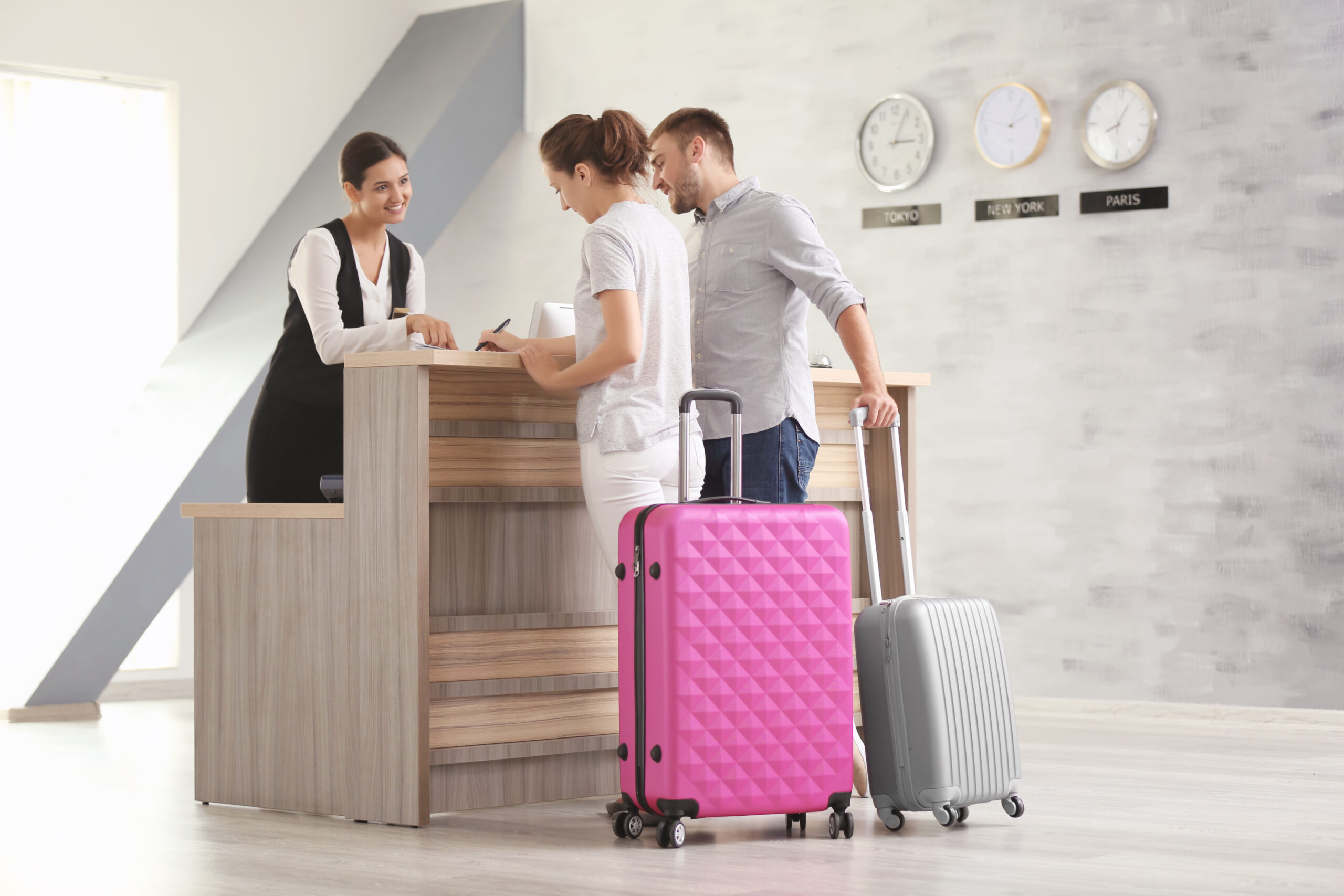
Handling hotel check-in procedures may seem like a routine interaction with the front desk staff. However, in the intervals of procedural exchanges involving identification documents, payment information, and room card handover, the information exchanged between both sides is much richer than you realize.
Even before you reach the front desk to say hello, the receptionist has already captured many non-verbal signals about you and started outlining a rough image of you in their mind to predict what kind of guest you might be.
From your behavior when entering the door to your reaction upon learning the need for a pre-authorization (deposit hold), front desk staff pay attention to every detail. These observations are not meant to judge guests; quite the opposite, these details help them tailor the accommodation experience to your needs and preferences, ensuring you enjoy a comfortable and seamless check-in process.
Some of the clues they pick up may seem trivial, and you may not even realize how much of an impact they can have on the impression you leave on others.
Here are some details that hotel staff pay attention to during check-in and suggestions on how to make a good impression from the start.
From the moment you step into the hotel lobby, the staff, from doormen to bellboys, especially the front desk staff, start noticing your every move. The front desk receptionist is not only one of the first people you interact with at the hotel but also the key point of contact throughout your entire stay. Considering they are responsible for coordinating your accommodation arrangements, they naturally possess keen observation skills.
From body language to the way you greet (or if you greet), to your appearance and the demeanor you display at the front desk, all of these contribute to the first impression you make. The core logic behind these observations is simple: the staff try to assess whether you are an easy-going guest or a difficult one to deal with.
“In fact, your attitude during check-in speaks volumes. If you are friendly, most hotel staff will go out of their way to ensure your satisfaction,” wrote a Reddit user in the hotel industry. “…If you give off a sense of doubt, we will remain alert.”
When you enter the hotel and approach the front desk, one thing the staff will notice is the number of bags you are carrying. This observation is usually discreet since hotel policies typically do not limit luggage allowance. As a Reddit user wrote, “As a hotel employee, I have seen guests staying just one night but bringing a cart full of luggage.”
This observation actually helps hotel staff sketch a rough image of each guest in their mind. Any unusual situation may raise concern, but compared to having too much luggage, having too little can attract even more attention. Imagine if someone arrives with just a small bag for a 10-day stay; that is clearly unusual. After all, rarely does anyone travel so lightly to such an extent.
Although hotel staff rarely reject guests solely based on the amount of luggage, they might take some precautions to prevent guests from leaving abruptly. Guests who draw attention during check-in, apart from being required to pay a deposit, may also be asked to prepay the room rate.
Oftentimes, hotel staff can gauge your state through body language. In fact, interpreting these subtle non-verbal signals is a fundamental skill that hospitality professionals worldwide must master. Due to the nature of their work requiring constant interaction with guests, they have ample opportunities for practice every day, enabling them to handle various types of guests more adeptly.
For instance, eye contact and smiles could indicate a pleasant mood and friendly attitude, heralding a smooth check-in process. Fatigue or anxiety, on the other hand, may manifest differently.
“They might touch their chin or tug on their ear. These signals prompt me to take action to get them checked in quickly or make them feel comfortable,” hotel industry executive John Moser once told ABC News.
Body language does indeed influence the way both parties interact during check-in at the front desk. Seasoned travelers who are familiar with the check-in and check-out procedures typically appear efficient and composed at the reception, ensuring a smooth process.
During check-in at a hotel, an extra charge to pay attention to is the “pre-authorization” or “deposit.” To cover incidental expenses that may occur during your stay (such as using the minibar or room service), hotels usually pre-authorize your credit card. This amount is not immediately deducted but temporarily locked and used to settle the final bill upon check-out. If you do not incur additional charges during your stay, the unused pre-authorized funds will be released.
The amount of the deposit varies by hotel, usually ranging from $50 to $500 (or even higher). A Reddit user who worked in the hotel industry recalled an experience during check-in: “I was irritated and distracted at the time. When processing the pre-authorization, I should have entered $1000, but mistakenly inputted $10,000.” However, the cardholder had almost no reaction to this mistake, which led the front desk staff to make certain judgments about their social status.
Nevertheless, hotel staff observing your reaction to the deposit pre-authorization are primarily aimed at assessing your wealth status, but rather to ensure that the hotel can mitigate potential losses that guests may cause during their stay. Front desk staff sometimes find themselves facing guests’ resistance due to deposit issues, and this kind of friction is often seen as an early “red flag.”
The number of companions often has a greater impact on the hotel experience than you might imagine. While the front desk usually does not adjust service standards based on whether you are traveling alone or with companions, they may tailor the interaction during check-in according to your needs. For example, when receiving solo backpackers, hotel staff may politely inquire about their itinerary and recommend local must-see attractions.
In contrast, the situation that large groups pose for hotel staff is drastically different.
“Group guests are often the ‘nightmare’ of the hotel industry. Regardless of the size of the group, they always act as if the entire hotel belongs to them alone,” said a Reddit user with front desk experience.
Among multi-person groups, families with children are often among the more challenging types to handle during check-in. While adults are busy with front desk procedures, children are often left unattended, running around and making noise.
“If your children are screaming in the echoing lobby, not only does it cause trouble for the staff, but it also prolongs your own check-in time and inconveniences every guest waiting in line behind you,” wrote a front desk practitioner on Reddit.
Such check-in situations often foreshadow the behavior of guests during their subsequent stay at the hotel.
When presenting identification documents to hotel staff or filling out personal information forms during check-in, one of the details they immediately notice is your address. In some cases, they may even have access to this information in advance, from when you made the reservation. This seemingly “nosy” behavior is not meant to monitor guests but to allow staff to have a preliminary understanding of the type of guest they are about to host.
“If the guest is local, they tend to be more difficult to serve…the farther they come from, the easier they are to handle,” a front desk employee said on Reddit, “Local guests tend to make all sorts of demands or complaints about trivial matters.”
Ultimately, as long as you are a pleasant, considerate guest, your residential address typically will not be an issue.
Regardless of how well someone believes they are concealing it, hotel staff generally have an easy time discerning whether the guest checking in is sober. While having a drink or two (or more) en route to the accommodation is not illegal, especially for holidaymakers immersed in festivities. But to the hotel staff who welcome you, this phenomenon often serves as a clear warning signal. After all, a tipsy guest often signals that the check-in process may not be as smooth, let alone whether the subsequent stay experience is manageable.
An issue related to smoking was mentioned by a Reddit user: If a guest does not inquire about the hotel’s designated smoking areas during check-in, this may indicate a higher likelihood of them violating the no-smoking policy in the rooms. In collaboration with front desk and housekeeping staff, the front desk may pay extra attention to such guests.
Indeed, one of the duties of hotel front desk staff is to address various questions posed by guests. However, they are also well aware of when to categorize a particular interaction as a “problem case” and flag it.
Presenting too many questions (especially those that disrupt their normal workflow) to the reception staff may raise concerns. Such instances are sometimes seen as signals of a “difficult guest.”
Making requests at the wrong time is also a signal that may stress out hotel staff. A Reddit user complained, “My biggest headache now is when I finish checking in and hand over the room key to the guest, and they suddenly come up with various special requests: ‘Oh, the room isn’t too close to the elevator, right? Oh, but it shouldn’t be too far. Does it have a view? Is it facing west?’…”
To ensure a smooth check-in process for both parties, it is best to keep your inquiries brief, reasonable, and straightforward.
The check-in queue can often be long, causing fatigue. Your room may still be in the process of being cleaned, requiring you to wait. The front desk card machine may have malfunctioned. Before successfully checking in and eventually entering your room, various problems may arise. However, your reactions to these situations often form the first impression that the front desk staff have of you.
No one likes to be delayed due to service disruptions, especially guests who have just come off a long flight or a full day of continuous meetings. Nonetheless, remember that there is a living person at the other end of the counter who, just like you (or maybe even more), wishes to get you checked in as quickly as possible. A friendly attitude is one of the best ways to win over the favor of hotel staff.