
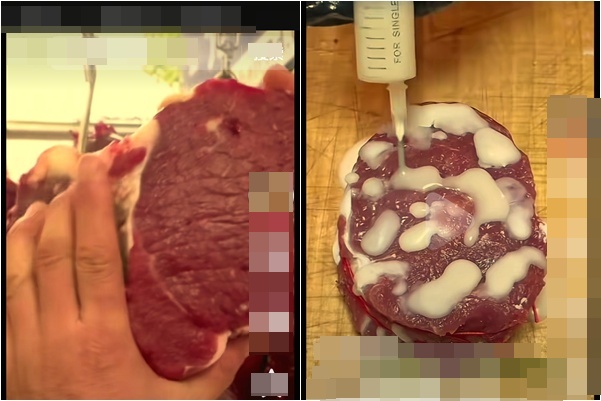
In the aftermath of the formaldehyde-laced cabbage scandal in Hebei, a new wave of complaints from citizens emerged, indicating a rampant presence of toxic foods in the market. It’s not just vegetables and fruits; counterfeit products are also widespread, including beverages and meats. For instance, slaughterhouses inject large quantities of unknown liquids into cattle bodies. The public criticizes regulatory agencies for their inaction, allowing toxic foods to flow onto dinner tables, essentially poisoning consumers slowly.
A source in Cangzhou, Hebei named Wenjing, revealed to Epoch Times that in recent years, the rate of cancer cases among local villagers has significantly increased compared to over a decade ago. The number of deaths among the elderly and young people has also risen notably, showing a trend towards younger victims. She believes that this is closely linked to food contamination. “Water pollution is a problem, and another major issue is food contamination. Many people in rural areas are still using herbicides. Herbicides are a significant cause of cancer.”
Wenjing disclosed that there is a wholesale distribution center for beef and mutton in northern China that supplies the Beijing-Tianjin-Hebei region. The owner slaughters and sells cattle and sheep purchased from various places in large quantities. Recently, an industry insider told Wenjing that he had witnessed slaughterhouse operators injecting a gel-like substance in large amounts into cattle bodies before slaughtering them. “Something like gel, a large amount injected directly into the body of the cow. If it’s something like a gel, it solidifies in one mass.”
After learning about this, Wenjing no longer dares to purchase local beef. “We don’t know what they inject, so if it’s inedible, all the meat we’ve eaten before might be problematic.”
Apart from meat products, counterfeit and substandard goods are also rampant in the area. Wenjing mentioned that the rural market is flooded with counterfeit products imitating renowned brands, and consumers, especially the elderly, are easily deceived. “Many counterfeit products imitate famous brands, such as what was originally called Kangshifu instant noodles is now named Kangshuaifu. The elderly don’t know and end up buying many fake products. These rural supermarkets and stores are filled with counterfeit products, fake goods, and toxic foods.”
Wenjing criticized the government regulatory authorities for turning a blind eye to toxic foods, suggesting that their deliberate allowance is akin to slow poisoning. She stated that the toxicity does not show immediately, but over the past decade, there has been a surge in young adults passing away, with food contamination being one of the causes.
“The regulatory authorities are simply not taking action. As long as people aren’t dying, and there are no major food safety incidents, they don’t care at all. That’s why so many children in rural areas, including the reason for the mass deaths of young adults, are happening.”
“The situation here is a microcosm of the entire country of China. The Chinese people are in a dire situation, it’s really tragic,” Wenjing commented.