
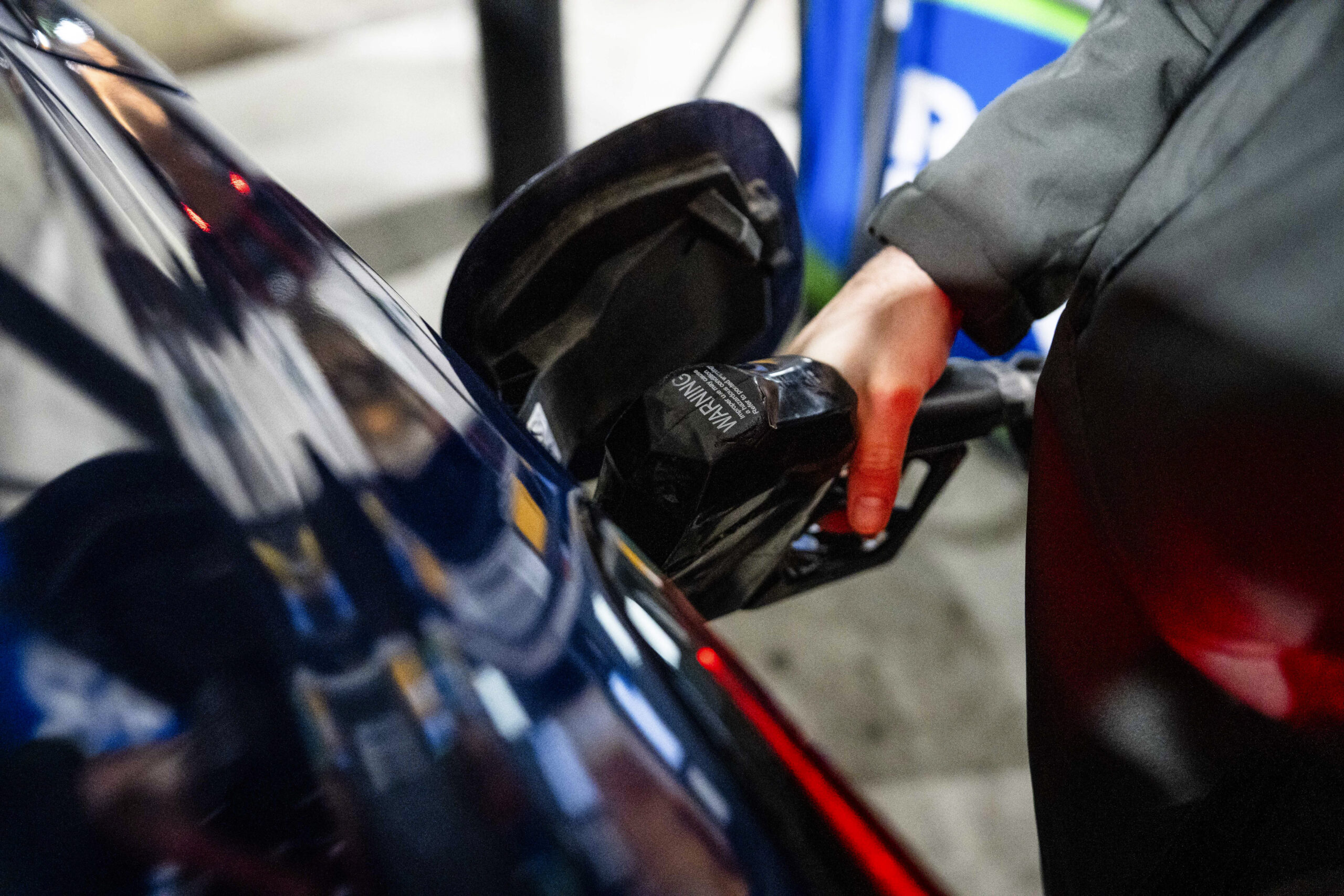
Amid the ongoing Middle East conflicts that continue to drive up energy costs, Americans faced record-high oil prices over the Labor Day weekend (September 5th to 7th). On September 5th, the average gasoline price in the United States reached $4.14 per gallon, nearly $1 higher than the same period last year, with popular round-trip flight prices also up by approximately 20% compared to last year.
Labor Day typically marks the last opportunity for many Americans to travel during the summer. Many choose to travel by car or plane, but the current prices of oil and airfare have become unaffordable for many families.
Analyst Patrick De Haan from GasBuddy recently analyzed in a blog post that the average gasoline price in the U.S. on Labor Day could reach $4.03 per gallon, well above the record of $3.83 per gallon set in 2012.
In his blog post, he wrote, “This will be the highest gasoline prices on Labor Day in history,” adding, “This means that Americans may see the average nationwide gas price exceed $4 per gallon for the first time during the Labor Day holiday.”
According to data from the American Automobile Association (AAA) on September 5th, the actual price has reached $4.14.
With tensions escalating once again between the U.S. and Iran, market concerns arise that global crude oil supply may be disrupted, causing crude oil prices to climb back above $90 per barrel (Brent crude currently at $95), thereby driving up prices of diesel and heating oil.
Furthermore, part of the reason for the increase in oil prices is also due to continuous attacks on Russian refineries by Ukraine, leading to supply disruptions.
Wood Mackenzie analyst Kuan Dosmuratov analyzed that the main reason for the sustained high oil prices is supply-related issues. Concerns about potential disruptions in energy transportation through the Turkish-controlled Bosporus strait have driven up crude oil prices and refining margins. Attacks on Russian refineries have also made overall fuel inventories tight.
Since the outbreak of the conflict between the U.S. and Iran, the most significant increases in oil prices have been seen in states such as Colorado, Utah, Idaho, Montana, Wyoming, and North Dakota. California, Washington, Oregon, Nevada, and other western states currently have the highest average gas prices in the U.S.
Madison Moore, a 28-year-old resident of Houston, Texas, mentioned during an interview with Reuters at a gas station that she is cutting back on her Labor Day travel plans. She said, “It used to be easy to pack up and drive to a barbecue party at Galveston beach. Now, no one really feels like doing that.”
Randi O’Brien, 57, near a Phillips 66 gas station in Evergreen, Colorado, said, “The situation has completely gotten out of control.” She mentioned that her daily commute to Home Depot takes about 40 minutes, but now she can only afford $15 for gas.
The Energy Information Administration (EIA) data shows that the U.S. is currently the world’s largest oil-producing country, with a daily production of approximately 13 million barrels of oil. However, its oil prices are still influenced by the global market.
Energy analysis firms point out that U.S. refineries are mostly designed for processing heavy crude oil, but domestic production is mainly light crude oil, leading the U.S. to import heavy crude oil and export light crude oil. Since oil is a globally priced commodity, any disruptions in the supply through the Bosporus strait will directly drive up global oil prices, making American high production unable to fully immunize consumers.
(Reference: Reuters)