
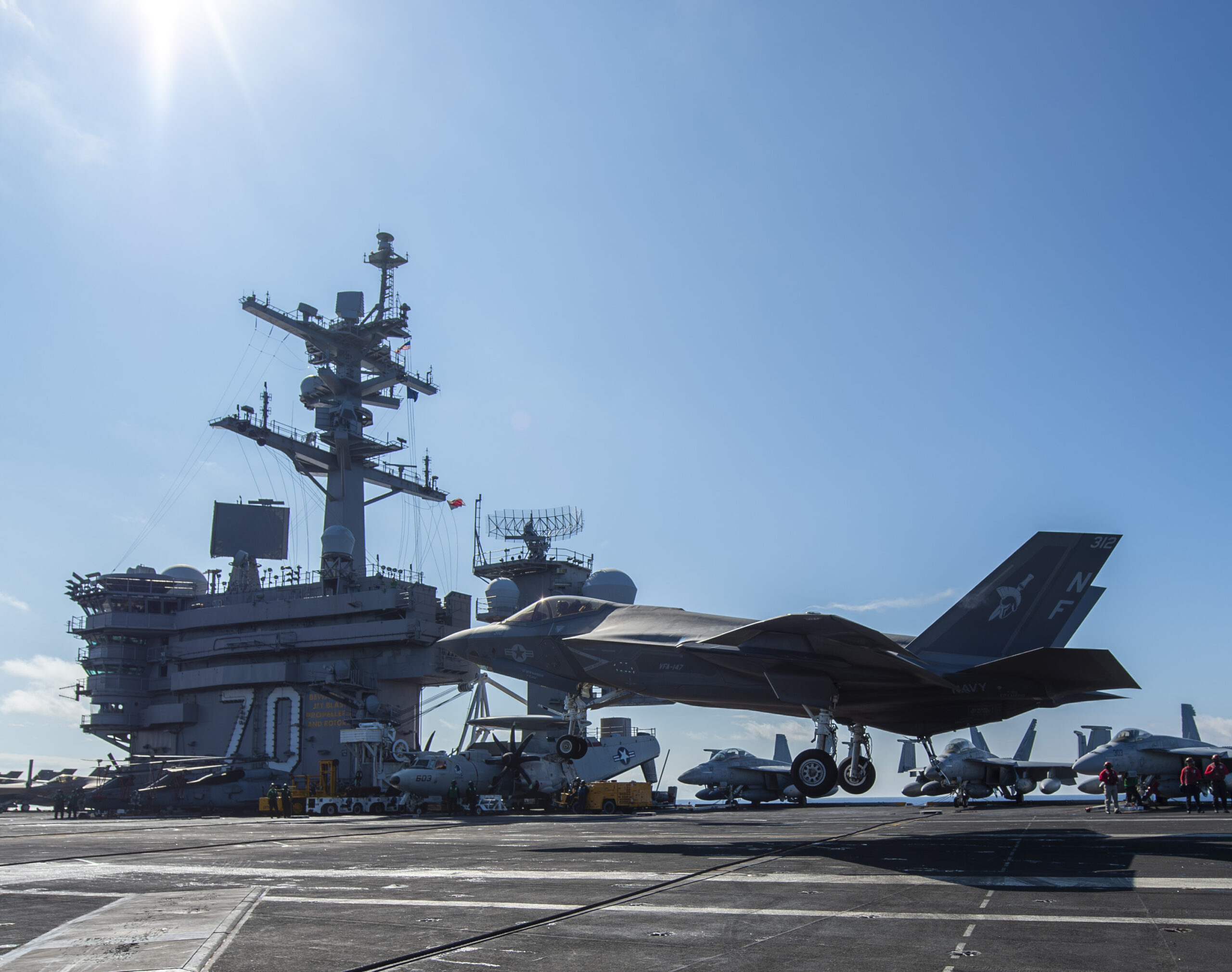
With the continuous military expansion of the Chinese Communist Party in the Pacific region, the United States has also deployed elite forces in the area, joining hands with allies to counter the threat posed by the CCP. The US Navy has deployed five advanced and powerful combat platforms, including the fifth-generation stealth fighter F-35 squadron, in the First and Second Island Chains to prepare for potential future conflicts.
When discussing the US Navy, the public often focuses on aircraft carriers and advanced carrier-based aircraft. However, in the implementation of the US military’s Pacific strategy, a variety of different types of aviation units are also needed.
Over the past two decades, the US Navy has invested heavily in maritime patrol aircraft, drones, tilt-rotor aircraft, and the world’s first combat-capable carrier-based stealth fighter. An article on the “Simple Flying” website introduces the most advanced and powerful combat platforms equipped by the Navy’s five aviation squadrons, all strategically deployed in the First or Second Island Chains to support the US military and its allies in the Indo-Pacific region.
The VUP-19 squadron represents a new type of organization within the US Navy’s aviation forces. Belonging to the “Big Red” squadron, personnel are responsible for operating the MQ-4C “Triton” high-altitude, long-endurance unmanned aerial vehicle produced by Northrop Grumman. The “Triton” is one of the most sophisticated unmanned drones in the US military arsenal, equipped with powerful radar, electro-optical, and electromagnetic sensor systems.
The VUP-19 squadron and the “Triton” drone play a crucial role in the US Navy’s maritime patrol capabilities.
The “Big Red” squadron is stationed at Andersen Air Force Base in Guam, the largest airpower hub for the US military in the Second Island Chain. The MQ-4C “Triton” drone can take off from Guam and carry out missions with flight times exceeding 24 hours and ranges exceeding 7400 nautical miles.
However, the squadron personnel and “Triton” drone are also regularly rotated to deploy to forward bases in Japan, such as Naval Air Facility Misawa or Marine Corps Air Station Iwakuni, to ensure the continuous surveillance capabilities of the “Triton” to support fleet operations across the region in coordination with the Navy, Marine Corps, Air Force, and Japanese Self-Defense Forces.
The VP-26 squadron, also known as the “Tridents,” is actually based in Jacksonville, Florida, but is currently forward deployed along with the US Air Force at Kadena Air Base in Okinawa, Japan. The squadron is equipped with Boeing P-8A “Poseidon” maritime patrol aircraft, which operate in conjunction with the MQ-4C “Triton” drone, providing continuous intelligence, surveillance, and reconnaissance (ISR) capabilities as well as anti-submarine warfare capabilities.
The MQ-4C drone serves as a remote sensor node, while…