
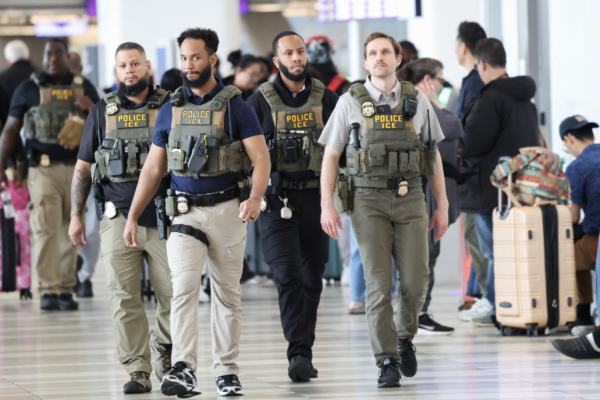
On November 4, a federal judge in the Northern District of New York, Mae D’Agostino, denied an emergency request made by 15 county sheriffs in New York State. The ruling prevents these sheriffs from temporarily blocking the enforcement of a state law that restricts local law enforcement agencies from collaborating with the U.S. Immigration and Customs Enforcement (ICE). This decision means that the law in question will remain active throughout the duration of the ongoing lawsuit.
The litigation was initiated on August 25 this year, with the 15 sheriffs collectively filing against several defendants, including New York’s Governor Kathy Hochul, Attorney General Letitia James, and the state government. The sheriffs requested the court to issue a preliminary injunction to halt the enforcement of the new law, arguing that it infringes upon the autonomy of local law enforcement agencies and violates both federal and state constitutional provisions.
In her ruling, Judge D’Agostino indicated that the sheriffs “have not proven that they have the legal standing to sue the defendants regarding the claimed constitutional violations,” which led her to reject their request for a preliminary injunction.
At the center of this dispute lies the “Local Cops, Local Crimes Act,” which went into effect following its signing by the governor on May 27. This legislation bars local governments and law enforcement agencies from entering into or continuing cooperation agreements under Section 287(g) of the Immigration and Nationality Act with ICE.
The 287(g) agreements allow authorized and trained local police officers to assist in the enforcement of certain immigration law functions, including identifying, detaining, and transferring individuals suspected of violating immigration laws, under the supervision of federal immigration authorities. The new New York State law also restricts local jails and detention facilities from entering into agreements with the federal government concerning the detention of individuals solely involved in civil immigration violations.
The state government has expressed that local police and prison resources should be prioritized for handling local criminal cases rather than being used for federal civil immigration enforcement. Governor Hochul and Attorney General James have previously indicated that this law aims to uphold community trust, ensuring that residents do not hesitate to report crimes or seek police assistance due to fears regarding their immigration status.
Conversely, the sheriffs who filed the lawsuit argue that they are independently elected officials accountable to their constituents, holding the right to decide how to engage with federal law enforcement agencies. They contend that the existing agreements primarily pertain to individuals detained by local police due to criminal charges, rather than allowing ICE to conduct immigration arrests without restrictions in the community. Therefore, they assert that the state government should not compel them to terminate these agreements.
On November 4, Attorney General James responded to the ruling on social media, stating, “Local law enforcement agencies should focus on keeping New Yorkers safe, not enforcing this administration’s cruel mass deportation agenda.” She emphasized that the state will continue to defend the law in court.
It’s important to note that this ruling doesn’t render a final decision on the constitutionality of the entire law, allowing the sheriffs to continue to present their legal claims in subsequent court proceedings.