
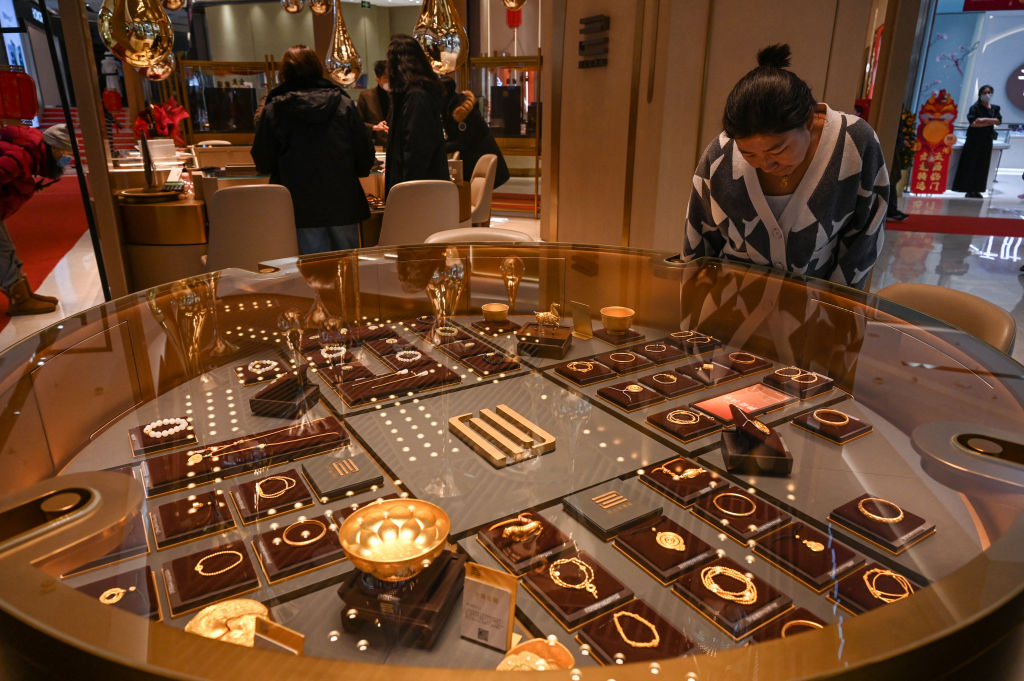
Recent data released by the China Gold Association on November 4 indicates a significant decline in the consumption of gold jewelry in mainland China during the first three quarters of the year. The figures show that the gold jewelry consumption totaled 178.612 tons, marking a substantial drop of 33.86% compared to the previous year. In contrast, the consumption of gold bars and coins saw an increase of 26.26% during the same period.
According to a report from the Daily Economic News on November 5, the China Gold Association recorded that the total gold consumption in mainland China for the first three quarters amounted to 684.623 tons, reflecting a slight year-on-year increase of 0.28%. Out of this total, gold bars and coins constituted a significant portion, with their consumption reaching 444.576 tons.
The Association noted that the divergent trends in consumption between gold jewelry and gold bars and coins can be attributed to high gold prices and the upcoming adjustments to gold taxation set to take effect in November 2025. While gold prices experienced fluctuations, initially rising before eventually falling, they remained at elevated levels, resulting in increased short-term volatility.
On November 3, the World Gold Council (WGC) published a report analyzing the Chinese gold market, highlighting the adverse effects of high gold prices and the additional costs associated with the value-added tax on gold. These factors have weakened consumer purchasing power. Furthermore, the slowdown in economic growth and the ongoing pressure on the real estate market have negatively impacted consumer confidence, thereby suppressing spending on non-essential items such as gold jewelry.
The report notes that despite a seasonal rebound in gold jewelry demand during the third quarter, the figures still reflect the lowest level for that specific period since 2006. Concurrently, the decline in the stock market and continuously falling government bond yields have provided support for gold investment demand, emphasizing the metal’s attractiveness as a safe haven.
On the retail side, the report discusses ongoing consolidation in the gold jewelry sales channels, accompanied by slower inventory turnover, which has increased operational pressures on retailers.
Prominent Chinese jewelry brand Lao Feng Xiang reported a staggering 44.56% decline in revenue for the first three quarters of the year in its financial report released on October 31. Additionally, the company faced a net loss of approximately 124 million yuan attributable to shareholders in the third quarter. A significant contraction was also noted in its chain marketing outlets, with a decrease of 107 locations, culminating in a total of 4,809 stores as of the end of September.
The World Gold Council’s retail market research report released in October further elaborates on the continuing slump in China’s real estate market and the weak consumer confidence which has driven residents to maintain a high rate of precautionary savings, nearing historical peaks. The decline in interest rates has also diminished the appeal of traditional savings products. In this context, an increasing number of investors are turning to gold as a means of preserving wealth and diversifying investment risks, illustrating a notable shift in consumer behavior amid economic uncertainties.