
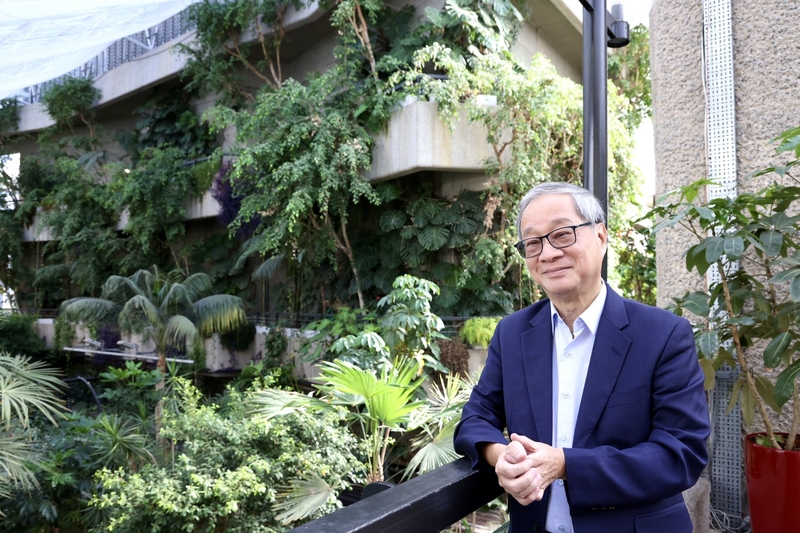
Minister of Culture of the Republic of China, Li Yuan, embarked on a European visit on the 6th, marking his first visit to the UK. Li expressed his anticipation to establish a stronger cultural ally relationship between Taiwan and Europe in his role as the Minister of Culture.
The Ministry of Culture of the Republic of China stated in a press release today (7th) that Minister Li Yuan’s visit to Europe started in the UK, followed by France, where he will participate in the 30th Taiwan-France Cultural Award judging and the 29th award ceremony.
Li Yuan expressed his desire to recommend Taiwan’s diverse cultural content and various cultural policies to the UK, France, and other European countries. He also extended invitations to influential figures to come to Taiwan to participate in collaborative creation and exchanges, aiming to strengthen cultural alliances between Taiwan and the UK, Taiwan and France, and Taiwan and Europe.
The Ministry of Culture mentioned that during Li Yuan’s visits to the UK and France, there will be intense meetings and exchanges covering literature, picture books, cultural technology, film, performing arts, heritage conservation, museum management, and more. As a creator himself, Li Yuan will engage in in-depth exchanges through literary discussions in the UK and film discussions in France with industry experts.
Reflecting on being the first Taiwan Minister of Culture to visit the UK, Li Yuan noted that this year, the recognition received by Taiwanese artists Yang Shuangzi and Jin Ling for “Taiwan Adventure Record” at the Booker Prize sparked new opportunities for Taiwan and the UK in literary publishing, translation, and other aspects.
Hence, Li chose this auspicious moment to visit the UK, aiming to promote Taiwan’s rapidly growing literary, comic, picture book, and cultural technology industries through intensive discussions, meetings, and visits. He will showcase Taiwan’s exceptional works and explain Taiwanese government’s cultural policies to various sectors in the UK.
Additionally, Li will personally invite distinguished writers, curators, and cultural institution leaders from the UK to visit Taiwan, directly engaging in future planning, collaboration, and cooperation to establish solid cultural alliances between Taiwan and the UK.
Looking ahead, Li hopes that by promoting Taiwan’s industries and creative endeavors and forging cultural alliances, Taiwan’s literature, comics, picture books, and other cultural content can find their place in the global mainstream market through diverse, open, and non-Western perspectives. This, he considers, is the mission of this visit.
Considering that the Ministry of Culture is currently involved in constructing and organizing several major cultural facilities such as the National Children’s Future Museum, the National Railway Museum, the National Comic Museum, and the second phase of the National Taiwan History Museum, Li aims to bring back immersive art and children’s museum management experiences as essential references for Taiwan’s international-grade museums.
On the first day of his visit to the UK, Li chose to visit the Barbican Centre in London and the Young V&A Children’s Museum under the Victoria and Albert Museum for exchange meetings.
During his visit to the Barbican Centre, Li was guided by Patrick Moran, Director of Business Strategy and Partnerships, and Matt Hudson, a producer from the Immersive Department, to explore the “In Other Worlds” exhibition curated by Australian director, artist, and architect Liam Young. The exhibition featured collaborations among professionals in film, television, literature, science, fashion designers, musicians, etc., presenting a world of imagination through LED walls, large projections, storytelling, set design, costumes, film models, graphic narratives, and displayed objects, allowing the audience to delve into creators’ imaginative worlds and explore future possibilities and challenges.
According to the introduction provided by the Barbican Centre, opened in 1982, the Barbican Centre is a unique and bold architectural landmark known globally. Apart from its theaters, galleries, concert halls, and cinemas, it houses a large greenhouse with over 1,500 plant species and trees, a library, conference facilities, public and community spaces, restaurants, and a lakeside oasis.
The Barbican Centre particularly emphasizes its rootedness in the local community as an international arts and events center, striving to work closely with the local community to make London a destination for everyone.
Impressed by the visit to the large greenhouse terrace, Li mentioned President Lai Ching-te’s vision of considering the greenery as a national-level resilient infrastructure, leading the administration to establish the “National Urban Forest Promotion Committee,” set to launch operational plans next year.
Notably, the Ministry of Culture is actively seeking to participate in the Environmental Protection Administration’s proposed “Climate Adaptation Greenery Doubling Plan.” Li expressed his hope for ecological planning in various corners of Taiwan, including museums, cultural facilities, communities, and major cultural sites, as he believes that once the Ministry of Culture is involved, urban forests will have stories to tell.
Appreciating the integration of the Barbican Centre with the surrounding community environment, Li acknowledged that while Taiwan’s early urban planning may have lacked such concepts, Taiwan is progressing towards cultural equity ideals, striving to provide cultural facilities within close reach for everyone in their living environments.
Regarding the museum meetings and exchanges in the UK and France, focusing on national institutions such as the National Children’s Future Museum, Li emphasized his dispreference for dogmatic and instructive educational methods. He praised the Western emphasis on placing children at the center, a concept that he aspires to incorporate into the National Children’s Future Museum, ensuring child participatory design during the construction and planning stages.