
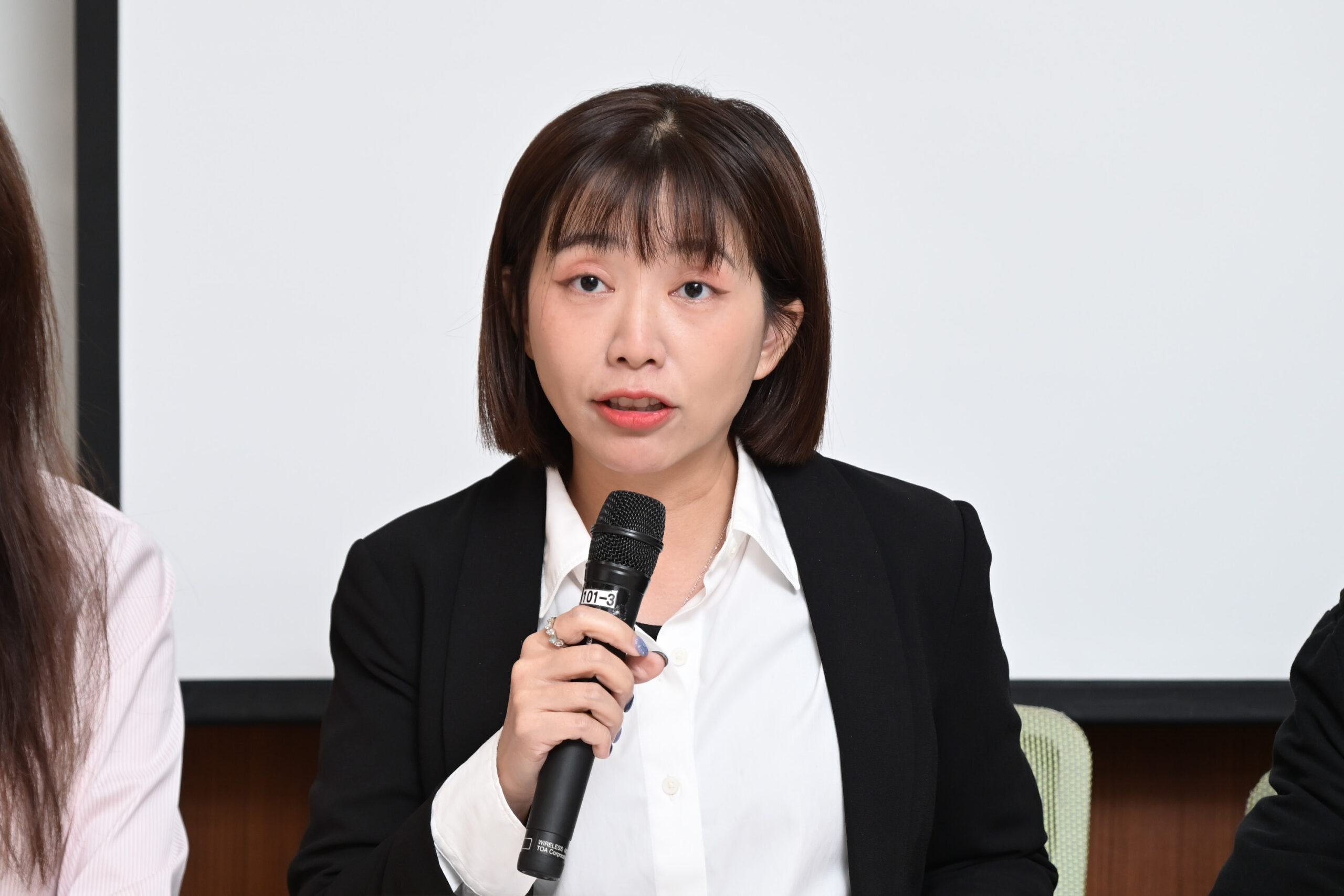
The annual summit of the Inter-Parliamentary Alliance on China Policy (IPAC) has commenced, focusing on the theme of transnational suppression. Attending the event on behalf of Taiwan, Democratic Progressive Party (DPP) legislator Chang Ya-lin emphasized on November 5 that such suppression is now extending to ordinary citizens. Taiwan stands at the frontline of this challenge and is in a position to share its experiences with the international community. She also mentioned that Panamanian legislators are actively working to improve relations with Taiwan, with the aim of restoring diplomatic ties.
The IPAC annual summit took place today at the Dutch Parliament building in The Hague, attracting 52 representatives from 30 countries, marking an unprecedented turnout. Chang Ya-lin represented Taiwan’s legislature at this significant gathering.
During the summit, Chang used the case of Taiwanese comedian Huang Yi-hao to illustrate how the methods of transnational suppression by the Chinese Communist Party (CCP) have evolved. Historically, such tactics targeted political figures and those expressing pro-independence sentiments. However, the scope has now widened to include ordinary citizens and businesspeople. Officials from Panama and Belize have faced sanctions from the CCP for their diplomatic relations with Taiwan, which has dramatically impacted the international order and the principle of national sovereignty.
Chang pointed out that while the CCP may not directly warn her, it is exerting pressure on the organizers of international events to keep her from participating—a classic example of the chilling effect in action. Given Taiwan’s position at the forefront of transnational suppression, Chang asserted the importance of sharing best practices and experiences with other nations. She urged various sectors to evaluate whether current laws provide a basis for thorough investigations into local accomplices and whether there are legal protections or reporting channels for entities under pressure.
Honduran legislator Gerson Osorto stated during the meeting that restoring relations with Taiwan should be a primary objective. Similarly, Panamanian lawmakers echoed the sentiment, advocating for the establishment of a Taiwan exchange group and supporting Taiwan as the right course of action.
In an interview with Central News Agency following the summit, Chang Ya-lin expressed confidence that the two former ally nations now recognize that the economic support from China often represents empty promises aimed at undermining other countries’ independence. She believes that these countries have come to understand Taiwan’s commitment not to harm the democracy and freedom of any nation, nor to engage in coercive economic practices, but rather to promote mutual prosperity.
Chang recounted that after the meeting, Panamanian legislators approached her for a selfie, emphasizing their proactive stance in fostering relations with Taiwan and their ultimate goal of resuming formal diplomatic ties.
When asked about the importance of the legislature’s presence in international forums, Chang emphasized that it is crucial for the world to be aware of Taiwan’s current situation and challenges. She highlighted that Taiwan is not merely seeking assistance; it has the capacity to share solutions with like-minded nations to jointly enhance their sovereignty and security.
The IPAC annual meeting featured parliamentarians from various political parties; however, only members of the DPP represented Taiwan. Chang noted that there is significant international attention on Taiwan’s defense budget. She expressed that if representatives from the People’s Party could also attend, it would showcase a spirit of political competition while maintaining a collective priority for the nation, thereby strengthening Taiwan’s resolve to defend its democracy and sovereignty.
Taiwan’s legislature is a formal member of the IPAC, co-chaired by DPP legislator Fan Yun and People’s Party legislator Chen Chao-tzu. Members include DPP legislators Chen Kuan-ting, Wang Ding-yu, and Chang Ya-lin, alongside People’s Party legislators Hsu Chong-shin, Hong Yu-hsiang, and Wang An-hsiang.