
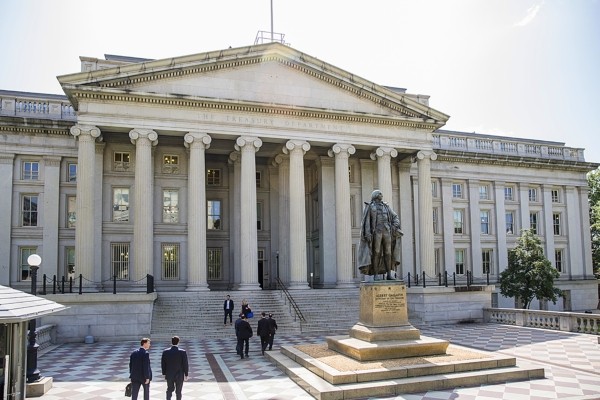
The U.S. Department of the Treasury announced on Wednesday, November 4, sanctions against several companies and individuals in India and Turkey. The accused entities have been implicated in providing assistance to the Iranian government, including offering falsified ship flags and maritime certifications for sanctioned vessels transporting Iranian oil, as well as providing ground services for sanctioned Iranian airlines.
These sanctions are part of the United States’ “Operation Economic Outcast,” a strategic initiative aimed at cutting off the economic revenue sources of the Iranian government.
The Treasury Department highlighted that a business network operating in Chandigarh, India, has been suspected of engaging in maritime fraud that enables Iran’s “shadow fleet” to evade international sanctions.
This network is managed by Suniel Kumar Sharma and his wife, Jaspreet Preeti Shahid, who are accused of supplying false ship flags and maritime certifications to sanctioned vessels involved in transporting Iranian oil, thereby assisting them in evading international oversight.
As a result, the U.S. Treasury imposed sanctions on Sharma, Shahid, and their associated businesses, including Eswatini Maritime Affairs and International Ship Registry PTE. Ltd., Oceaniek Technologies India, and Aryavart Ship Management Private Limited. Additionally, two other Indian business directors, Ashwani Kumar Dhiman and Ishwinder Singh, have also found themselves on the sanctions list.
The announcement further revealed that the U.S. Treasury has sanctioned an additional six Indian companies that are owned or controlled by Shahid.
According to the Treasury Department, this particular network has been operational since 2014 and has previously masqueraded as a ship flag management agency from the Caribbean nation of Dominica. In 2023, Sharma established a Singapore-based company, Eswatini Maritime, continuing to provide flag services for vessels transporting Iranian oil products.
Sharma has also been accused of using Indian company Oceaniek Technologies India to set up a fraudulent ship flag registration system for Aruba, Nicaragua, and St. Martin, again offering services to sanctioned vessels involved in Iranian oil transport.
Furthermore, the U.S. Treasury Department has raised alarms regarding the use of false flags, warning that vessels registered under such flags often lack effective ship insurance. In the event of incidents like collisions or oil spills, associated losses may not be covered by insurance, potentially resulting in billions of dollars in damages to coastal nations and the global economy.
In a related action, the U.S. Treasury also sanctioned Fugo Ground Services, headquartered in Istanbul, as it continued providing ground services for sanctioned Iranian airlines despite repeated warnings from U.S. authorities.
The Treasury noted that Fugo had service agreements with six Iranian airlines that are already under U.S. sanctions, including Iran Air Tour, Saha Airlines, Sepehran Airlines, Varesh Airlines, Taban Airlines, and Ata Airlines Company. These airlines were sanctioned on September 8, and Fugo began providing services to some of them weeks after the sanctions were announced.
According to the U.S. Treasury, Iran utilizes so-called commercial airlines to transport personnel, weapons, sensitive technologies, and cash, thereby supporting its military endeavors and proxy organizations.
In accordance with U.S. sanctions regulations, the assets and related interests of designated individuals and enterprises within the United States will be frozen. Violators of these sanctions could face civil or criminal penalties.
Treasury Secretary Scott Bessent emphasized that the United States will continue to impose sanctions on any individuals and companies that support the Iranian government, regardless of whether their activities are land-based, maritime, or aerial in nature.