
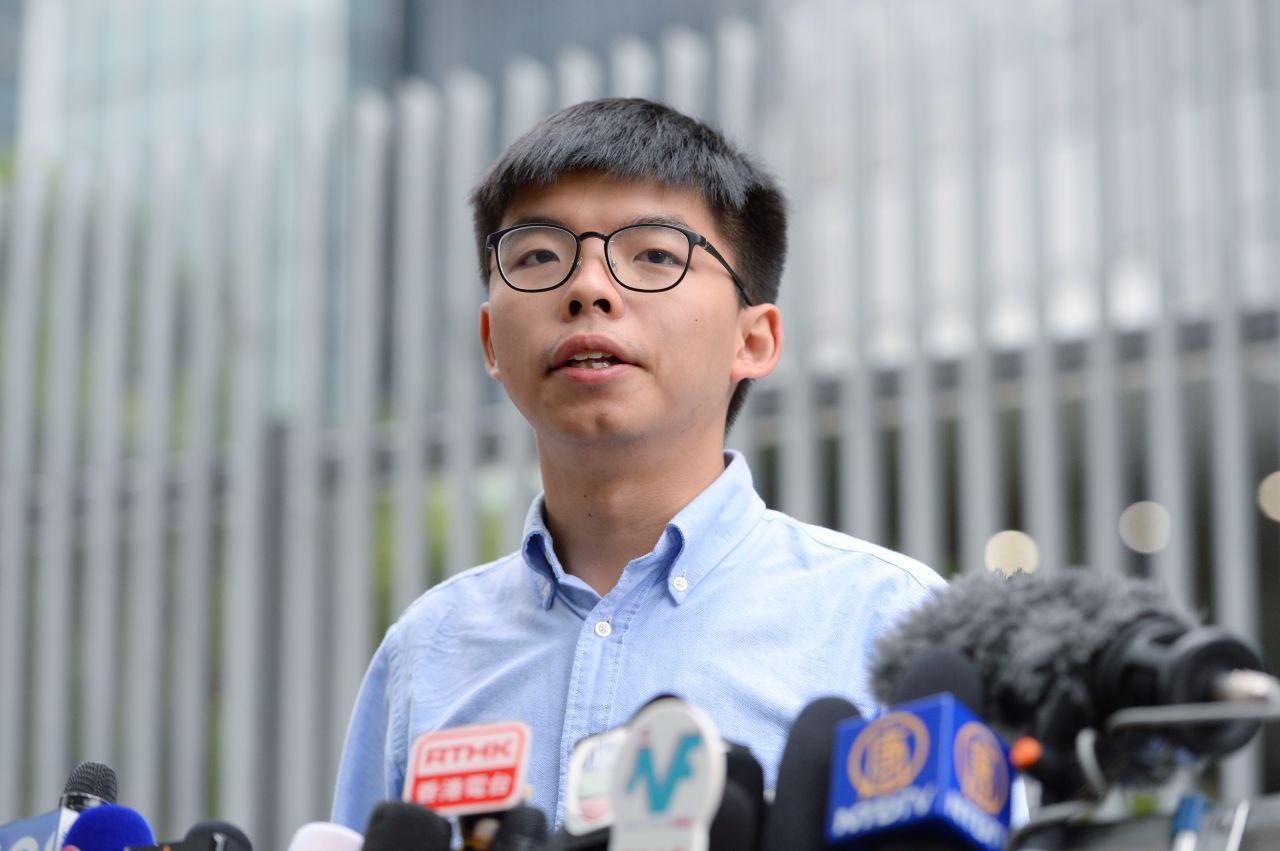
Hong Kong’s former Secretary-General of the pro-democracy group Demosisto, Joshua Wong, has been sentenced under the National Security Law. The ruling was handed down today in the High Court of Hong Kong. He has received a prison sentence of 10 years, meaning he is expected to be released in November 2036.
The case was presided over by Judge Frank Poon, who has been designated for handling National Security Law cases. He categorized Wong’s offense as “major” and used a starting point for sentencing of 13 years. However, after considering factors such as Wong’s guilty plea, the final sentence was reduced to 10 years imprisonment.
Under Article 29 of the National Security Law, convicted individuals can face a minimum of three years and a maximum of ten years of imprisonment; in cases classified as “serious crimes,” sentences can extend beyond ten years to life imprisonment.
Joshua Wong has been detained since November 2020, and he is currently serving time for his involvement in the pro-democracy “35+” primary election case. In November 2024, he was sentenced to 4 years and 8 months for conspiracy to subvert state power, with his initial release set for January 2027. With this new sentence, he will now need to spend nearly another decade behind bars.
Wong has emerged as a prominent figure in Hong Kong’s pro-democracy movement, renowned for his activism and advocacy for democratic reforms. His legal challenges and subsequent imprisonment reflect the broader crackdown on dissent in Hong Kong following the implementation of the National Security Law, which critics argue has been used to stifle political opposition and restrict freedoms in the region.
As Wong continues to face legal battles, his case has drawn significant international attention, highlighting concerns over human rights and the rule of law in Hong Kong. Many observers view his sentencing as part of a larger pattern of repression against pro-democracy advocates in the territory.
The repercussions of this ruling extend beyond Wong himself, as they represent a chilling signal to others involved in the pro-democracy movement. Activists and organizations around the world are closely monitoring the situation, advocating for the rights of the individuals facing similar charges and calling for a restoration of democratic freedoms in Hong Kong.
The future of activism and political expression in Hong Kong remains uncertain, as the government continues its firm stance against dissent under the National Security Law. Wong’s story is emblematic of the challenges faced by those who dare to speak out in defense of their beliefs and the direction the city is heading in a rapidly changing political landscape.