
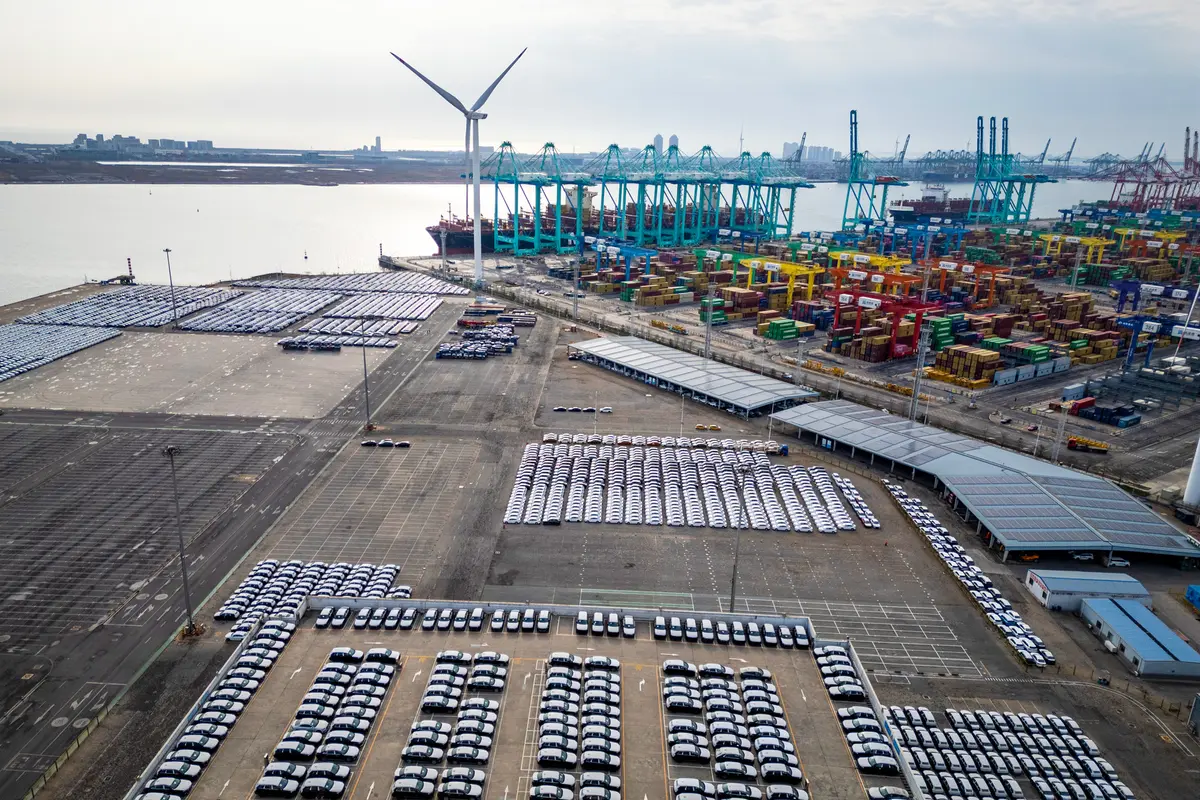
Recently, the Chinese automotive industry has shown signs of a significant downturn, defying the traditional peak sales season typically observed in September and October. This period is commonly referred to as “Golden September and Silver October.” However, the Vice Chairman of Geely Holding, Gui Shengyue, has noted that this phenomenon has noticeably diminished for the first time this year.
On November 1st, major Chinese automotive companies revealed their sales figures for October, which indicated a stagnation in the growth rate of first-tier manufacturers. There is a growing disparity in sales performance among different companies, underlining an increasingly fragmented market.
According to estimates from Nomura Securities, domestic sales in China experienced a sharp decline of about 25% in October, bringing demand back to levels not seen since 2014. A report from the China Fund News highlighted that despite the impact of the National Day holiday, significant autumn auto shows, and various promotional policies, the foot traffic for dealerships rapidly fell back to normal levels in the second half of the month. Consequently, the sustainability of demand remains inadequate.
During a recent performance communication meeting, Geely Holding’s Vice Chairman, Gui Shengyue, candidly stated that this year marks the first time the “Golden September and Silver October” phenomenon has “essentially disappeared” in the automotive sector, suggesting it may become a new norm. He described the current situation as indicative of “a cold winter before dawn.”
Previous forecasts by the China Passenger Car Association indicated a downward trend in sales during this peak season. In September, nationwide retail sales of passenger cars dropped to just 1.618 million units, reflecting a 28% year-on-year decline. October is projected to see a further decrease of 28.9%, with total retail sales estimated to dip to around 1.6 million units.
A survey conducted by the China Automobile Dealers Association revealed that 54.2% of dealers felt this year’s peak season effects were significantly weaker than in previous years. Moreover, 33.7% of dealers explicitly acknowledged that the busy season had “essentially disappeared.” Several industry executives have also publicly indicated a clear trend of declining sales.
Looking ahead to November and the rest of the year, the China Automobile Dealers Association believes that carmakers will soon begin to ramp up efforts to boost sales as year-end approaches, gradually increasing their sales tempo. While there may be a slight recovery in the market in November, persistent price wars and weak demand are expected to impose noticeable constraints, hindering any possibility for substantial growth. The automotive market this year has been beset with challenges, including declining demand, sustained pressure on overall market volume, heightened competition, and weak intrinsic growth momentum.
On the supply side, the competition among car manufacturers to launch new models has been fierce this year, with reports of up to seven new cars being introduced in a single day. However, this surge in new releases has not translated into increased profitability.
In a report published on November 3rd, analysts at Nomura Securities suggested that the Chinese automotive market is now entering a phase of elimination. They opined that improvements in market sentiment could occur only with the advent of potential mergers and further industry collaborations.
The report further analyzed that, amidst the domestic market slump, Chinese automotive companies are becoming increasingly reliant on exports. Nevertheless, the industry faces potential adverse effects, as effective April 1, 2027, the value-added tax rebate on exports of new energy vehicles will decrease from 13% to 9%.
Cui Dongshu, head of the China Passenger Car Association, commented to domestic media that the reduction in tax rebate rates by four percentage points would put more immediate pressure on certain small to medium-sized manufacturers and low-cost vehicle segments.
The China Passenger Car Association estimates that retail sales of automobiles are expected to plummet to just 18.5 million units in 2026, a stark decline of 22.1% compared to 23.744 million units in 2025. This projection represents a dramatic drop of 5.09 million units compared to earlier forecasts of 23.59 million units made in April of this year.