
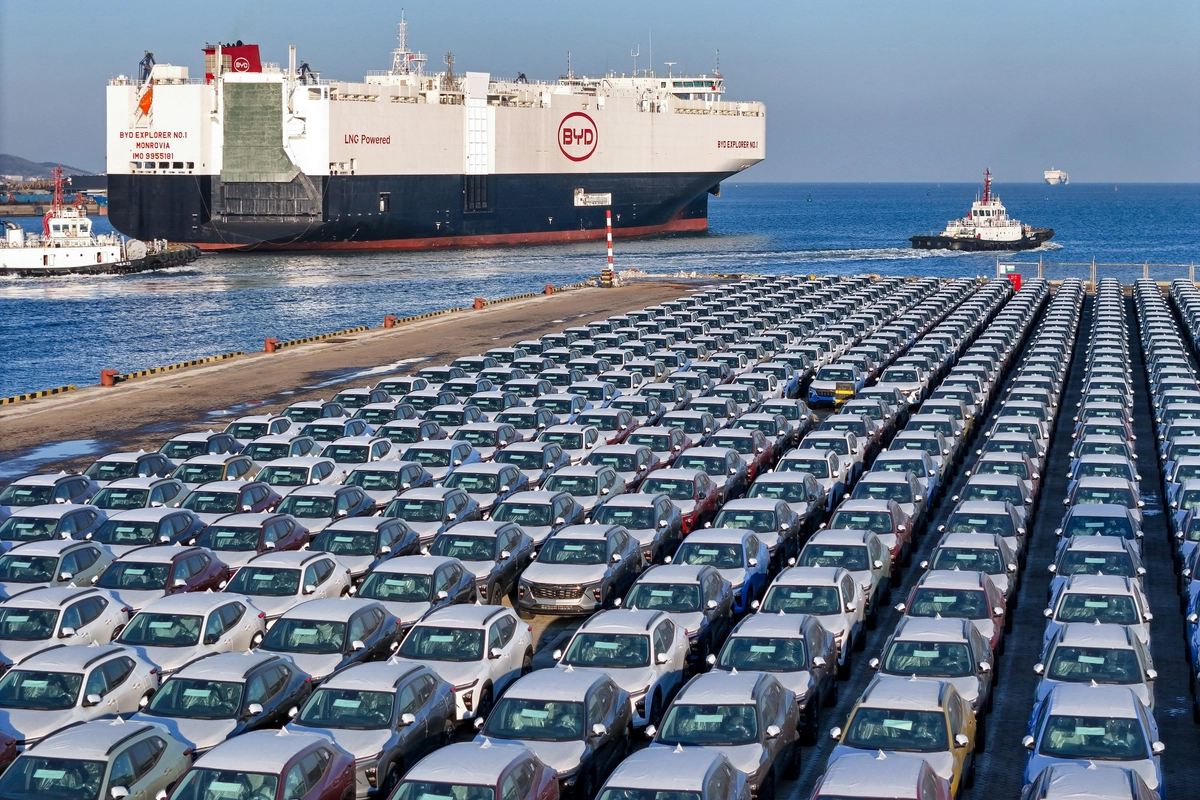
On Monday, November 2, the Alliance for Automotive Innovation, an organization representing nearly all major automobile manufacturers, urged the United States Congress to enact a permanent ban on Chinese automobiles during its brief session following the midterm elections next week.
John Bozzella, the CEO and President of the Alliance for Automotive Innovation, expressed concerns about the influx of Chinese-made vehicles into the U.S. market. He stated, “We need to protect the American market from a significant surge of Chinese imports. These vehicles not only pose surveillance risks but also undermine the interests of existing manufacturers, who have invested significantly in communities across the United States for generations.”
The Alliance includes key players such as General Motors, Toyota, Volkswagen, and many others in the automotive industry.
In September of this year, bipartisan senators sponsored the Connected Vehicle Security Act of 2026, agreeing to postpone the bill’s discussion until November. If passed, this legislation would permanently prohibit the sale of Chinese automobiles in the United States.
Earlier this year, in early 2025, the Biden administration implemented rules through the Department of Commerce that effectively curtailed the sale or production of connected vehicles by Chinese companies in the U.S. This measure was aimed at preventing sensitive driver data from being accessed by the Chinese Communist Party (CCP). However, since this action was not a permanent legislative solution, the senators advocating for the legislation hope to close this loophole through formal law.
In early September, Bozzella reached out to the leaders of both the House and Senate, urging them to act promptly on a “permanent ban” against the sale of Chinese automobiles and their associated hardware and software in the United States. In his letter, he highlighted the troubling nature of Chinese manufacturing practices, saying they are rooted in a pattern characterized by unfair trade, subsidies, intellectual property theft, and surveillance.
He emphasized, “Currently, Chinese automakers are dumping vehicles that are equipped with connected hardware and software globally, and these vehicles are subsidized.” Furthermore, he noted that Chinese companies are aggressively capturing market share in Europe, Australia, Southeast Asia, Mexico, and South America.
The Connected Vehicle Security Act is co-sponsored by Republican Senator Bernie Moreno and Democratic Senator Elissa Slotkin. The legislation aims to prohibit the import, production, and sale of connected vehicles, software, and hardware developed by companies linked to China, Russia, North Korea, and Iran. The vehicle and software restrictions are anticipated to take effect in 2027, while the hardware restrictions are set to be implemented in 2030.
In conclusion, the call for a permanent ban on Chinese automobiles reflects growing concerns over national security and the competitive landscape of the automotive industry. As lawmakers weigh the implications of this proposed legislation, the stakes remain high for both domestic manufacturers and international trade relations.