
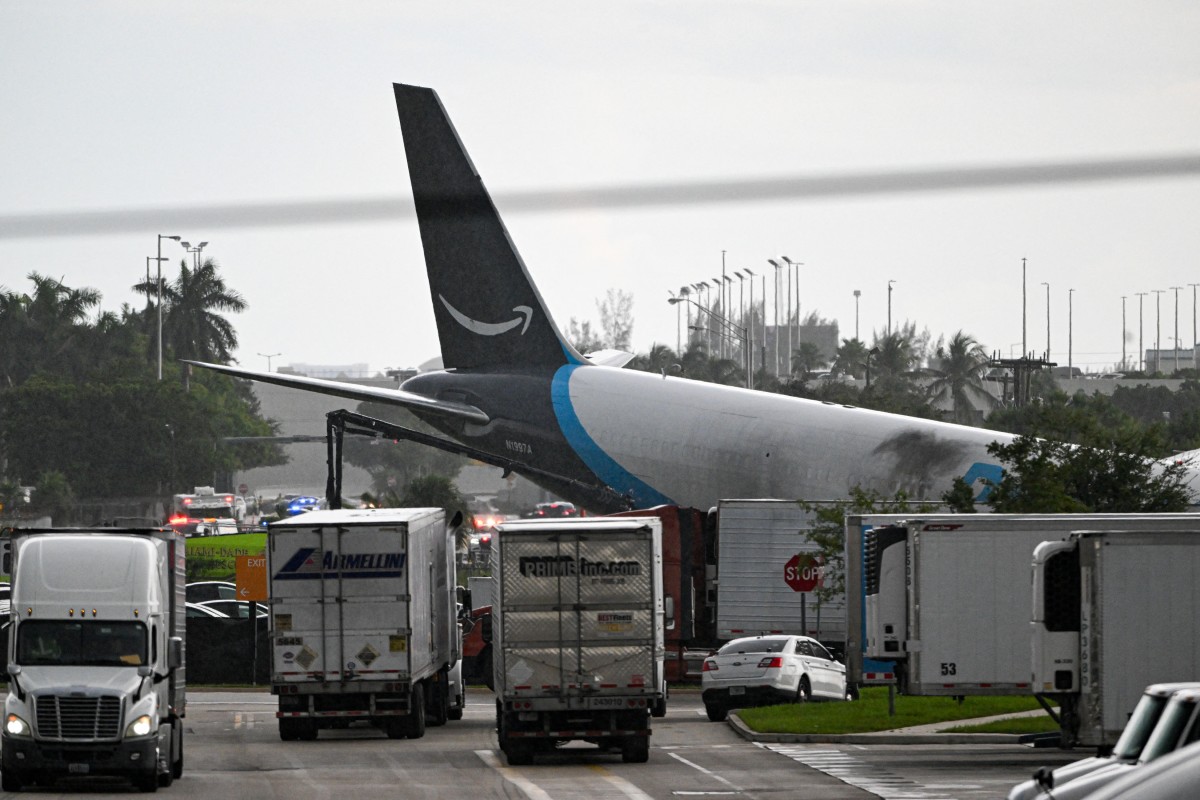
Following the air crash involving an Amazon cargo plane at Miami International Airport on Sunday, September 6th, Ross Aimer, CEO of Aero Consulting Experts, stated that the aircraft was very unstable during approach and the pilot should have initiated a “go-around” procedure before approaching the airport to attempt a new landing.
Flight data recordings indicate that the aircraft was landing at a speed of approximately 180 miles per hour with an unstable attitude. The pilot briefly attempted to go around but ultimately the aircraft overrun the runway by about 1,300 feet, colliding with two cars on the ground, resulting in the death of 5 people in the cars and injuries to 5 others.
The airline operating the flight for Amazon was 21 Air.
According to NPR, some former pilots of 21 Air had raised concerns about safety measures even before the accident on Sunday, but the airline denied such claims.
With over 40 years of experience in the aviation industry, mostly as a pilot at United Airlines, Aimer questioned why a financially strong company like Amazon Prime would outsource flight missions to what he referred to as “irregular operators” like 21 Air.
An Amazon spokesperson stated that their carrier model is common in the aviation industry, and the airline in question holds certification from the Federal Aviation Administration (FAA).
Kelly Nantel, the Amazon spokesperson, emphasized in a statement to NPR that safety is paramount for them, including the safety of their flight operations personnel, the communities surrounding the airports they use, and the personnel handling their goods.
Data from aviation analysis company Cirium shows that Amazon currently has contracts with nine different airlines, operating over 100 aircraft, with 21 Air operating eight of them, including the Boeing 767 involved in the Miami crash.
Aimer commented that 21 Air tends to attract less experienced individuals.
The National Transportation Safety Board (NTSB) confirmed that the crew on the 21 Air flight in the Miami crash had relatively limited experience for the aircraft type, with the captain having obtained a Boeing 767 pilot license less than five months prior and the co-pilot less than 18 months.
In a statement to The Wall Street Journal, 21 Air expressed their commitment to providing correct training, procedures, and protocols for safety in all aspects of their operations.
Prior to the Miami crash, former employees of 21 Air had expressed concerns about the safety culture within the airline. Karl Seuring, a senior pilot and former president of the 21 Air Pilots Association, stated that he was not surprised by the accident and had anticipated it but felt powerless to prevent it.
Seuring, who had filed a federal whistleblower lawsuit in 2022 due to his safety concerns about 21 Air, mentioned that he had been terminated for questioning the airline’s safety standards after being repeatedly told that “things would not change.”
He highlighted the challenges the company faced in attracting experienced pilots due to lower salaries compared to other airlines and had proposed changes to the management.
The then CEO of the company refuted these accusations in the lawsuit testimony, denying that 21 Air had prevented employees from reporting safety concerns, and stating that the company “complies with all regulations.”
Both Amazon and 21 Air acknowledged reports regarding safety concerns raised by former 21 Air employees. Nantel stated in a statement that despite these allegations emerging before their relationship was established with the company and the current leadership of 21 Air, they take any safety-related claims very seriously.
Both 21 Air and Amazon confirmed their cooperation with the NTSB in the investigation of the Miami crash incident.
During a press conference on Monday, NTSB Chair Jennifer Homendy mentioned that investigators were looking into how the two companies collaborated, questioning the nature of their relationship, responsibilities, any safety provisions within contracts or policies.
(Adapted from NPR’s reporting)