
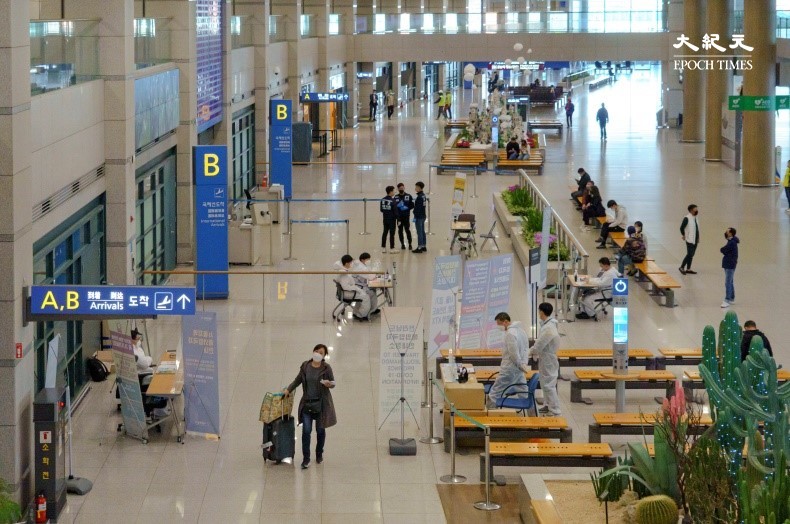
On September 13, 2026, a petition named “Request to Ban Chinese People from Visa-Free Entry and Strengthen Foreigners Entry Inspection and Crime Management” on the “National Agreement Petition” website in the South Korean National Assembly has surpassed 50,000 signatures threshold on September 12 (Saturday), making it eligible to enter the parliamentary committee review process as per the law.
The petition was made public on August 31 and garnered rapid support. By around 4 p.m. on September 7, it had gathered around 20,000 supporters; by 8 a.m. on September 8, the numbers had increased to nearly 25,000; and by noon on September 12, it had exceeded 51,000 individuals. According to current regulations in South Korea, a petition needs to gather support from 50,000 people within 30 days after its public release (until September 30) to be handed over to the relevant parliamentary committees for review.
The petition stated, “With the increasing number of foreigners residing in South Korea, concerns among citizens regarding foreign crimes are rising. In fact, in 2024, there were a total of 35,296 foreign nationals suspected of crime residing in South Korea, an increase of 6.8% from the previous year. In addition, there have been some statistics showing that Chinese nationals have a higher proportion in foreign crime cases.”
“In this situation, it is necessary to carefully reconsider expanding or maintaining the visa-free entry policy for Chinese people without fully ensuring the safety of citizens.”
The first petition proposed the “Abolition of the Visa-Free Entry Policy for Chinese People.” The reason cited was that while promoting tourism and economic benefits is important, it should not override the lives and safety of citizens. If visa-free entry is allowed, it should avoid creating loopholes in managing the identity and crime risks of entrants before their arrival.
The second proposal was to “Strengthen Entry Inspection for all Foreigners.” Regardless of nationality, their criminal records, international arrest warrants, past rejections or deportations, illegal stay, or violations of immigration laws should be confirmed as much as possible before entry. Therefore, there should be an expansion of crime information sharing among countries. Especially for foreign nationals confirmed to have committed serious crimes such as murder, robbery, sexual offenses, drug crimes, and organized crimes, strict standards should be established, such as generally restricting their entry.
The other four petition contents were: strengthening systematic management and tracking of foreign nationals after entry; strict limitations on foreign criminals re-entering; enhancing the integration of crime information among immigration, police, and prosecution authorities; and transparency in sharing foreign crime statistics and management systems with citizens.
The petition stated, “The Republic of Korea does not intend to exclude foreigners but aims to establish a normal immigration management system, requiring everyone entering the country to abide by the laws and order, prioritizing citizen safety. Safeguarding the lives and safety of citizens is the most fundamental responsibility of the state.”
Several incidents involving Chinese nationals on Jeju Island in recent months have fueled further discussions.
On the evening of July 21, a residence in Lao Heng-dong, Jeju City, witnessed an altercation involving two illegal Chinese residents who ended up injuring each other with knives after a dispute over trivial matters. One of the wounded Chinese individuals, covered in blood, walked out of the building, prompting a passerby to call the police upon witnessing the scene. The Western Jeju Police Station arrested both individuals on July 22 on suspicion of grievous bodily harm and initiated an investigation.
On August 1, South Korean police attempted to stop a van for not wearing seat belts. However, the vehicle suddenly accelerated and fled, violating multiple traffic laws such as running red lights, crossing the centerline, making illegal U-turns, and engaging in high-speed escapes. After a pursuit of about 1.3 kilometers lasting approximately ten minutes, four individuals abandoned the van and attempted to escape, with one even climbing over a residential fence. The police, along with nearby residents, managed to apprehend all four individuals, revealing that they were all illegal Chinese residents. The driver, a man in his thirties, did not even possess a driver’s license.
On August 12, the Jeju Maritime Police Department disclosed that they arrested three individuals, including a Korean male in his forties named Mr. A, on suspicion of recruiting and transporting illegal Chinese islanders (in violation of the “Jeju Special Act”) and had transferred the case to the prosecution.
These three people were responsible for recruitment, transportation, and were allegedly involved in assisting two Chinese nationals who entered Jeju without a visa over two years from 2024 to 2025, as well as three Chinese illegal residents in leaving Jeju for other areas of Korea. They concealed these individuals in a truck and subsequently loaded both the truck and passengers onto a cargo ship from Jeju port to ship them to other regions, continuing their criminal activities.
Under the “Jeju Special Act,” foreigners can enter Jeju without a visa but are prohibited from going to areas outside Jeju without permission; they are allowed a maximum stay of 30 days upon entry, exceeding which transforms them into illegal residents.
Another independent petition requests the abolition of the “Jeju Special Autonomous Province Visa-Free Entry System,” which intersects with the issues raised in this case but is being handled separately. The South Korean government has yet to issue a formal response to this petition, pending the outcome of the parliamentary committee review.