
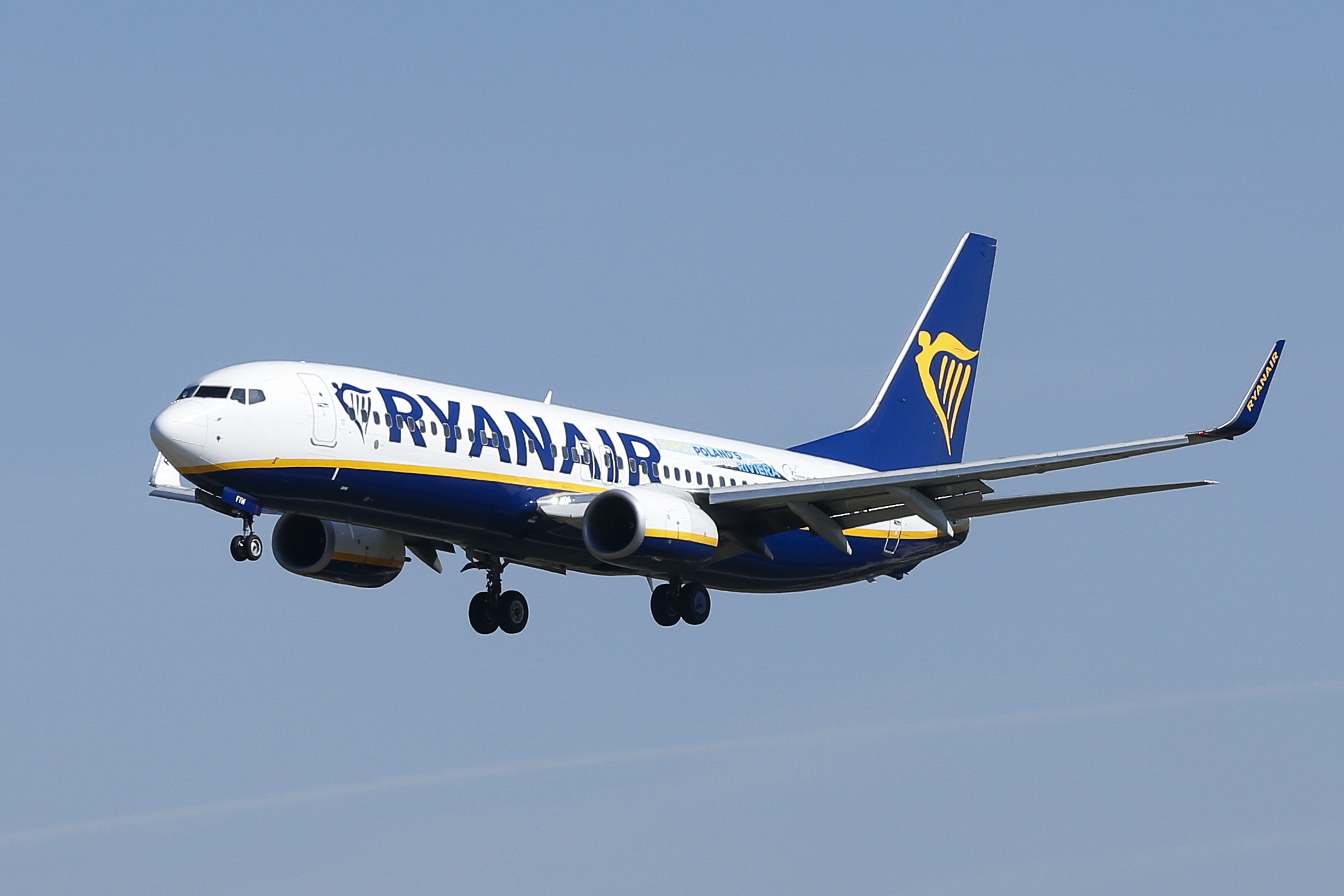
European airline giant Ryanair announced on Wednesday, August 12th, that it has signed a new 5-year partnership agreement with Google Cloud, one of the largest aviation companies in Europe. The company will deploy Google Workspace and Google Cloud services to approximately 35,000 employees and utilize AI tools like Gemini Enterprise to automate decision-making, optimize crew scheduling, and enhance operational efficiency.
This collaboration further solidifies Ryanair’s “dual-cloud strategy” after extending its existing partnership with Amazon Web Services (AWS) for another 5 years on July 27th. The airline plans to continue utilizing cloud and AI technologies like Amazon Quick, Amazon Bedrock, and Amazon Bedrock AgentCore from AWS.
According to information released by Ryanair and Google Cloud, Ryanair will roll out Google Workspace and Google Cloud services to its global network of approximately 35,000 employees to support the company’s growth target of annually transporting 300 million passengers by 2034.
Gemini Enterprise will play a vital role in this collaboration. Ryanair plans to leverage Google Cloud’s enterprise AI platform to connect internal data, automate workflows, and develop customized AI agents.
These AI agents will assist in automating certain decisions, optimizing crew scheduling, and boosting overall enterprise productivity. Google DeepMind’s technologies such as AlphaEvolve and WeatherNext will also be utilized to support Ryanair’s fleet operations, maintenance planning, and related operational tasks.
Ryanair CEO Eddie Wilson stated that the company is progressing towards its goal of carrying 300 million passengers annually by 2034, necessitating a highly resilient infrastructure. He noted that the new “dual-cloud strategy” will enhance infrastructure resilience, allowing technology partners to align with the company’s rapid growth and efficiency requirements.
Maureen Costello, Vice President of Google Cloud for the UK, Ireland, and Sub-Saharan Africa, expressed that deploying generative AI at scale combined with modern collaboration tools has the potential to assist companies in expanding their business while reducing operational costs.
Ryanair’s collaboration with Google Cloud comes less than a month after renewing its partnership with AWS on July 27th. The extended 5-year agreement with AWS aims to enhance productivity and customer experience through the use of AWS’s cloud computing and AI technologies such as Amazon Quick, Amazon Bedrock, and Amazon Bedrock AgentCore across various domains including Ryanair’s website and operational efficiency.
AWS is a crucial partner for Ryanair’s existing digital infrastructure. With approximately 647 aircraft in operation and around 3,900 flights daily, AWS technologies will continue to support its large-scale operations.
Tanuja Randery, Vice President and General Manager for Europe, the Middle East, and Africa (EMEA) at AWS, expressed pride in deepening the long-term partnership with Ryanair and looks forward to how cloud technology and AI can revolutionize operational efficiency and customer experience in the aviation industry.
By establishing a new long-term partnership with Google Cloud on top of its existing collaboration with AWS, Ryanair has adopted a multi-cloud architecture utilizing both AWS and Google Cloud. The airline positions this as its “dual-cloud strategy,” aiming to enhance IT infrastructure resilience and reduce reliance on a single cloud provider.
Ryanair’s strategic moves reflect the growing application of AI in the aviation industry, expanding from customer service and general office tools to more core operational processes including crew scheduling, fleet management, maintenance planning, operational decision-making, and infrastructure management.
For airlines, with a vast number of flights and complex crew scheduling alongside factors like weather conditions, airport capacity, and aircraft maintenance that can cause chain effects anytime, utilizing AI to analyze vast amounts of data and automate certain decisions is seen as a crucial tool for enhancing operational efficiency and resilience.
Not only Ryanair but the international aviation telecommunication group (SITA) and the International Air Transport Association (IATA) research indicate that as the aviation industry continues to pursue enhancing operational efficiency and system reliability, the entire industry is progressively expanding the application of AI in areas such as customer service, operations, and maintenance.