
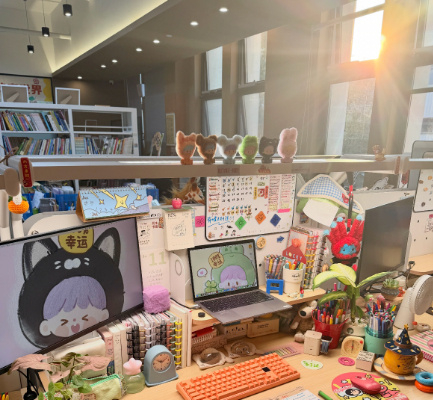
Recently, following the trends of “naked resignation” and “lying flat,” discussions on whether office workers have a lack of loyalty towards their companies have emerged on Chinese social media. A popular topic on Weibo is the phrase “This computer is not meant for resigning,” with netizens posting photos of their own or colleagues’ workstations to analyze who treats the company like home and who feels no attachment and is ready to leave at any time. Some netizens even think that using a computer desk setup as an indicator of resignation intentions may be overthinking it.
The belief that “the more exquisite the computer desktop, the less likely the employee is to resign” is gaining traction on social media. Chinese netizens have been posting pictures and commenting on the items displayed on their colleagues’ desks, such as action figures, plants, health pots, carefully selected desktop wallpapers, and meticulously arranged folders, jokingly referring to these details as “the cyber-loyalty badge.”
These posts have sparked a significant response, with many netizens commenting or creating new posts to share photos of different office workstations. It’s generally agreed among netizens that employees who personalize their desks with personal items like toys, plushies, plants, unique stationery, health pots, stylish computer wallpapers, sticker-covered monitor borders, personal mechanical keyboards, and mice show a strong dedication to their job and see the company as their own, making them less likely to leave.
On the flip side, employees preparing to resign tend to clear their browsing history, delete personal files, and remove any customization from their computers, leaving their desktops looking clean as if they just had their system reinstalled. This minimalist style is dubbed the “ready-to-run style,” indicating a high resignation likelihood, whether it’s a voluntary or involuntary exit.
Netizens believe that those who put effort and time into arranging their workstations, even adding long-term items like health pots and heated coaster pads, are demonstrating a willingness to create a comfortable zone in the company. The more personal items they have, the deeper their roots in the company. Conversely, a minimalist office setup suggests that the employee is detached or lacks emotional investment in the company, showing no long-term commitment.
Weibo user “Nanxiang Fenglin Wan” expressed that dedicating time to organize their computer and build their work database does not indicate an immediate intention to leave. They remarked, “Details don’t lie. The state of a computer directly exposes the true thoughts of a worker. The more meticulous the organization, the more they plan to stay long-term.”
Another Weibo user, “Shijian Qing yu Li,” stated that the more exquisite the desktop, the stronger the roots. Those who set up their office space as a second home won’t be leaving in the short term.
Some netizens commented that “the dedication in computer setup equals determination on the job,” and employees who meticulously adjust settings and wallpapers are likely planning for long-term dedication. On the contrary, those who are about to leave won’t leave any personal items on their computers. The computer holds the true answer to a worker’s intentions.
However, some netizens believe that the analysis of “This computer is not meant for resigning” is oversimplified. Some people arrange their computer desks neatly or beautifully simply because of personal preferences for cleanliness or enjoyment in life. The key to whether someone is determined to resign lies in career development opportunities and interpersonal relationships.
Others added that “it mainly relates to personal habits,” and “I also prefer cleanliness.” They noted that an office workstation’s status only reflects organizational habits and cannot determine one’s thoughts. They emphasized the importance of being comfortable and at ease, suggesting that personal preference in workstation setup is essential, and both approaches have their pros and cons.