
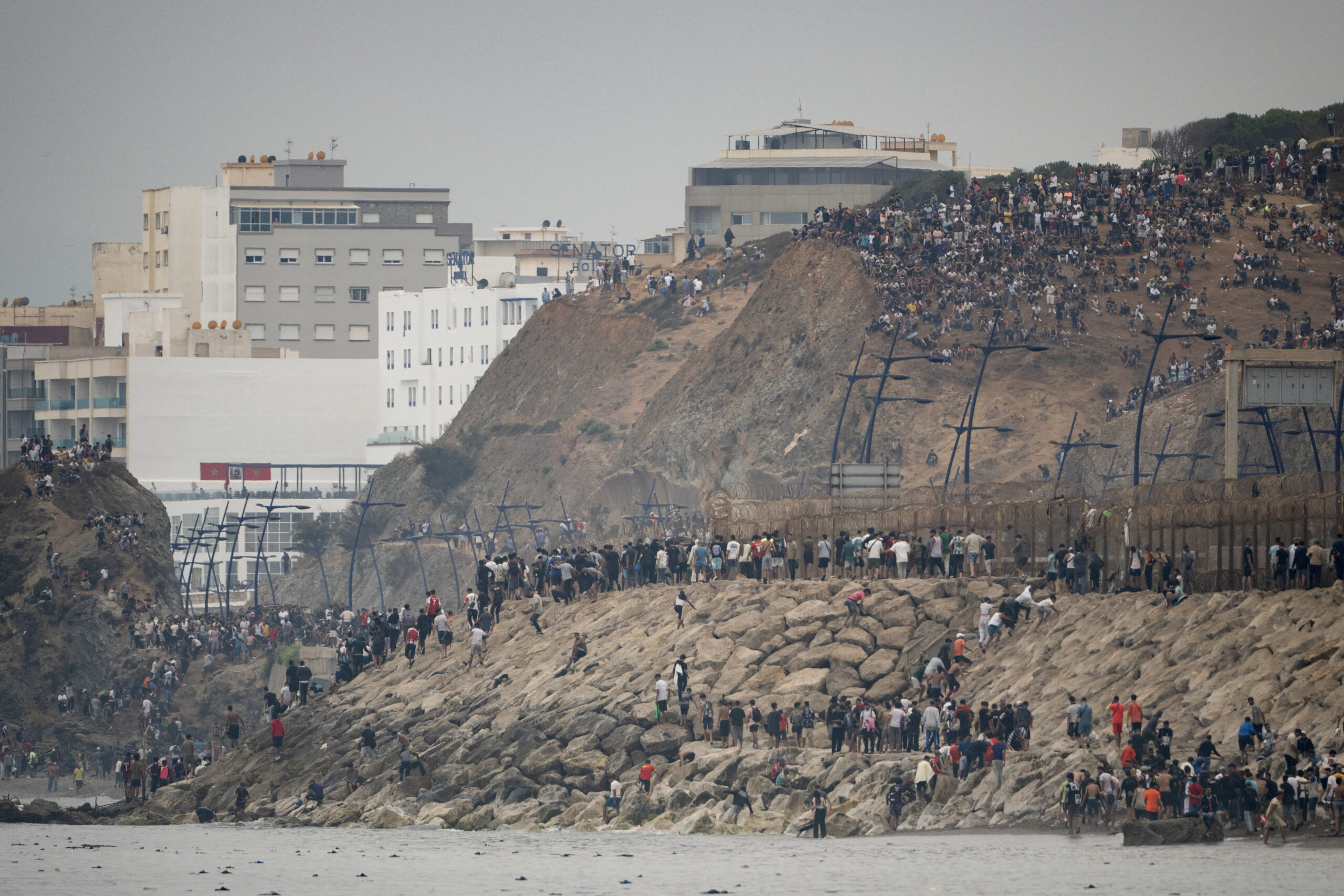
In the Spanish North African enclave of Ceuta, local leaders said on Wednesday (August 5) that after 72,000 illegal immigrants flooded the area within a week, the regional government is now attempting to transfer hundreds of unaccompanied minor migrants to mainland Spain.
Despite the majority of migrants having already returned to Morocco, there are still around 1,100 unaccompanied minors who arrived before and during the influx stranded in Ceuta, and they cannot be immediately deported according to the law.
Due to the reception centers in Ceuta being full, many minors are living in makeshift accommodations in converted warehouses, while some are sleeping on the streets.
Charities and residents’ groups are working to help children and pregnant women living on the streets.
As per the immigration law reform implemented in Spain in 2025, authorities must relocate unaccompanied minor migrants who arrive in overwhelmed reception areas to other regions within 15 days of filing their cases.
However, while the country’s laws mandate regional governments to assist in emergency placements of migrants, it is currently unclear whether the four regions governed by the conservative People’s Party and the far-right Vox party would be willing to receive these unaccompanied minor migrants arriving in Ceuta.
On Wednesday, the coalition governments in these four regions all stated they would challenge any such orders, with leaders from Vox even stating that Spain should not give “a single euro” to these minor migrants.
Nonetheless, the Spanish government has approved providing Ceuta with €25 million (approximately $29 million USD) in funding to care for these unaccompanied minor migrants.
Experts caution that even if regions agree to receive these minors, it may take several months to complete the process of identification and resettlement.
This issue could further intensify tensions between Spain and some conservative-led European countries. Last week’s cross-border events have raised the alert across the EU, with the Italian government taking action last Friday (July 31) by suspending the Schengen Area free movement mechanism for Spain, reinstating border checks to address this migration crisis.
(Reference: Reuters)