
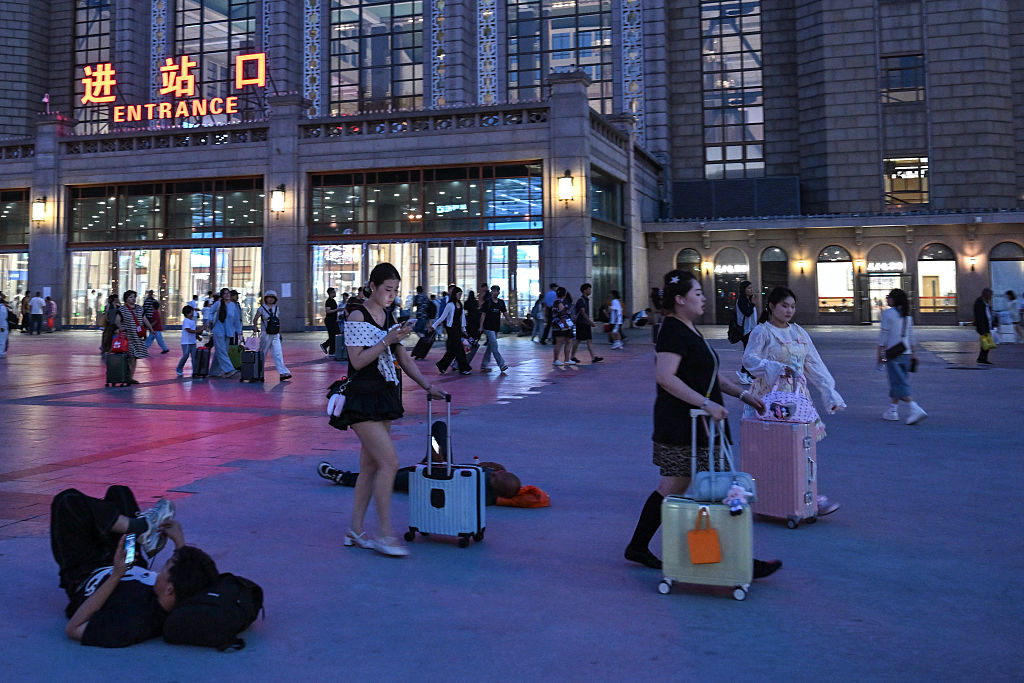
During the peak summer travel season on the mainland, the surge in tourism did not translate into increased revenue. Nearly twenty professionals in the cultural and tourism industry recently expressed that while tourists are still traveling, their budgets have noticeably tightened, leading to repeated price comparisons. Hotel room rates have decreased, travel agency revenues and profit margins per tour have declined, and some operators have exited the market.
According to a report by the Economic Observer on July 31, a five-star hotel in Zhengzhou, Henan Province, saw a similar occupancy rate in July compared to the same period last year, but the average room price dropped by 8%, with a decrease of 18 percentage points in the proportion of independent travelers.
The manager of a hotel in Changsha, Hunan Province, mentioned that during the summer of 2023, the room rates at their hotel could go over 1000 yuan per night, while this year, similar-grade hotels are charging only around 500 to 600 yuan.
Data released by Guojin Securities shows that from June 29 to July 5, the income from available rooms in the national economy and mid-range hotels decreased by 8.2% and 7.8% year on year, respectively. The occupancy rates and average room prices of both types of hotels also saw a decline compared to the previous year.
According to a report by China Newsweek, as of the end of 2025, Dali had a total of 7,007 operating homestays, 68,300 rooms, and 103,200 beds throughout the county.
Luo Zhen, a channel merchant in the hospitality industry, mentioned that in previous summer seasons, the occupancy rate of many homestays in Dali could reach 80%, but achieving 50% this year is already considered challenging. A manager operating 15 homestay units stated that despite receiving inquiries from about 100 people daily, usually only one or two deals are finalized.
Ren Wanle, the founder of the travel industry platform “Lu Bang,” stated that a survey conducted among thousands of travel agencies showed that the number of visitors received by the interviewed agencies generally decreased by about 50% compared to the previous year.
The head of a travel agency in Hainan mentioned to the Economic Observer that the company’s overall revenue during the summer decreased by 40% compared to the previous year, with routes to Qinghai and Gansu declining by 40% and those to Xinjiang dropping by 60%.
An operator of a travel agency in Guilin revealed that profit per tourist in a business group had decreased from a few hundred yuan to tens of yuan this year compared to the beginning of the year. After canceling the travel agency in April this year, they bought a seven-seat car and switched to providing small charter services.
Several industry professionals pointed out that whereas in the past, tourists typically placed orders half a month in advance, many bookings are now confirmed only 48 hours before departure.
According to the data from the Ministry of Culture and Tourism of the Communist Party of China, in the first quarter of 2026, there were 1.901 billion trips made by mainland residents, an increase of 6.0% year on year, with a total expenditure on domestic trips amounting to 1.86 trillion yuan, representing only a 2.9% growth. The growth in travel expenditure was significantly lower than the growth in the number of trips.
The founder of Wenhui Creative, an industry institution, Liu Zhaohui, wrote on July 16 that with tighter budgets, more people are opting for short-distance, off-peak, and low-cost travels. They are also choosing budget chain hotels over resort hotels and reducing expenses on scenic spots and cultural performances.
The related news has sparked discussions among netizens. A netizen from Zhejiang expressed, “The common people dare not spend money.” Another netizen mentioned that staying at a homestay in Moganshan, Zhejiang, for a few days costs four to five thousand yuan, while opting for a budget chain hotel in the county town saves money that can be used for an additional two days of fun. A traveler posted about encountering issues such as unpleasant restroom odors and obstructed views of the promoted landscapes at a homestay costing over 1000 yuan per night.