
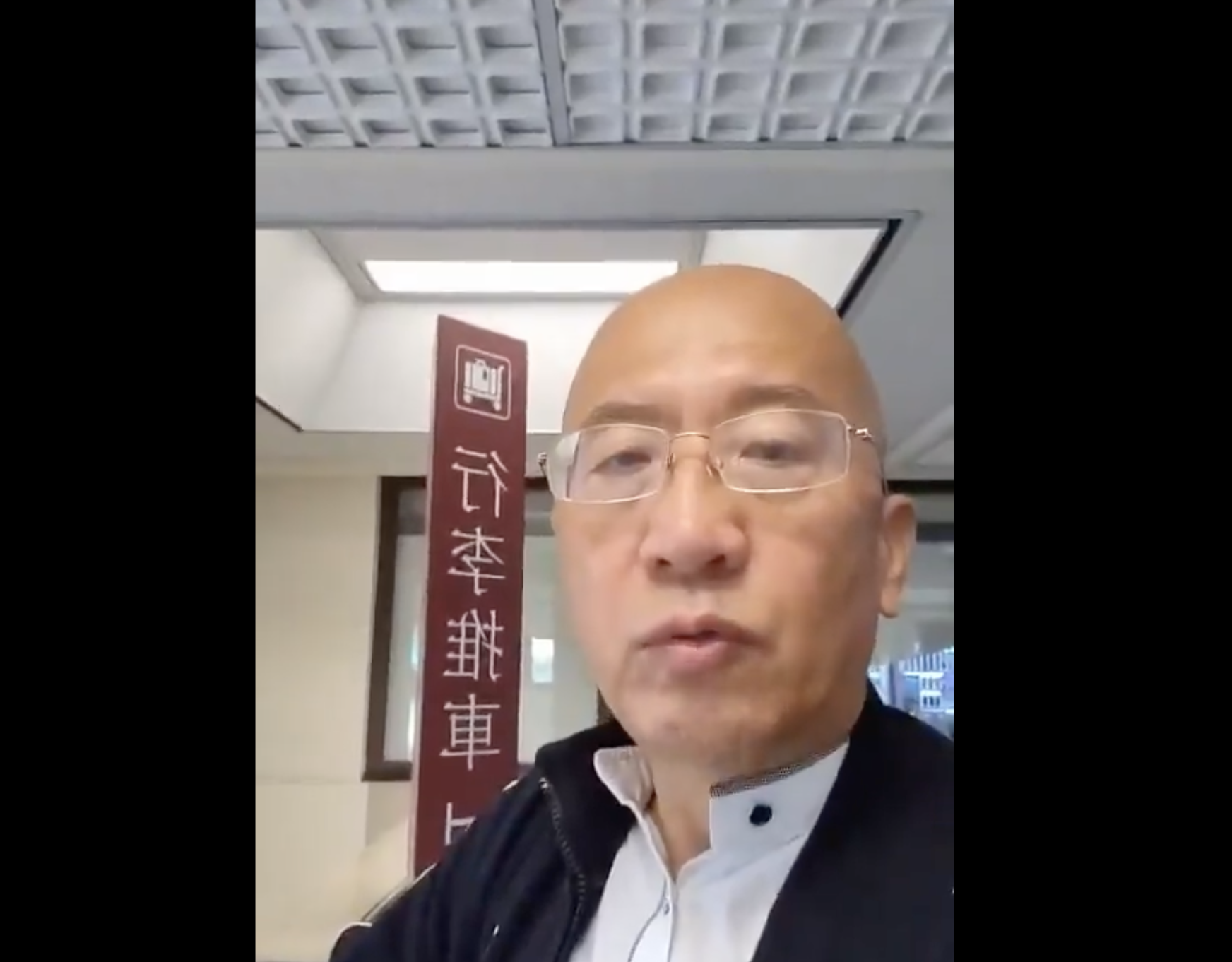
On November 2, 2026, the prominent Chinese media figure Cheng Wanjun, who has sought asylum abroad, arrived at Taiwan’s Taoyuan Airport after taking a flight from Thailand. Upon his arrival, he requested short-term humanitarian protection from the Taiwanese government. However, in a recent interview on November 4, Cheng revealed that he had been deported back to Bangkok, Thailand. The Mainland Affairs Council (MAC) of Taiwan issued a statement indicating that they could not verify the claims of persecution made by Cheng.
During a telephone interview with reporters, Cheng expressed his disappointment and anger over the forced deportation, stating that he was physically harmed during the process. He shared that he had settled in a temporary residence in Bangkok after being returned.
Cheng, aware of the risks he faces due to his previous writings that expose the Chinese Communist Party’s (CCP) abuses, emphasized that he does not feel safe. He had previously informed Taiwan’s Central News Agency that, due to the impending expiration of his visa, he was actively working with the Independent Chinese PEN Center and a Canadian rescue team to expedite his application for asylum in Canada, hoping to obtain safe refuge in a third country as soon as possible.
The MAC clarified that Cheng’s actions at Taoyuan International Airport, where he attempted to solicit temporary shelter from the Taiwanese government, did not adhere to their established protocols and regulations. As a result, the relevant authorities had no choice but to return him to his departure point in Bangkok.
The MAC further noted that similar cases occur frequently, and thus, there must be a mechanism for screening asylum seekers. It is not feasible for the government to process every case on a temporary shelter basis.
The council emphasized that the critical issue in Cheng’s case was the inability of the government to verify his claims of persecution. Until now, the government had found no third-party evidence to substantiate his assertions beyond his own statements. Cheng was also noted to have the ability to travel freely to mainland China and had not been subjected to any restrictions on his personal freedom. The government’s handling of such cases is based on certain evaluative criteria, leading to the decision to return Cheng to Thailand.
The MAC firmly stated that they had provided an official explanation regarding the execution of the deportation, reiterating that the Taiwanese government has generally maintained a supportive stance toward dissenters from mainland China. However, they also urged the public to respect Taiwanese laws and national management systems.
Cheng Wanjun, 58 years old and originally from Inner Mongolia, previously worked as the editor of the periodical “Law and Life” and was the host of the “Legal Lecture” program on China Central Television (CCTV).
Cheng recounted that in 2019 he was reported for criticizing the Chinese leader Xi Jinping during a departmental meeting, which led to a crackdown within his workplace. Subsequently, he was sentenced to six years in prison for “illegal business operations,” being released in 2025. He arrived in Thailand on October 14, 2026, and was given urgent status by the United Nations High Commissioner for Refugees (UNHCR) there.
Due to his visa’s imminent expiration and reports of his experiences being published by overseas media, Cheng had serious concerns about his safety. On November 2, he flew from Bangkok to Taipei via EVA Air, intending to transition to a flight to Beijing. Upon arrival at Taoyuan International Airport, he approached the Immigration Agency to express that he was facing political persecution from the CCP and sought short-term humanitarian asylum.
In recent years, there have been several cases of Chinese dissidents jumping off flights in Taiwan seeking assistance, with varying outcomes.
In September 2023, Chinese rights activist Chen Siming attempted to seek asylum at Taoyuan Airport. In late January 2024, rights defenders Tian Yongde and Wei Yani, as well as the Deng family, also followed this path in hopes of gaining refuge. Among these attempts, only Chen Siming successfully secured humanitarian asylum in Canada without ever entering Taiwanese soil, while the others faced deportation. In September of this year, attorney Wang Xiaohong and his family, who defend the Beijing Zion church, also made a jump at the airport and attained temporary humanitarian housing.
Jie Lijian, chairman of the International Alliance of the Chinese Democratic Party, expressed concern over Cheng Wanjun’s deportation back to Thailand, fearing he might be sent back to China, where he would likely face further persecution.
Regarding the rejection of Cheng’s request for assistance in Taiwan, Jie speculated that the presence of numerous Chinese refugees in Thailand might have led the Taiwanese government to worry about creating a precedent, encouraging more individuals to imitate such actions.
Jie urged the international community to pay greater attention to the plight of Chinese refugees in Southeast Asia. Some of these individuals may have been secretly deported back to China after lacking sufficient attention, leaving their fates unknown.