
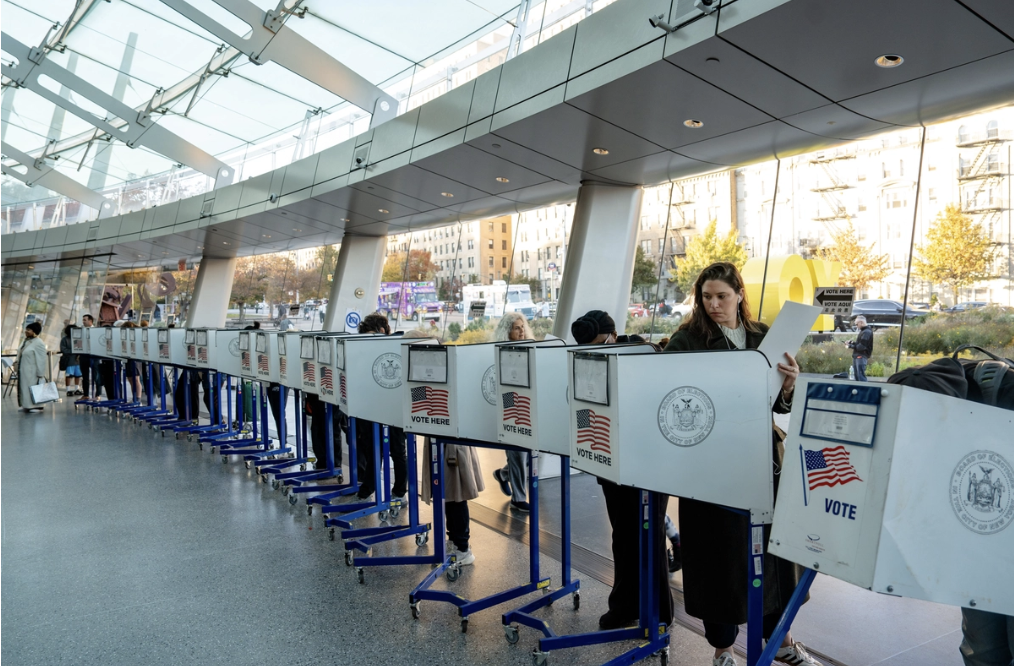
According to data from the University of Florida Election Lab, early voting for the upcoming midterm elections in 2026 has already reached an impressive total of 61 million ballots. This figure marks an increase of approximately 15 million ballots compared to the 2022 midterm elections.
Early voting encompasses ballots cast in person by voters before election day, as well as mail-in ballots that have been returned prior to the election. In the 2022 midterm elections, the overall number of votes cast was about 112 million, with early voting accounting for around 40 percent of that total.
As of November 3, the statistics revealed that the total number of mail-in ballots returned stands at 28.5 million. This significant uptick in early voting suggests a strong engagement among voters ahead of the elections.
Furthermore, the data from the University of Florida Election Lab indicates that 11 states have already exceeded 60 percent of their total early voting counts compared to the figures from the 2022 midterms. Notably, Texas has seen an astonishing surge in early voting, with nearly 95 percent of the total ballots cast in the 2022 elections being tallied in just the five days leading up to the election.
By November 2, early voting statistics from seven states—Oregon, Nevada, Montana, Tennessee, North Carolina, Georgia, and Florida—indicate that they have surpassed 70 percent of the total early voting numbers from the last midterm elections, showcasing heightened voter enthusiasm and participation.
In states that provide data on voter party registration, Democratic registrants make up 42 percent of early voters, while Republicans account for 33 percent. Additionally, more than a quarter of the early voters are either unaffiliated or registered with smaller parties, reflecting a diverse political landscape among those participating in early voting.
The current data suggests that the party composition of voters in this election cycle remains relatively unchanged compared to the 2022 midterms. In the context of the 2024 presidential election, Democratic voters constitute less than 38 percent of the total votes, while Republicans hold 36 percent, with independent voters slightly exceeding a quarter of the total.
When considering gender demographics, early voting in five states—Colorado, Louisiana, Maryland, North Carolina, and Virginia—shows that female voters represent a higher proportion than their male counterparts.
Regarding age demographics, young voters aged 29 and below represent a modest percentage of early voters in North Carolina and Pennsylvania, accounting for 11 percent and 8 percent, respectively. In these two states, a significant three-quarters of the ballots are cast by voters aged 45 and above.
Overall, the demographic breakdown of gender and age among the total number of voters appears consistent when compared to the elections in 2022 and 2024. This continuity suggests a stable voter base, while the increase in early voting indicates an invigorated participation level as the elections draw nearer.