
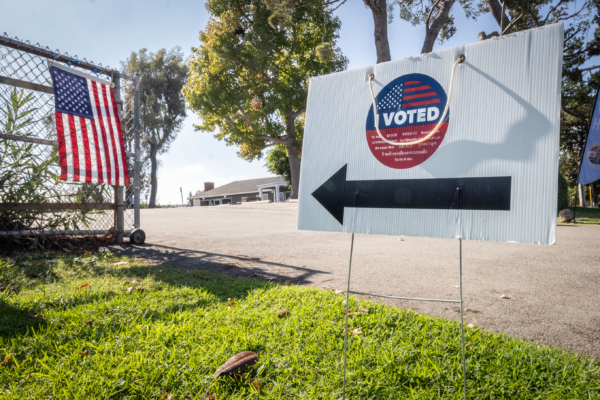
As the U.S. midterm elections approach their final days, candidates at all levels are putting in maximum effort to rally support from voters. This initiative has sparked excitement among many immigrants from mainland China, who have longed for the day when their own country could experience such democratic elections. But what do these immigrants think of the upcoming elections?
Mr. Zhao, a seasoned observer of political affairs and a survivor of the 1989 pro-democracy movement in China, has personal experience with political persecution, having spent time in prison before finding refuge and obtaining residency in the United States. His keen interest in political discourse has led him to express some concerns regarding the participation of socialist and communist candidates in this year’s elections.
“In terms of socialism or democratic socialism, these candidates only scratch the surface,” Mr. Zhao remarked. He elaborated on the origins of socialism as a utopian idea in the 19th century, explaining its evolution through figures like Robert Owen and Saint-Simon, eventually leading to the era of Karl Marx. This historical trajectory diverged into two main branches: one represented by the democratic socialist ideologies of figures like Eduard Bernstein and Karl Kautsky from the German Social Democratic Party, and another signified by the oppressive forms of socialism seen in Soviet Russia, China, and North Korea.
According to Mr. Zhao, neither the democratic socialism that has emerged in Western Europe and Britain nor the tyrannical socialist regimes seen in places like China and North Korea offer viable solutions. He points out that the high taxes and substantial welfare systems in Europe have led to widespread disincentives for individuals to work, fostering a culture where many prefer to rely on state support. The situation has been exacerbated by an influx of refugees dependent on these welfare systems, effectively depleting such nations of their resources.
In the current American political landscape, a sector of the populace fervently advocates for socialism, suggesting that wealthy individuals like Elon Musk should contribute more to taxes. Mr. Zhao perceives this as a dangerous trend, arguing that a nation requires a healthy and normal incentivization mechanism to thrive. He emphasizes that it is this very mechanism that has allowed the United States to flourish over the past two centuries.
He criticizes leftist politicians who equate social equity with a form of “levelling” that mirrors the Chinese Communist Party’s historic land reform campaign targeting wealthy landowners. He warns that such policies could plunge America into the kind of despair faced by Nordic and Western European countries burdened by excessive taxation and welfare – a “tragedy” that would represent a significant regression for the nation.
For Mr. Zhao, the most critical standard for a mature voter is the ability to express political views honestly. He stresses that electoral fraud poses a severe threat to the traditional democratic system in the United States and is a serious challenge for all voters.
Another prominent figure in the Chinese diaspora, Jiang Pinchao, who is also a former leader of the 1989 movement and a poet known for his works on the Tiananmen Square protests, has lived in the U.S. for nearly 30 years. Currently involved in real estate brokerage and investment, he has become acutely aware of the economic conditions affecting everyday Americans, particularly in relation to property prices and mortgage interest rates.
Jiang owns a property in Los Angeles County that has been impacted by rent control policies, resulting in rent increases that fall below inflation rates. He has lost over a million dollars on another commercial property due to excessively high loan interest rates. Emphasizing the importance of being an informed voter, Jiang indicates that he meticulously researches candidates’ backgrounds and policies before casting his ballot. He wishes for voters to support those who prioritize lowering interest rates.
Jiang is impressed by the direct communication candidates have with voters in the U.S., expressing that such interactions would be unthinkable in China. He advises voters to choose candidates who engage, listen to constituents, and are willing to advocate for the public. “Typically, these candidates also require support from the community; volunteering or donating to their campaigns is essential,” he noted.
In addition, Jin Yan, a fellow leader from the 1989 movement and the current executive director of the Tiananmen Square Memorial, sees the current political decision-making in the U.S. as generally favorable for national prosperity. However, he insists that there must be a firmer stance against authoritarian regimes. He reflected, “If we hadn’t been deceived in the past, how could American manufacturing have fallen into such a dire situation?”
Concerning the rise of socialist and communist ideologies in the ongoing midterm elections, Jin stresses that these extremist radicals exploit America’s freedom to infiltrate and undermine democratic institutions. “This calls for electing political figures who possess a profound understanding of these issues, so we can apply the brakes before the harm becomes irreversible,” he cautioned.
As the elections loom nearer, the diverse perspectives of these Chinese immigrants reflect a deep appreciation for democracy, tempered by cautionary insights informed by their own histories.