
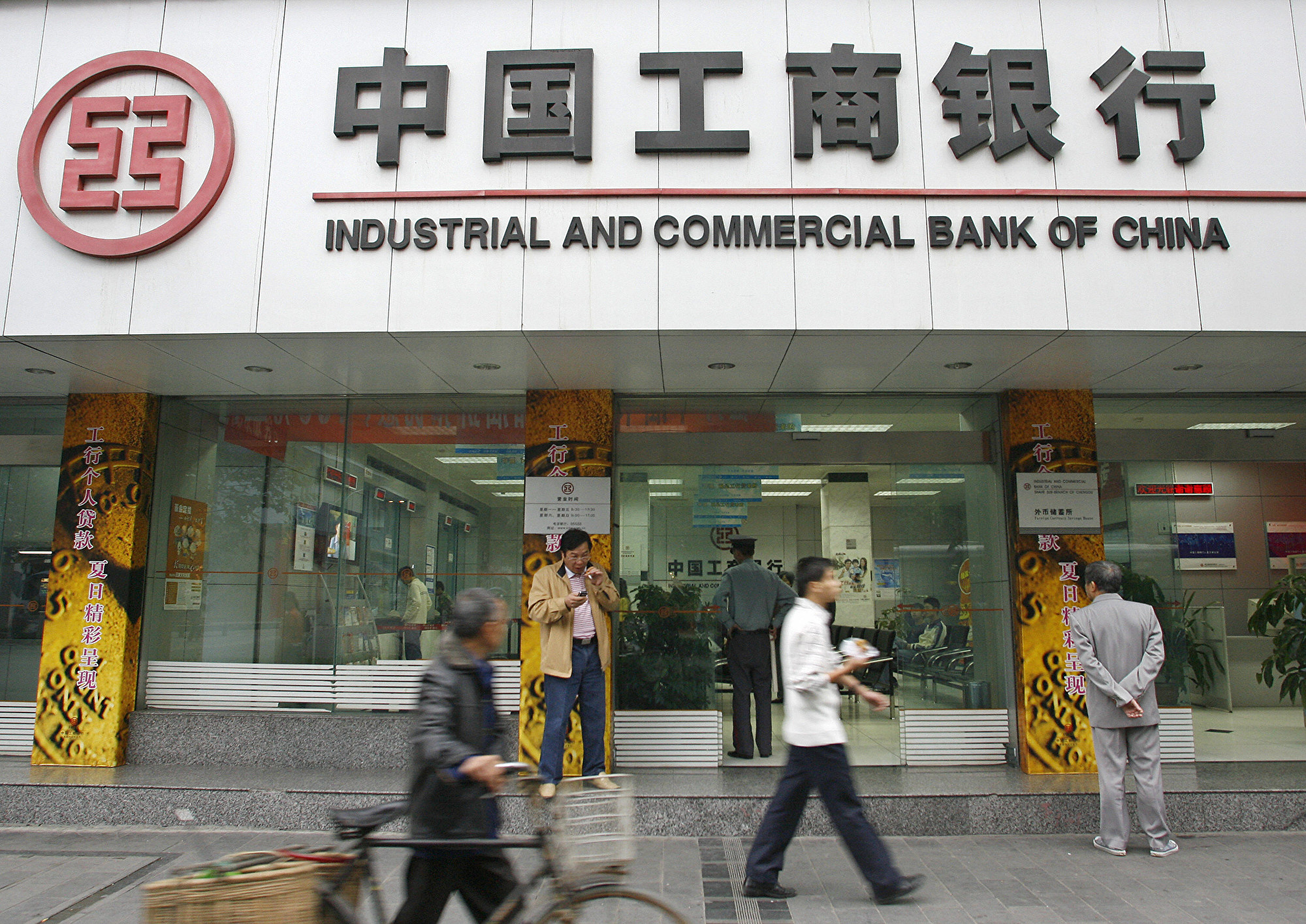
On November 3, a dramatic decline in the stock market was observed as six major state-owned banks in China, including Industrial and Commercial Bank of China and China Construction Bank, saw their market values plummet by nearly 77.2 billion yuan (approximately 11 billion USD). This sudden downturn caught the attention of seasoned investors, who noted that the appeal of bank stocks’ dividend yields had significantly weakened in the short term. As a result, some investors opted to shift their portfolios early in this market cycle. This news quickly rose to prominence, becoming a trending topic on Baidu by November 4.
Multiple sources, including the influential Chinese financial media outlet “First Financial,” reported that all major stock indices in China’s market – the Shanghai Composite Index, the Shenzhen Component Index, and the ChiNext Index – faced declines on the same day. Notably, the stocks of state-owned banks experienced substantial intra-day drops exceeding 3%.
In detail, Industrial and Commercial Bank of China experienced a decline exceeding 4% at one point during the trading session. Similarly, China Bank also saw its stock drop more than 4%, while China Construction Bank’s decline neared 4%. Agricultural Bank of China fell by more than 3.7%, and Bank of Communications saw a peak intraday decrease of over 5.5%. Postal Savings Bank of China also dropped more than 3.1%. By the end of the trading day, only Agricultural Bank of China recorded an increase, while the other five major banks closed in the red. In total, the market value of these six banks eroded close to 77.2 billion yuan throughout the day.
Industry analysts attribute this major decline in bank stocks to a combination of factors.
According to post-market analyses from several institutions including Guotai Junan and CITIC Securities, this market correction is viewed as a technical adjustment following a release of the high concentration seen at elevated prices. Since July, market fluctuations and an increase in risk-averse sentiments have led to significant continuous gains in these banks’ stocks, which are recognized for their high yields and defensive characteristics. The China Securities Bank Index has surged nearly 19% in the past four months, while over the same time frame, the Shanghai Index has fallen by more than 12%, and the ChiNext and STAR 50 indices have seen drops exceeding 43% and 46% respectively. During this period, several state-owned banks reached new record high stock prices, accruing substantial profits. However, some of these banks also exhibited patterns indicating resistance at elevated price levels, prompting a wave of short-term profit-taking among investors.
Additionally, the advancing stock prices of these banks gradually diminished the attractiveness of their previously appealing dividend yields. As a result, some institutions and seasoned investors believe that the value-for-money proposition and defensive qualities of large banks have lessened, leading them to make strategic portfolio adjustments.
Moreover, on November 3, the People’s Bank of China launched its third round of 100 billion yuan in securities, funds, and insurance company swap operations, coupled with a recent reduction in the relending rate to 1%. These actions have sparked speculation within the market that institutional investors might use this opportunity for portfolio realignment, raising the pressure on bank stocks to realize profits.
Currently, there is a growing divide within the market regarding the trajectory of bank stocks and whether they have reached their peak. As third-quarter financial reports are released and market dynamics shift, some institutions believe that the peak revenue growth for the banking sector has passed. This could further highlight the structural divergence between opportunities and risks within the industry.
A seasoned investor remarked to “First Financial” that in the short run, as bank stock prices rapidly escalated, their dividend yield advantage had markedly diminished. Following a round of adjustments, there are now more attractive investment options available in the market. This investor had already made a portfolio shift early in the current market cycle.
As of November 3, the Shanghai Composite Index, Shenzhen Component Index, and ChiNext Index all recorded declines. By the end of trading, the Shanghai Composite Index had decreased by 0.82%, the Shenzhen Component Index by 1.21%, and the ChiNext Index by 2.73%. The STAR 50 Index saw a pronounced drop of 3.81%, with more than 3,300 stocks across the market declining. The combined trading volume in the Shanghai, Shenzhen, and Beijing markets was about 1.72 trillion yuan, marking a reduction of approximately 80.3 billion yuan compared to the previous trading day, indicating a contraction in market activity. Sectors such as semiconductors, communication equipment, optical modules, chips, and AI hardware collectively experienced declines, significantly contributing to the drop in indices.
Industry experts commented that while all three indices dipped simultaneously, the disparities in decline among the indices reveal that the market is not operating in a completely synchronized manner. The performance difference between heavyweight sectors and growth sectors is becoming an increasingly influential factor on index movements.
Chinese economist and new financial expert Yu Fenghui shared thoughts in a blog post, stating, “Today’s market is truly hard to describe. Early in the session, as policy warmth was observed, many people sparked new hopes, but by the afternoon, it felt like a bucket of cold water was poured over them.”