
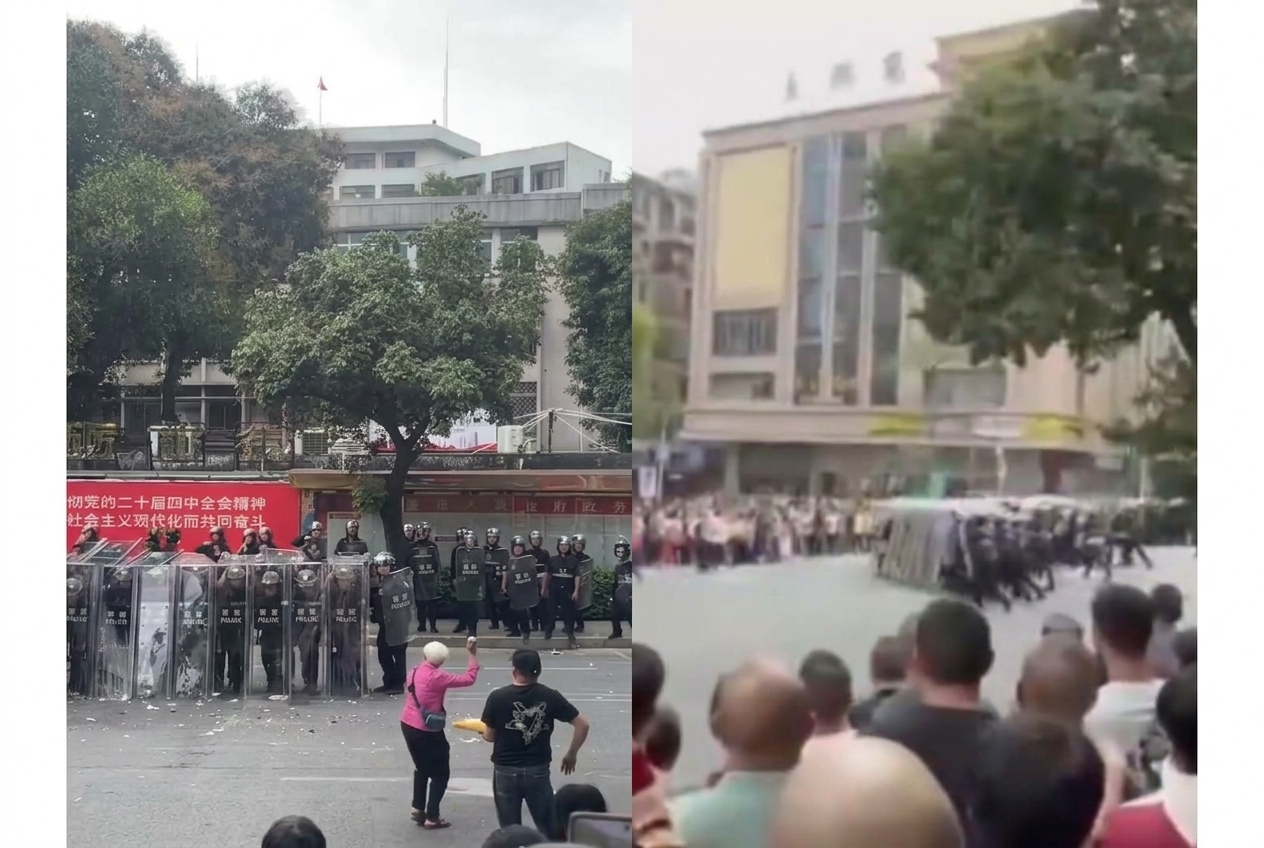
According to recent statistics released by Freedom House, China recorded a significant increase in protest events, with 948 incidents reported in the third quarter of 2026. This marks a rise from the 846 incidents documented in the previous quarter, emphasizing the ongoing civil unrest within the country. The primary catalyst for these protests appears to be workers demanding unpaid wages, which has become a focal point for collective action among different demographics.
In particular, Guangdong Province leads the nation with approximately 13% of these protests, highlighting its status as a hotspot for labor disputes and civil discontent. Among the protesters, workers constituted about 44%, while homeowners accounted for around 27%, and rural residents made up approximately 9%. The ongoing issues surrounding land expropriation, forced relocation, and wage disputes continue to fuel public unrest, showcasing a growing trend of collective actions among affected communities.
One particularly striking incident occurred in Hefei City’s Yao Hai District on the morning of May 16, 2026, when numerous homes in the Sun Daying area were demolished. A male resident recounted the events, stating that around 400 security personnel arrived at the scene without presenting any official documentation. Instead, they only claimed to be from a security company before proceeding to demolish all the residents’ houses.
The affected residents clarified that their homes, built between 2004 and 2005, were deemed illegal or unlicensed for historical reasons. They asserted that they were not inherently against the demolition but demanded the presentation of formal approvals and compensation plans before any action was taken.
Such occurrences have become increasingly common in China in recent years, reflecting a significant rise in public protests. Freedom House’s report from October 29 outlines that between June 2022 and September 2026, there were 643 documented incidents pertaining specifically to land expropriation and an additional 503 related to forced relocation. This amounts to a staggering total of 1,146 protest events, with 558 involving some form of repression by authorities. The frequency of these related protests increased fivefold between 2023 and 2025, with 267 incidents recorded in just the first nine months of 2026.
The report highlighted data from the Organisation for Economic Co-operation and Development (OECD), indicating that over the past two decades, revenues from land leasing have accounted for 30% to 60% of local government revenues. Furthermore, data from the International Monetary Fund (IMF) revealed that regional government debts are equivalent to 90% of local Gross Domestic Product (GDP) as of the end of 2025.
Freedom House pointed out the systemic issues plaguing the land expropriation process in China, including a lack of effective legal recourse and political accountability. Corruption, opacity, and inequitable compensation processes have led to rampant grievances among residents, igniting further protests. Among the documented 1,146 cases of land expropriation and forced relocation, there are at least 18 instances where residents have continued to protest for over five years after their homes were demolished, with ten cases stretching beyond a decade.
One of the longest-running disputes involves the Guangzhou University Town relocation controversy, where residents have demanded housing and compensation for the past 20 years.
The statistics from Freedom House revealed that in the third quarter of 2026, Guangdong was the province with the highest number of protests, accounting for about 13% of the national total, followed by Henan, Shaanxi, Hebei, and Shandong. Reports on social media indicated that Guangdong experienced a series of incidents involving workers clamoring for overdue wages during this period.
Moreover, Guangdong, Hebei, Shaanxi, and Henan have emerged as regions with high occurrences of protests related to land expropriation and forced relocation.
The report further indicated that construction sites comprised 52.8% of worker-related protest events in the third quarter. Of these protests associated with construction sites, 38.1% were linked to state-owned enterprises, comprising 43 different units under 15 state-owned enterprise groups.
Among these, China State Construction Engineering Corporation (CSCEC) emerged as a frequent target of protests, with 85 related incidents documented. The China State Construction Second and Fourth Engineering Bureaus have previously taken on projects for financially troubled real estate companies like Sunac, Wanda, and Evergrande.
The report noted that the Second Engineering Bureau may be facing approximately 900 million yuan in unpaid debts from Wanda, while the Fourth Engineering Bureau reported unrecovered funds equaling 2.2 billion yuan, a sum that was four times its pre-tax profits. This financial strain could significantly impact their ability to recover payments and meet payroll obligations.
Even after the third quarter concluded, incidents of wage protests at construction sites persisted. On October 6, a video uploaded from Langfang, Hebei, showed workers at the China State Construction Sixth Bureau’s Shijing Garden project demonstrating for unpaid wages, with many lying down on the office floor while awaiting resolutions to their compensation issues.
On October 14, another video surfaced from a China State Construction Seventh Bureau site in Henan, displaying numerous workers advocating for their wage rights. One worker cited, “Our hard-earned money has been owed for several years, yet no one is holding the debtors accountable.”
Freedom House analysts attribute China’s prolonged real estate market slump to the financial difficulties faced by developers and contractors, resulting in a strain on payment chains, leaving some workers unable to receive timely wages. The multi-layered subcontracting system has further dispersed the responsibility for wage payments, complicating workers’ efforts to reclaim owed salaries.
Troubles within the manufacturing sector have also led to labor disputes. The Freedom House report indicated that in the third quarter of 2026, factory-related protests accounted for 24.5% of worker protest events, prominently observed in coastal provinces such as Zhejiang, Jiangsu, Guangdong, and Fujian.
On October 9, Fengcheng Salt Chemical Co. in Feng County, Xuzhou, Jiangsu Province notified its employees that the factory would cease operations, affecting approximately 800 to 900 workers facing job relocation or severance compensation issues. A worker expressed, “None of us wish to be relocated; we are waiting for compensation.” Concerns were raised about the company’s insufficient funds to ensure timely compensation, with no clear timeline for payment.
The report by Freedom House also mentioned that at least 1,359 protest incidents were associated with other cases. These events often include recurrent protests by the same group within a short timeframe or actions initiated over compensation, land, and financial disputes that have persisted for months.
Despite a 33% year-on-year reduction in protest incidents for the third quarter, analysts caution that this decrease may not accurately reflect the actual level of dissent, as it could be significantly curtailed due to heightened internet censorship by authorities.
In February 2026, the Chinese Communist Party’s National Cyberspace Administration announced a special operation named “Clear and Bright,” instructing social media platforms to limit or eliminate content deemed by authorities as provoking negative sentiment. Preliminary analyses by “China Dissent Monitor” suggested that related posts on Douyin concerning protests in the second quarter of 2026 had dropped by approximately 50% compared to the same period the previous year, coinciding with the start of these proactive measures.
The ongoing situation reflects a complicated landscape of civil unrest, structural issues within China’s economy, and the persistent challenges faced by citizens in asserting their rights in an environment marked by increasing governmental control and oversight. As these protests continue to unfold, they signal the mounting frustrations of the population in the face of systemic challenges and the demand for accountability and transparency.