
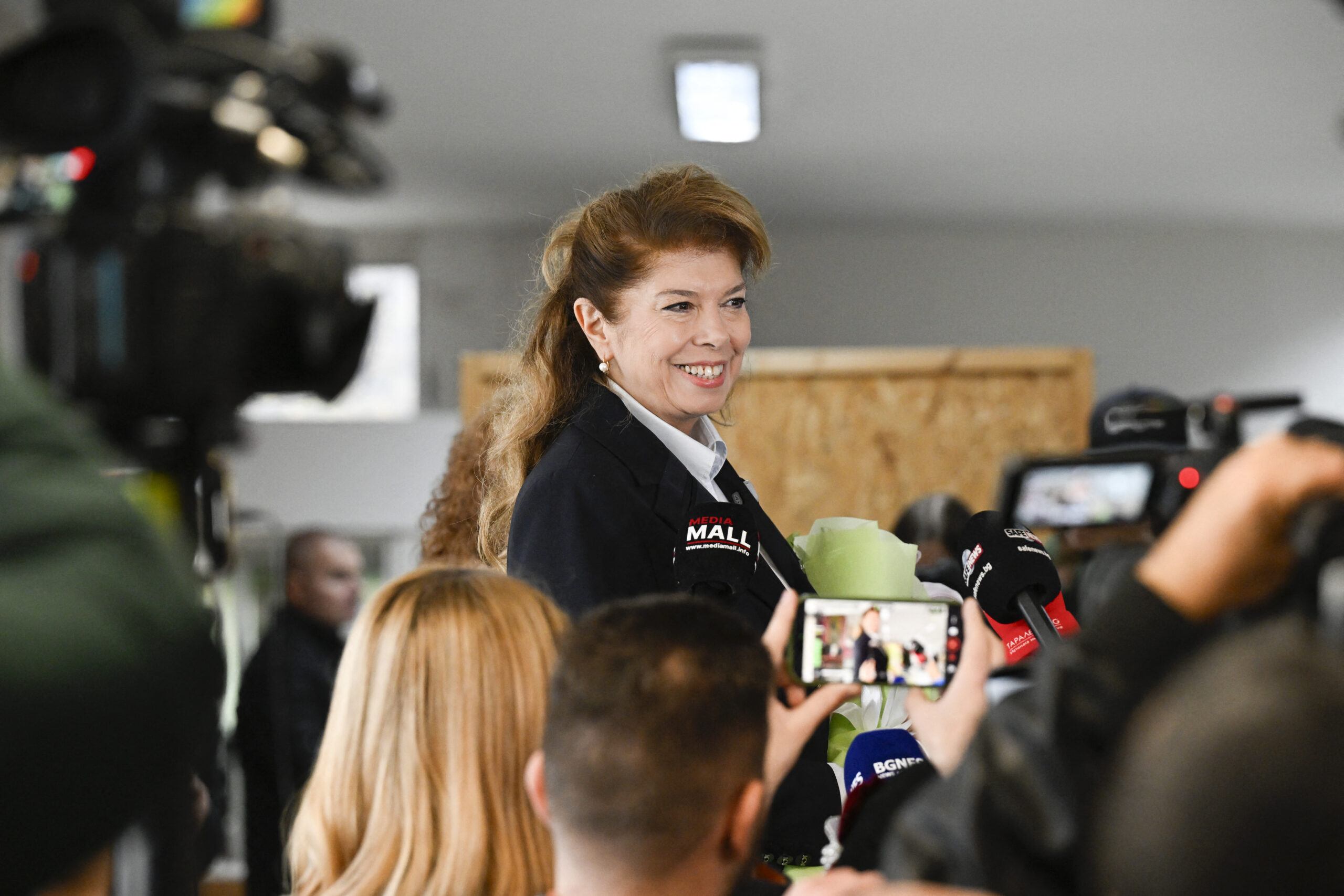
On November 1st, Bulgaria conducted its presidential runoff election, and the results, nearly finalized as reported by the Central Election Commission, reveal that acting president Iliana Iotova secured victory with 57.58% of the vote, defeating pro-Western candidate Andrey Gyurov. With this win, Iotova is set to become the first democratically elected female head of state in the country’s history.
Iotova has the backing of the ruling coalition, led by Prime Minister Rumen Radev. Earlier this year, Radev’s Progressive Bulgaria Party won an absolute majority in the 240-seat Parliament, securing 131 seats, thereby forming the most stable government the nation has seen in recent years.
Observers noted that the outcome of this election may further concentrate power within the ruling coalition, potentially impacting the checks and balances within various governmental institutions. The Financial Times speculated that this could reinforce Bulgaria’s shift toward support for Ukraine amid the ongoing conflict.
According to reports from Reuters, the authorities processed approximately 99.95% of the electoral returns, showing Iotova received about 1.1 million votes, while Gyurov garnered around 749,500 votes. Additionally, 2.95% of voters opted not to support any candidate. The necessity for a runoff arose after the initial round of voting on October 25th, as no candidate received the required majority.
At 62 years old, Iotova has a rich background as a former journalist and member of the European Parliament. She has served as vice president during Radev’s presidency for the past nine years. Following Radev’s resignation earlier this year to participate in parliamentary elections, Iotova assumed the role of acting president and sought to secure a full term through this election.
Radev had previously pledged to halt arms exports to Ukraine. Iotova is anticipated to continue Bulgaria’s European development trajectory while also supporting efforts to improve relations with Russia and lift sanctions. Both candidates argued for a diplomatic resolution to the ongoing conflict between Russia and Ukraine.
During the pre-election television debates, Iotova emphasized that “peace can only be achieved through negotiation” and proposed convening a security meeting among the six Black Sea coastal countries to facilitate a ceasefire agreement.
Towards the end of her campaign, Iotova stated that “everyone should call President Putin,” branding herself as the “peace president.”
Bulgaria joined NATO in 2004 and the European Union in 2007. Despite widespread political support for a pro-Western approach, there remains a notable pro-Russian sentiment within society, highlighting divisions especially following Russia’s full-scale invasion of Ukraine.
The security situation in the Black Sea was also a topic of concern during the election. Reports indicate that in recent weeks, several vessels off the coasts of Bulgaria and Romania were attacked by drones, leading to casualties among crew members. One container ship, carrying hazardous materials, was attacked just 21 nautical miles from Bulgaria’s shores.
Radev had suggested that Russia might be implicated in the attacks on cargo ships near Bulgarian waters in October. However, the Financial Times pointed out that the government has taken no measures in response to this suspicion.
After the polls closed, Iotova expressed gratitude to voters, Radev, and the political parties that supported her candidacy. According to the Bulgarian National Radio, she noted that her campaign focused on positive messaging rather than resorting to language of hatred and division.
She remarked, “People have begun to believe that dialogue can lead to good decisions.”
In contrast, Gyurov acknowledged his defeat, stating, “We accept the current election results,” while expressing surprise at the disparities between exit polls and parallel vote counts.
He emphasized, “We are ready to assert that although the campaign may be over, the responsibilities have not ceased. We must hold the state accountable, as it should serve the citizens of Bulgaria, not itself.”
Gyurov further remarked that numerous challenges and difficult times lie ahead, asserting that society should seek unity rather than division.
According to Bulgarian National Radio, the voter turnout for this presidential runoff was approximately 27%, slightly above the historic low of 22.98% recorded in the first round on October 25th, yet still reflecting a low engagement level. The pro-Russian far-right party, known as the Revival Party, claimed that its mobilization efforts helped Iotova achieve her victory.
Market Links sociologist Dobromir Zhivkov indicated that centrist voters were inclined to support Gyurov, although their numbers were relatively few.
The presidential term in Bulgaria lasts five years, with a maximum of two terms allowed. The constitution designates the prime minister with more substantial powers compared to the president. The presidential role is largely ceremonial but allows for vetoing legislation, appointing ambassadors, and commanding the armed forces. Significant policies still require parliamentary approval.