
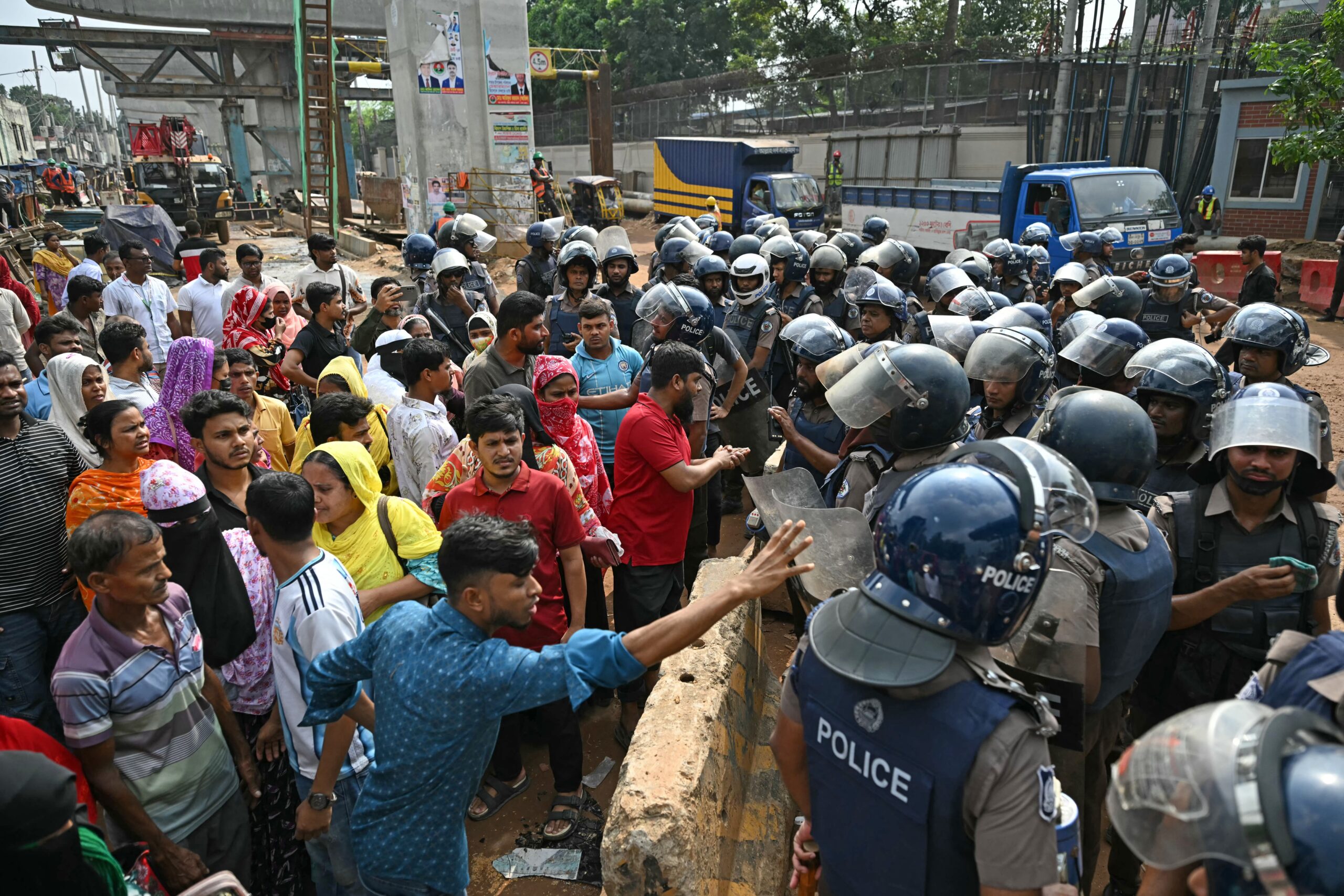
Workers at Bangladesh’s garment factories have begun returning to their jobs as of November 2, following a series of protests and strikes. Despite this progress, several industrial zones are still experiencing demonstrations, and production has not yet fully resumed to normal levels. The garment workers are demanding an increase in the minimum monthly wage, prompting government intervention, including the establishment of a wage committee to review their demands. However, employers are concerned that renewed protests could lead to further work stoppages.
The Bangladesh Garment Manufacturers and Exporters Association (BGMEA) reported that demonstrations on November 1 impacted the operations of 529 factories, affecting nearly one million workers. Following a wave of protests that had led to significant work stoppages and disruptions in production, garment factories reopened on November 2. Nonetheless, Al Jazeera reporters in Dhaka noted that protests were still ongoing in areas such as Savar, Ashulia, and Gazipur, with a heavy police presence also reported in Mirpur, a neighborhood in Dhaka.
Garment workers are demanding an increase in the minimum wage from 12,500 taka (approximately $102) to 30,000 taka (around $243) to help cope with ongoing inflation and rising living costs. In response to these concerns, the government established a six-member wage committee on November 1 to review the wage issues, but the protests did not subside immediately.
According to reports from The Business Standard, demonstrations involving road blockades have been increasingly common in Dhaka and surrounding industrial areas. On November 1, clashes between police and civilians occurred in Mirpur, resulting in the burning of a police vehicle. Law enforcement responded by deploying tear gas and water cannons to disperse protesters. Similar incidents of property damage and arson have been reported in Gazipur and Savar.
On November 1, Prime Minister Tarique Rahman convened a meeting with relevant officials and emphasized the importance of balancing the rights and living conditions of garment workers with the need to maintain production and exports. The Minister of Labour and Employment, Ariful Haque Chowdhury, also urged workers to return to their jobs.
BGMEA President Mahmud Hasan Khan told Reuters that the government has created a wage committee in hopes that workers will grant employers some time to complete the review process. He warned that if further protests occur that lead to factory closures, employers will enforce a “no work, no pay” rule.
The garment industry is currently facing several challenges, including rising costs, uncertainties in the energy market due to conflicts in the Middle East, and decreasing demand in key export markets.
In Bangladesh, the garment sector employs about four million workers, contributing over 80% of the country’s export revenue and around 10% of its Gross Domestic Product (GDP). According to the Export Promotion Bureau, the garment export revenue for the fiscal year from July 2025 to June 2026 is projected to be $38.7 billion.
Selim Raihan, an economics professor at the University of Dhaka, acknowledged that the workers’ demand for wage increases is understandable in the context of high inflation. He warned that keeping wages suppressed could lead to further unrest. However, he also cautioned that significant wage hikes could elevate production costs, reduce exporters’ profits, and weaken the price competitiveness of Bangladeshi products.
Raihan recommended implementing gradual wage adjustments, enhancing production efficiency, and advocating for international buyers to pay more reasonable prices. This approach could strike a balance between improving workers’ welfare and ensuring the sustainable growth of the industry.