
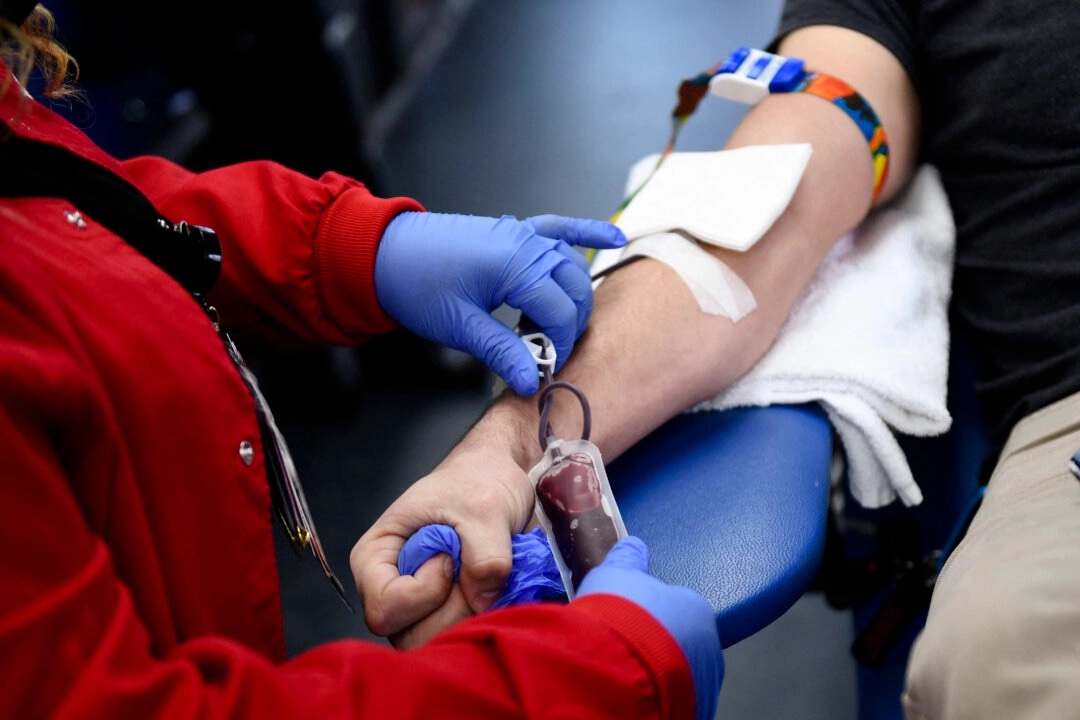
Interns at a hospital in Xinyi City, Maoming, Guangdong, posted on social media that they could exchange blood donation for two days off. The hospital’s education department immediately traced the poster in the work group, asking school leaders to identify the person and threatening to involve the schools if they didn’t comply. This incident sparked criticism, with the public condemning the hospital for pressuring students who exposed the issue instead of addressing the institutional problem.
Two screenshots circulating on social media show the intern in question posting that the hospital requires blood donors to register by name in the group chat, and those who donate blood on the same day can get two days off. The intern questioned, “Interns must exchange blood donation for time off. It’s one thing to have fewer days off, but what’s the point of all this?”
Xinyi People’s Hospital has a bed capacity of 1500 beds, with 1230 beds actually in use. In 2023, it formed a close medical alliance with the Sixth Hospital affiliated with Sun Yat-sen University. On March 24th of this year, the hospital, in collaboration with Maoming Central Blood Station, held a voluntary blood donation activity in the hospital lobby, claiming the event was “guided by Party building”.
The hospital’s public promotion did not mention the connection between blood donation and interns’ time off. Voluntary blood donation should be a personal decision based on individual health conditions and should not be subject to administrative pressure or used as a condition to exchange for leave or other benefits.
Ms. Wang, an internal medicine physician at Guangzhou Southern Hospital, interviewed by Epoch Times, stated that interns are bound by both hospital management and school evaluations. Even if the hospital does not explicitly compel them, linking blood donation with time off makes it challenging for students to freely choose. She said, “Blood donation is voluntary. by linking it with time off, you’re essentially telling students that without donating blood, they won’t get the two-day break. Interns usually have little say, they worry about evaluations, whether they can successfully complete the internship, so ‘voluntary’ turns into ‘coerced’.”
Following the attention drawn to the post, a person identified as the head of the hospital’s education department in the work group said, “Who posted this? Please come forward and find out who it is through each school leader, or we’ll go directly to the schools.”
The hospital did not initially explain who decided on the “blood donation for leave” arrangement, whether it was with the students’ consent, or address the interns’ concerns. Instead, they demanded to find the poster and extended the pressure to the interns’ schools.
Ding Li, a surgical ward nurse who previously interned at the Red Cross Hospital in Shenzhen, empathized with the situation. She stated that interns are in an extremely vulnerable position with no income and lacking avenues for complaints, while the hospital holds the internship appraisal power determining the students’ future. Therefore, the hospital using the excuse of “contacting the schools” is essentially a blatant threat.
Ding Li bluntly expressed, “Back in the Red Cross Hospital, when things escalated, top management’s focus was not on verifying the correctness of the system but on catching the poster at all costs. This style of intimidating to set an example makes everyone realize the cost of resistance, making them dare not speak up even in the face of blatant injustice.”
In recent years, there have been frequent reports across China of blood shortages in clinical use and urgent needs in blood banks, with the voluntary blood donation system continually questioned by the public. Many blood donors feel puzzled as they are asked to donate blood selflessly, yet when they or their family members need blood transfusions, they are still required to pay for clinical blood-related expenses upfront, only to apply for reductions or reimbursements later.
Online commentator “Cang Hai Yi Su” told reporters that many struggle to comprehend being urged to make a sacrificial gesture during blood donation, but facing charges during blood usage. This gap diminishes public willingness to donate blood and makes the hospital’s practice of using leaves to lure or indirectly coerce interns into blood donation even more enraging. “I have seen many such cases around me, as well as the hospitals’ ruthless demeanor when faced with patients who can’t afford to buy blood, completely contradicting the so-called principle of saving lives and helping the wounded they promote.”
According to regulations announced by China’s health authorities, patients pay not for the blood itself but for blood collection, storage, separation, and testing fees. Qualified voluntary blood donors and their relatives can apply for fee waivers, but the specific standards and procedures vary across different regions.
Cang Hai stated that this incident reflects the power dynamic commonly used within the Chinese Communist Party system, where authorities can leverage evaluations, school affairs, and personal futures as bargaining chips to compel the weaker party to comply. Once a problem is exposed, the initial response is not to hold accountable those responsible, but to investigate and maintain stability.