
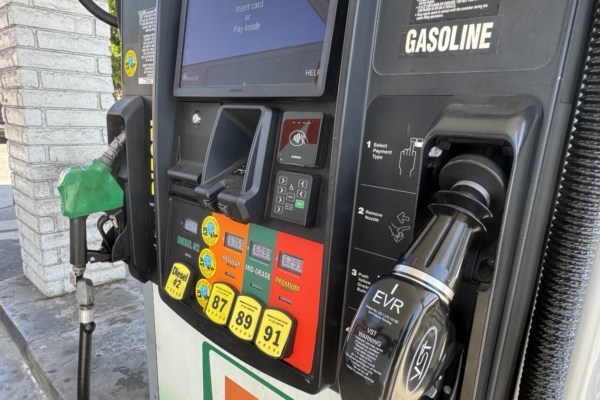
The current oil prices in the United States are at a high level, with the average gasoline price in California surpassing $6 per gallon. Despite the soaring oil prices, many car owners still choose to spend extra money on premium gasoline, believing that it can protect the engine and enhance the performance of their vehicles. However, the authoritative American consumer magazine “Consumer Reports” pointed out that deliberately using premium gasoline is simply a waste of money.
Gasoline at American gas stations is mainly divided into three types: 87 octane Regular, 89 octane Mid-Grade/Plus, and 91/93 octane Premium. The main difference among these three types of gasoline lies in their octane levels, with higher octane levels leading to higher fuel prices.
Many car owners mistakenly believe that using the highest octane gasoline can reduce engine damage and make their cars run faster. But can more expensive gasoline really bring about better performance?
In fact, the type of gasoline a car should use is clearly indicated on the inside of the fuel tank cap, the door frame label, and the owner’s manual. Generally, “Regular Unleaded” indicates the usage of 87 octane Regular gasoline; “Premium Required” means that 91 or 93 octane gasoline is necessary; and “Premium Unleaded Recommended” suggests using premium gasoline.
“Consumer Reports” points out that if the manual suggests using premium gasoline, using 87 octane Regular gasoline for daily driving is still safe.
If a vehicle explicitly requires the use of premium gasoline, it means that the engine is designed based on the need for high-octane fuel. Using regular gasoline may not only lead to excessive engine wear but also potentially void the manufacturer’s warranty.
In addition to these two scenarios, experts suggest that the majority of modern household cars in the United States can suffice with regular gasoline. Jake Fisher, Senior Director at the Consumer Reports Automotive Test Center, said, “If a vehicle does not require premium gasoline, adding it will not make the car run faster, perform better, or make the engine more durable.”
As early as 2016, a survey conducted by the American Automobile Association (AAA) found that American car owners wasted over $2.1 billion per year by unnecessarily using premium gasoline when their vehicles’ manufacturers only recommended regular gasoline.
For vehicles that clearly require the use of premium or regular gasoline, one should follow the manufacturer’s instructions. But what about vehicles that only “recommend” using premium gasoline?
“Consumer Reports” test engineers selected two new SUVs that “recommended” the use of premium gasoline by the manufacturer. During the test, regular and premium gasoline were separately used, and the fuel consumption performance and acceleration were compared. The results showed that both SUVs had similar fuel consumption performance when using regular and premium gasoline.
Moreover, during the test, there were no discernible differences in driving feel and engine noise between the two types of gasoline. When using regular gasoline, no engine knock was heard.
However, Fisher noted, “Although our tests found similar performance between the two types of gasoline, there may still be some differences in some extreme situations, such as extremely hot weather or when towing heavy loads.” If your engine experiences knock, a higher-octane gasoline should be used.
For vehicles that “recommend” the use of premium gasoline, the owner’s manual may explicitly state when premium gasoline should be used and when regular gasoline can be used.
Experts recommend that under heavy loads such as towing, driving in mountainous areas, commuting in stop-and-go traffic, or undertaking long-distance travel in extreme hot weather, it is best to use premium gasoline.
Additionally, John Ibbotson, Chief Mechanic at “Consumer Reports,” said, “For some older engines, using high-octane gasoline helps prevent knock caused by carbon buildup.”
In recent times, oil prices have continued to rise. According to AAA data on Sunday (20th), the average price of regular gasoline in California reached $6.15 per gallon, mid-grade 89 gasoline averaged at $6.38, and premium 91 gasoline reached $6.58.
Meanwhile, diesel prices have been setting new historical records, reaching $8.42 per gallon. Since diesel is an important fuel for agricultural production and goods transportation, the price hike may also lead to increased costs for daily consumption items like food.
This article is for general reference only; for specific situations, please refer to the owner’s manual.