
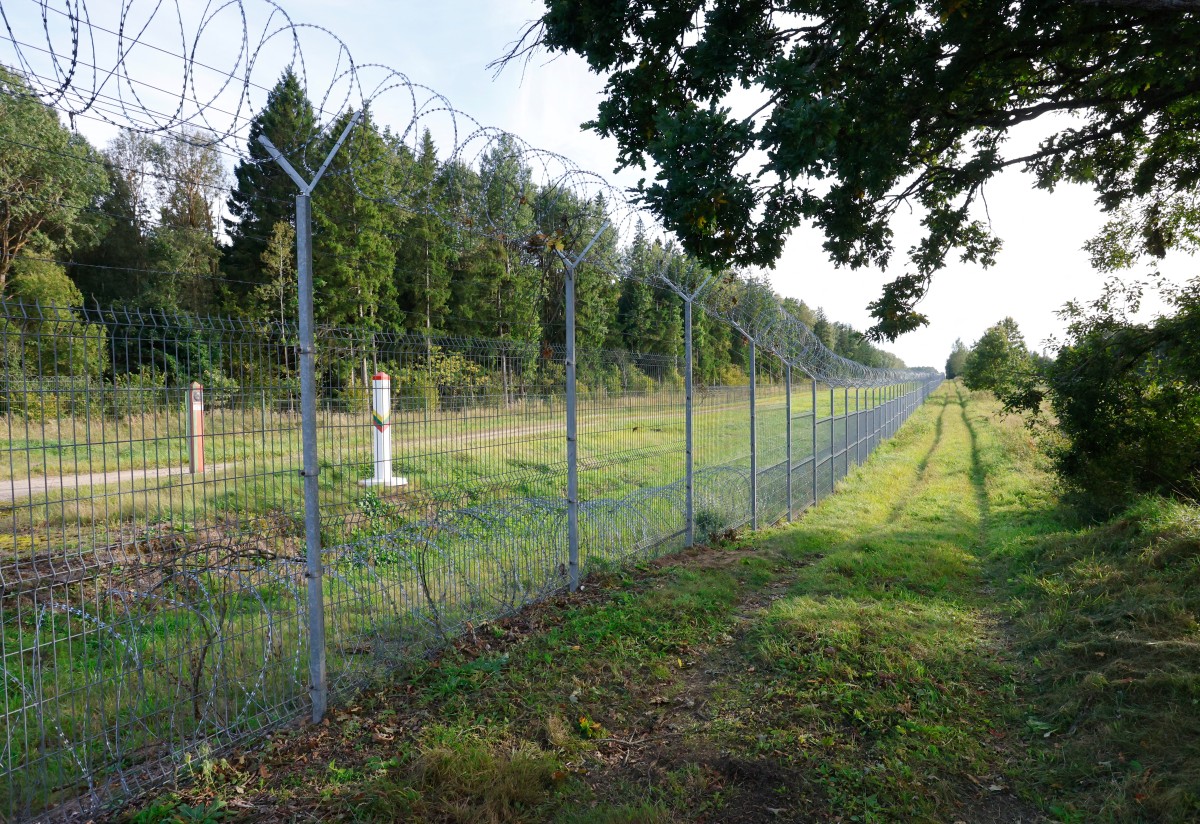
On Tuesday (September 15), the Lithuanian National Crisis Management Center announced that in the early hours of the morning, an Italian NATO fighter jet shot down an unmanned aerial vehicle (UAV) that had entered Lithuanian airspace.
The Lithuanian Ministry of National Defense stated that the country’s armed forces, along with Italian pilots carrying out NATO air defense missions, responded swiftly and responsibly to the UAV intrusion incident.
A spokesperson for the Lithuanian National Crisis Management Center indicated that the UAV likely entered Lithuanian airspace near Kaunas, the country’s second-largest city in the south, possibly originating from neighboring Belarus. The UAV was shot down near Pratkunai village in Kaunas. The spokesperson mentioned that the exact source of the UAV is still under investigation.
Officials did not disclose whether the UAV originated from Ukraine or Russia. In recent months, Ukrainian drones have repeatedly entered NATO airspace in the Baltic Sea region. Ukraine has claimed that these drones deviated from their flight paths due to Russian signal interference.
Early on Tuesday, Vilnius, the capital of Lithuania, and its surrounding areas issued a drone alert. The Lithuanian military released a video of the crashed UAV, showing debris scattered on the ground. Some components appeared to be made of wood, while others were charred.
This incident marks the first time a NATO fighter jet has shot down a drone in Lithuanian airspace. Residents in the region received alerts on their phones warning of potential drone intrusions. They were advised to “find a safe place” and await further instructions to lift the alert.
Since joining NATO in 2004, fighter jets conducting NATO Baltic Air Policing missions have been patrolling the skies over Latvia, Lithuania, and Estonia. In May, Ukrainian drones off course were shot down over Estonia, and in June and August, similar incidents occurred over Latvia.
Military drone trespassing incidents have raised concerns that the conflict between Russia and Ukraine might be spilling over into NATO member countries’ border regions.
Ukraine has intensified its long-range drone attacks against Russia, including those targeting the Baltic Sea region.