
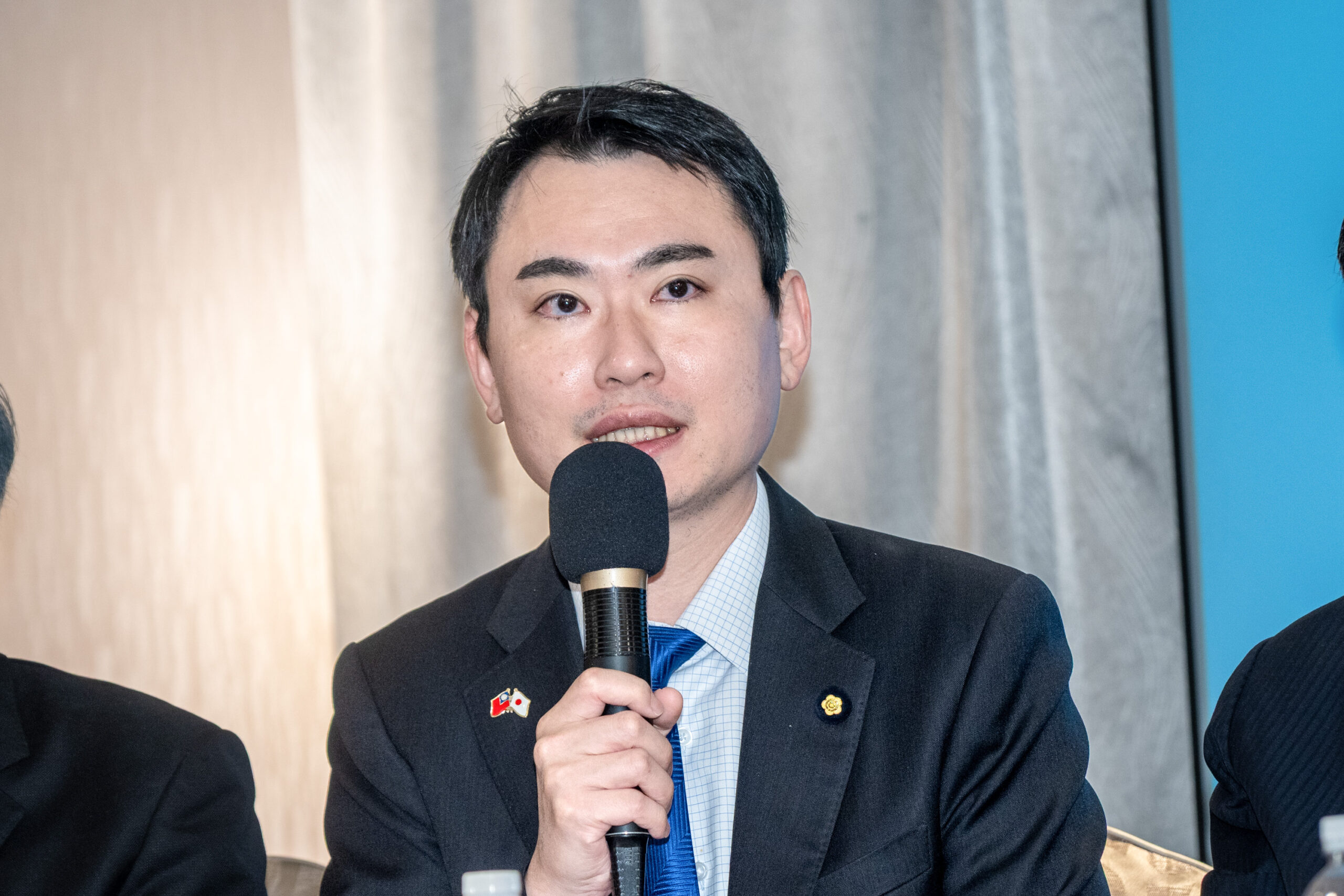
Recently, Chinese scholar Jin Canrong stated that the People’s Liberation Army (PLA) may apply pressure on Taiwan in 2027 through methods like blockade or direct attacks. In response to this assertion, Chen Guanting, a member of Taiwan’s Legislative Yuan National Defense and Foreign Affairs Committee, emphasized that the government should significantly expand energy strategic reserves to cope with potential blockades and gray-zone threats.
Jin Canrong, the Chinese scholar, mentioned that the situation in the Taiwan Strait is expected to undergo a significant transformation in 2027, with the PLA possibly resorting to blockades or direct attacks to pressure Taiwan. By employing tactics such as blockades and cutting off food and material supplies, Beijing aims to achieve its objectives within two weeks.
Taiwanese legislator Chen Guanting stated that regardless of China’s specific evaluation of timing, such discourse serves as a reminder to Taiwan that dealing with blockades and gray-zone threats requires proactive preparation rather than waiting for a crisis to unfold. It is essential for Taiwan to implement strategic reserves and enhance infrastructure readiness during peacetime.
Chen Guanting pointed out that the Chinese Communist Party (CCP) has long established a national reserve system to convert more national resources into wartime capabilities, continuously updating through rotating mechanisms. Faced with a more challenging security environment, Taiwan must adopt a similar military readiness mindset towards critical resource reserves. The overall resilience of society relies on continuous preparedness, and the government needs to identify key infrastructure that should not be interrupted and how to maintain a consistent supply.
“The government should establish a more comprehensive system for safely stockpiling and rotating reserves of long-term preserved energy, medical supplies, essential components, and daily necessities to prevent scrambling for alternatives in case of maritime and airspace blockades, disrupted shipping, or supply chain interference. Strategic reserves should not be solely based on ‘inventory days,’ but also on transportation, warehousing, distribution, and the ability to sustain vital industries and public services,” stated Chen Guanting.
Furthermore, Chen Guanting emphasized that aside from goods, backup systems for ports, communications, electricity, transportation, and maritime and airspace surveillance capabilities need to be established. Even if resources remain in Taiwan, if ports cannot operate, communications are cut off, there are power outages, or the logistics distribution system fails, reserves themselves will be ineffective. Therefore, Taiwan’s resilience-building efforts must progress from ‘how much to store’ towards ‘whether the system can sustain continued operations.’
Chen Guanting stressed that Taiwan’s security cannot solely rely on amassing supplies. The government should proactively establish crisis coordination mechanisms with like-minded partners such as the United States, Japan, and others, encompassing shipping routes, energy supplies, intelligence sharing, and economic and supply chain support, and institutionalize coordination during peacetime along with necessary exercises.
Lastly, Chen Guanting expressed that if the CCP attempts to force Taiwan to accept political conditions through blockades, Taiwan’s most effective response would be to make Beijing realize that attempts to cripple Taiwan through blockades will not yield rapid results.