
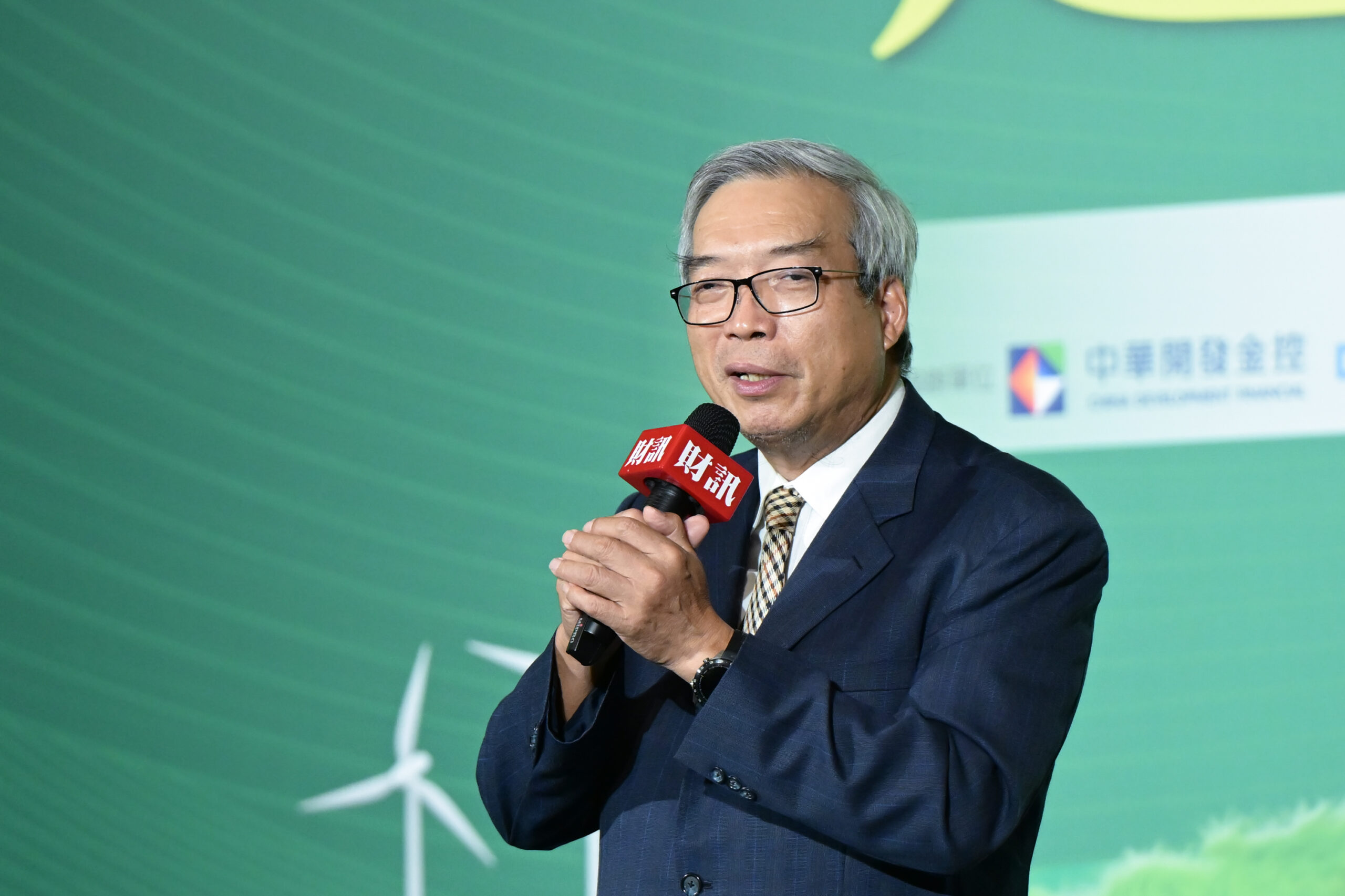
Taiwan’s Finance and Media Group Chairman, Xie Jinhe, recently posted on Facebook under the title “Major Changes in Cross-Strait Dynamics” pointing out that according to surveys, for the first time in twenty years, the Taiwanese people’s positive evaluations of their domestic economy have surpassed negative views. Xie analyzed that Taiwan is the biggest beneficiary of Artificial Intelligence (AI), and as AI continues to advance, Taiwan will sprint ahead on this path, while mainland China faces weakening domestic demand and is caught in a cycle of adjustment. The economic confidence and development trajectories between the two sides of the strait are clearly diverging.
Xie Jinhe remarked that there is a significant shift in the cross-strait dynamics, and the national survey conducted by Taiwanese expert Dai Lian emphasized is an important indicator. Since 2000, Taiwan’s population has generally held positive views towards China’s economy, while overwhelmingly pessimistic views towards Taiwan. At the height of this sentiment, around the time when President Chen Shui-bian was about to leave office, the ratio of those pessimistic about Taiwan reached as high as 93.6%, with only 5.6% optimistic.
On August 25th, Dai Lian released the latest survey results, which revealed that for the first time since 2006, the Taiwanese public’s positive evaluations of the overall domestic economy exceeded negative evaluations. This marked the first occurrence of a “golden cross” in the survey over the past 20 years. President Lai Ching-te’s satisfaction rating has increased significantly by 7.4% compared to the previous survey, with over half, 51.4% of the population expressing satisfaction with him.
Xie Jinhe noted that for the past two decades, those pessimistic about Taiwan have consistently outnumbered those with positive views, even during President Tsai Ing-wen’s administration in 2016. It wasn’t until after the spread of the pandemic in 2020 that the Taiwanese people gradually became more economically aware. This latest survey indicates a shift where optimists outnumber pessimists, marking a turning point in Taiwan’s political climate.
Furthermore, Xie Jinhe mentioned that in comparison, companies that had relied on China’s rise are gradually facing difficulties. Recently, Tsai Yanming, the Chairman of the Want Want Group, acknowledged in a letter to employees that the company had not transitioned well over the past thirty years, leading to a continuous decline in Want Want’s stock prices, with it hitting a low of 2.785 Hong Kong dollars.
In the letter to employees, Tsai Yanming admitted that the company is facing a major operational crisis and emphasized the need for all employees to pay close attention to it. He pointed out that due to the lack of timely innovation and failure to update their cooperation model with distributors, leading to customer losses and yearly declines in operating profits, they need to strictly control unreasonable and ineffective costs and actively try new business ventures. He also mentioned, “Those who do not produce results or make contributions will be eliminated.”
Xie Jinhe also brought up recent examples in China where companies listed on the A-share market, such as Huali Group, and those on the Hong Kong stock exchange, like Haidilao, have been consistently hitting new lows. The founders of Haidilao, Zhang Yong and Shu Ping, have fled to Singapore, and the company’s operations have been on a downward trajectory. China’s retail giant “Darunfa” sold to Jack Ma, has also undergone significant changes, with its stock price continuously falling. The trend of weakening domestic demand in China has just begun.
He highlighted that while Taiwan is sprinting ahead on the AI track, China is caught in a cycle of adjustment due to over-expansion, and these parallel lines will clearly divert. Taiwanese people will gradually find their own confidence!
Xie Jinhe stated that Taiwan is the biggest beneficiary in the AI arms race outside of the red supply chain. Today, Taiwan boasts impressive economic growth rates, a rising per capita income, with exports to the United States increasing by over 60%, and a net profit of 3.67 trillion New Taiwan dollars in the first half of the year, a 95.3% increase from the same period last year, all stemming from hardware investments to pursue computing power. As long as AI continues to advance, Taiwan will lead the pack on this path.