
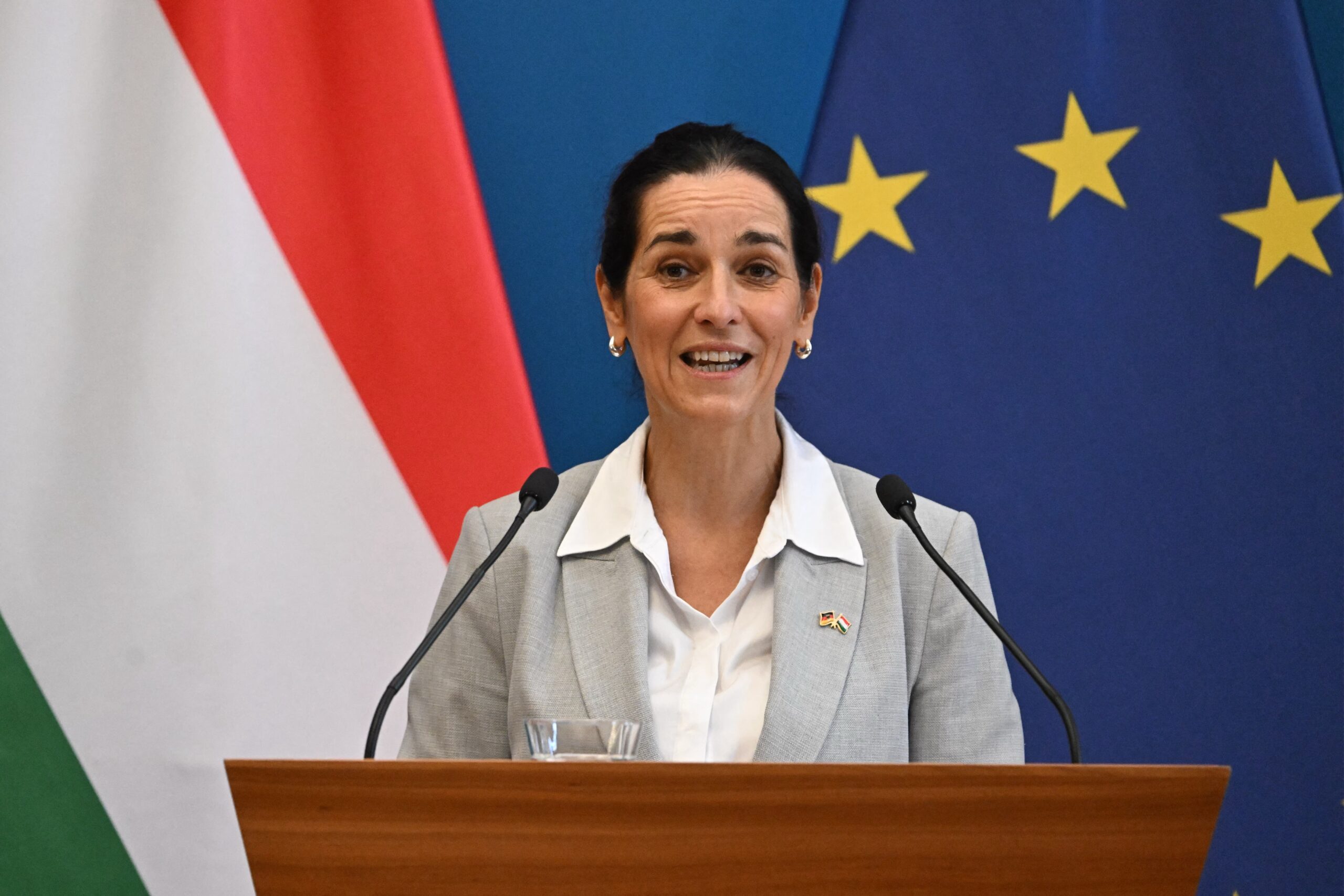
Hungary, a member of NATO and the European Union (EU), recently announced the expulsion of 10 Russian diplomatic staff, citing activities that violate the Vienna Convention on Diplomatic Relations. Hungarian Deputy Prime Minister and Minister of Foreign Affairs, Anita Orban, disclosed on September 13th through the social media platform X that after an assessment by Hungarian authorities, these individuals were found to be engaged in activities deemed incompatible with the diplomatic norms outlined in the Vienna Convention.
Orban emphasized that this decision does not signify a complete breakdown in diplomatic relations between Hungary and Russia. She clarified that the expulsion was necessary to safeguard Hungary’s security and sovereignty while underscoring the country’s commitment to maintaining essential diplomatic dialogue with Russia, contingent upon mutual respect and adherence to established rules.
In response to Hungary’s action, the Russian Ministry of Foreign Affairs subsequently announced that Moscow would provide an “appropriate response” to the expulsion of Russian diplomatic personnel from Hungary. As both a NATO and EU member state, Hungary’s move was noted and supported by the European Commission spokesperson, Christian Wigand, who characterized it as a legitimate response to ongoing “hybrid attacks” by Russia within the EU and its member countries.
Hybrid attacks typically involve a combination of tactics such as cyberattacks, dissemination of false information, espionage, targeting critical infrastructure, and other unconventional methods. The expulsion of Russian diplomats by Hungary is seen as part of a broader European response to counter these destabilizing actions orchestrated by Russia.
On September 13th, when Russian drones attacked a train station near the Ukrainian-Polish border at Yahodyn, the train carrying a delegation that included former UK Prime Minister Boris Johnson, former Swedish PM Carl Bildt, and German national security adviser Günter Sautter narrowly escaped being a target of the attack. Ukrainian officials indicated that the train departing from Kyiv was flagged as a potential target for the Russian drones, prompting concerns of being locked onto by Russian forces. Consequently, the train accelerated and safely crossed the border into Poland, averting a potential disaster.
This incident further underscores the tense geopolitical climate in the region and highlights the heightened security risks faced by European dignitaries amid escalating tensions between Russia and its neighboring countries. The near miss experienced by the European delegation serves as a stark reminder of the real and immediate threats posed by aggressive actions in the region, necessitating vigilance and diplomatic solidarity among European nations.